
Observation Spots
Activities
The island packs a surprising range of things to do into a compact footprint. The headline activity is the Butterfly House, where visitors walk slowly through a humid, planted enclosure as roughly 500 butterflies of about 20 species feed and fly around them; interpretive displays cover the chrysalis stage and lifecycle.
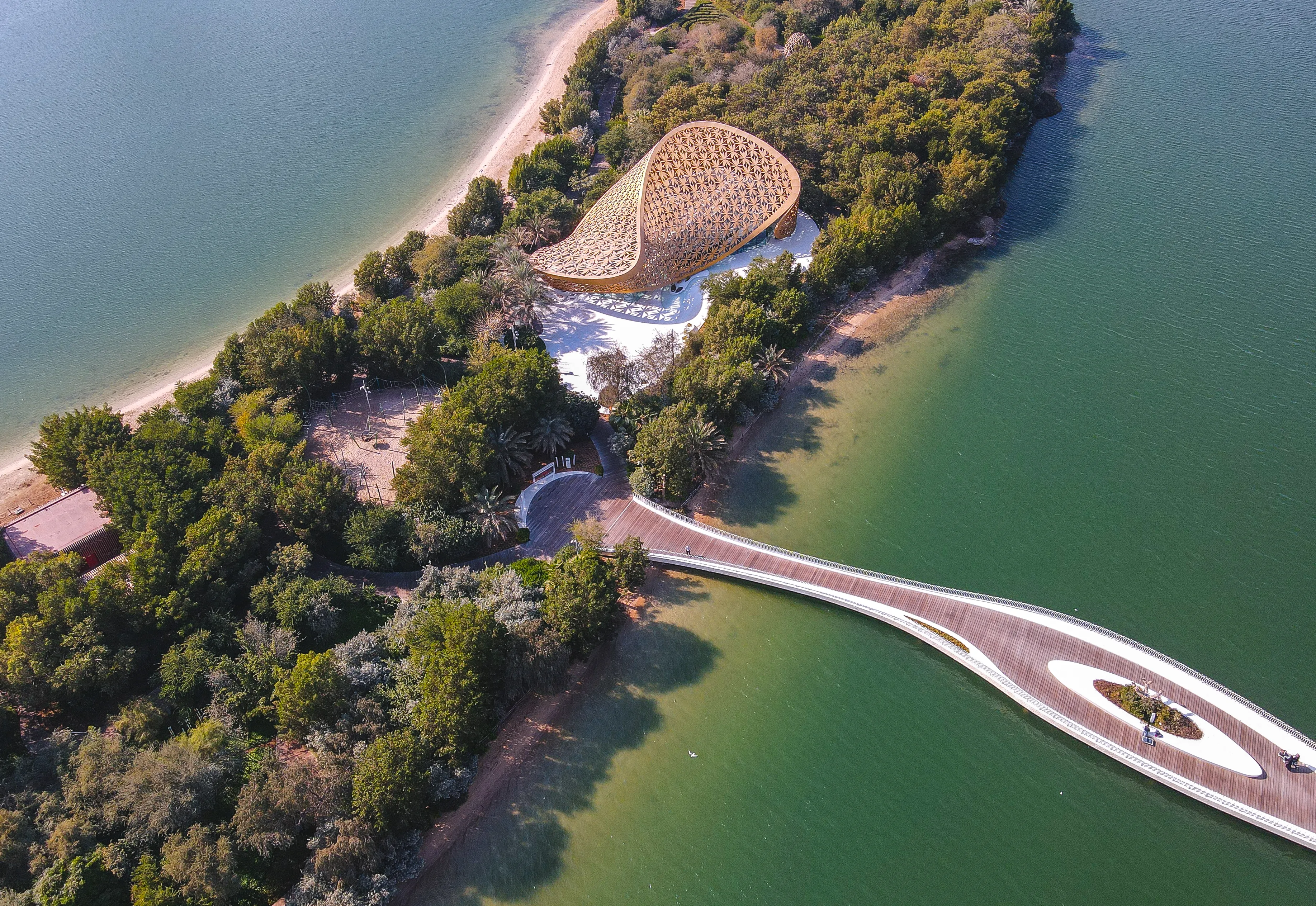
Beyond it, the main draws are garden walking along the looped paths, exploring the sculptural Literature Pavilion (a quiet space themed around reading and storytelling), and discovering the luminous OVO art installations that transform the island after sunset. Families gravitate to the children's playground with its rope climbing structures, while couples and photographers favour the lagoon-edge benches and the bridge for skyline shots. The on-site café provides a natural rest stop, and the whole island is designed for unhurried strolling rather than thrill-seeking — its pleasures are contemplative, visual, and photographic rather than adrenaline-driven.
Seasonal Highlights
Al Noor Island's appeal swings dramatically with Sharjah's climate. Winter (November–March) is the prime season: daytime temperatures of roughly 18–26°C make the gardens comfortable from late afternoon, sunsets over Khalid Lagoon are spectacular, and evening visits feel genuinely pleasant. This is also when the island hosts seasonal décor and occasional events tied to the cooler tourist months.
Spring (April–May) still works for early-morning or post-sunset visits, but the heat builds quickly. Summer (June–September) is brutal, with temperatures regularly exceeding 40°C and high humidity off the lagoon; only an after-dark visit is realistic, and even then the air stays warm. The Butterfly House, being climate-controlled, is a reliable refuge in any season and is one of the few parts of the island comfortable to enjoy at midday in summer. For the full experience of gardens, lights, and lagoon views together, aim squarely for the winter peak.
Al Noor Island timeline
-
Al Noor Mosque opens
The Ottoman-style mosque opened across the water on the Buhaira Corniche, later becoming the island's pedestrian gateway.
-
Al Noor Island opens
The 45,000-square-metre garden island opened in Khalid Lagoon with the Butterfly House, Literature Pavilion, and OVO installations designed by 3deluxe.
When to Visit
Al Noor Island is generally open daily from 9:00 AM to 11:00 PM, with the last entry typically around 10:00 PM. Hours shift with the season and the calendar, so treat the following as a planning guide and confirm the current schedule on the official site before a special trip:
- Weekdays: quietest overall, especially mornings; the gardens feel almost private before the after-work crowd arrives.
- Weekends (Friday–Saturday): busiest after sunset, when Sharjah families turn out in numbers and the café queues lengthen.
- Ramadan: opening often shifts later into the evening and daytime hours contract, so an after-iftar visit is the safe assumption.
The single best window is late afternoon into evening. Arrive around 5:00 PM in winter to walk the gardens in soft light, watch sunset over Khalid Lagoon, then linger as the OVO installations and the Literature Pavilion are illuminated after dark — the island effectively offers two different visits in one. Mornings are peaceful but the midday sun is punishing for much of the year. Allow 2–3 hours overall, including 30–40 minutes inside the Butterfly House, whose own last admission usually closes before the island's, so head there first if it is your priority.
Admission and Costs
General island admission is approximately AED 35 (~$10) for adults and AED 25 (~$7) for children, with under-3s usually free; a single ticket includes the gardens, art installations, and the Butterfly House, and there are no separate charges for individual pavilions. Prices are occasionally adjusted for seasonal events, so verify current rates on the official Al Noor Island site when booking. A rough on-site budget:
- Island admission: AED 35 (
$10) adult, AED 25 ($7) child, under-3s free. - Café: coffee from around AED 15 (~$4); light meals AED 30–60 (~$8–16).
- Private guided walk: AED 150–300 (~$40–80) for a small group, covering the island and surrounding corniche.
Because Sharjah is a dry emirate, no alcohol is sold anywhere on the island or along the lagoon. Combining Al Noor Island with the free Monday tour at Al Noor Mosque and the largely free or low-cost Sharjah Museums keeps a full cultural day inexpensive by regional standards.
The Case for a Guide
Al Noor Island is straightforward to navigate, but a knowledgeable local guide turns a pleasant walk into a richer cultural and design story.
- Design and architecture context: A guide can explain the 3deluxe concept behind the butterfly-shaped Butterfly House and the parametric OVO sculptures, connecting the island to Sharjah's broader push for public, design-led green space
- Butterfly House interpretation: Guides point out the species on the wing, the lifecycle displays, and the best times of day for butterflies to be active rather than resting
- Cultural framing: Understanding why Sharjah — a conservative, dry emirate and UNESCO-recognised cultural capital — invests in art parks like this adds meaning that signage alone does not convey
- Efficient pairing: A guide can sequence the island with the nearby Al Noor Mosque Monday tour and the Sharjah Museums quarter into one logical, walkable day
- Photography timing: Local guides know exactly when the light hits the lagoon and when the OVO installations switch on, so you do not miss the island's two very different daytime and night-time moods
Tips for Visitors
Visit in the cooler months and the cooler hours: From November to March an evening visit is delightful; from June to August even the gardens are oppressive before sunset, so go after dark. Wear comfortable shoes — the looped path and bridge crossing add up to a fair amount of walking.
Getting there: Sharjah has no metro, so a taxi or a Careem/Uber ride-hail is the simplest way in; the drive from central Dubai takes roughly 25–35 minutes off-peak, though the Al Ittihad Road corridor between the emirates clogs badly at rush hour. Park along the Al Buhaira Corniche near Al Noor Mosque and cross the pedestrian bridge on foot — there is no vehicle access onto the island itself.
Accessibility: paths are flat, paved, and stroller- and wheelchair-friendly, and the whole island is enclosed and traffic-free, so children can roam safely.
Dress modestly: Sharjah enforces stricter dress standards than Dubai; shoulders and knees should be covered, which is appreciated even in a garden setting. Bring water and sun protection by day, as shade is limited away from the pavilions. Time the Butterfly House for activity: butterflies are liveliest in warm, bright conditions, so a late-morning or mid-afternoon visit there beats the cooler evening. Stay for the lights: the OVO installations and illuminated Literature Pavilion are the island's signature after-dark sight and well worth lingering for. Combine the trip with a stroll across to the Al Majaz Waterfront for fountains, dining, and skyline views, or fold the island into a broader United Arab Emirates circuit.
Frequently Asked Questions
How long should I set aside to explore Al Noor Island properly?
Plan for 2 to 3 hours to do the island justice. The looped walking path itself takes about 45 minutes at a gentle pace, but the Butterfly House alone deserves 30–40 minutes, and most visitors linger far longer over the OVO light sculptures, the Literature Pavilion, and the lagoon viewpoints. Families with children, or photographers chasing the sunset and the after-dark illuminations, often stay well past three hours. If you arrive late afternoon you can experience both daylight and the lit-up evening atmosphere in a single visit.
Is Al Noor Island a good place to bring young children?
Yes — it is one of the more child-friendly attractions in Sharjah. The Butterfly House, home to around 500 butterflies of roughly 20 species, is a genuine highlight for kids, and there is a dedicated children's playground with rope structures and slides set among the gardens. Paths are flat, paved, and stroller-friendly, and the whole island is enclosed and traffic-free, so children can roam safely. Bring sun protection by day, as shade is limited away from the pavilions.
How do I actually get onto the island?
Al Noor Island sits in Khalid Lagoon and is reached on foot via a pedestrian bridge from the Al Noor Mosque side of the corniche, near Al Noor Mosque. There is no vehicle access onto the island itself; visitors park along the Al Buhaira Corniche or arrive by taxi and walk across the connecting bridge. Allow a few minutes for the crossing, which offers some of the best photo angles of the butterfly-shaped pavilion and the Sharjah skyline.
Does Al Noor Island serve food, and can I bring my own?
There is a café on the island serving coffee, light meals, and snacks, and seating areas overlook the lagoon. Outside food is generally discouraged, so plan to buy refreshments on-site or eat beforehand along the corniche. Remember that Sharjah is a dry emirate, so no alcohol is served anywhere on the island or in the surrounding area.