

Overview
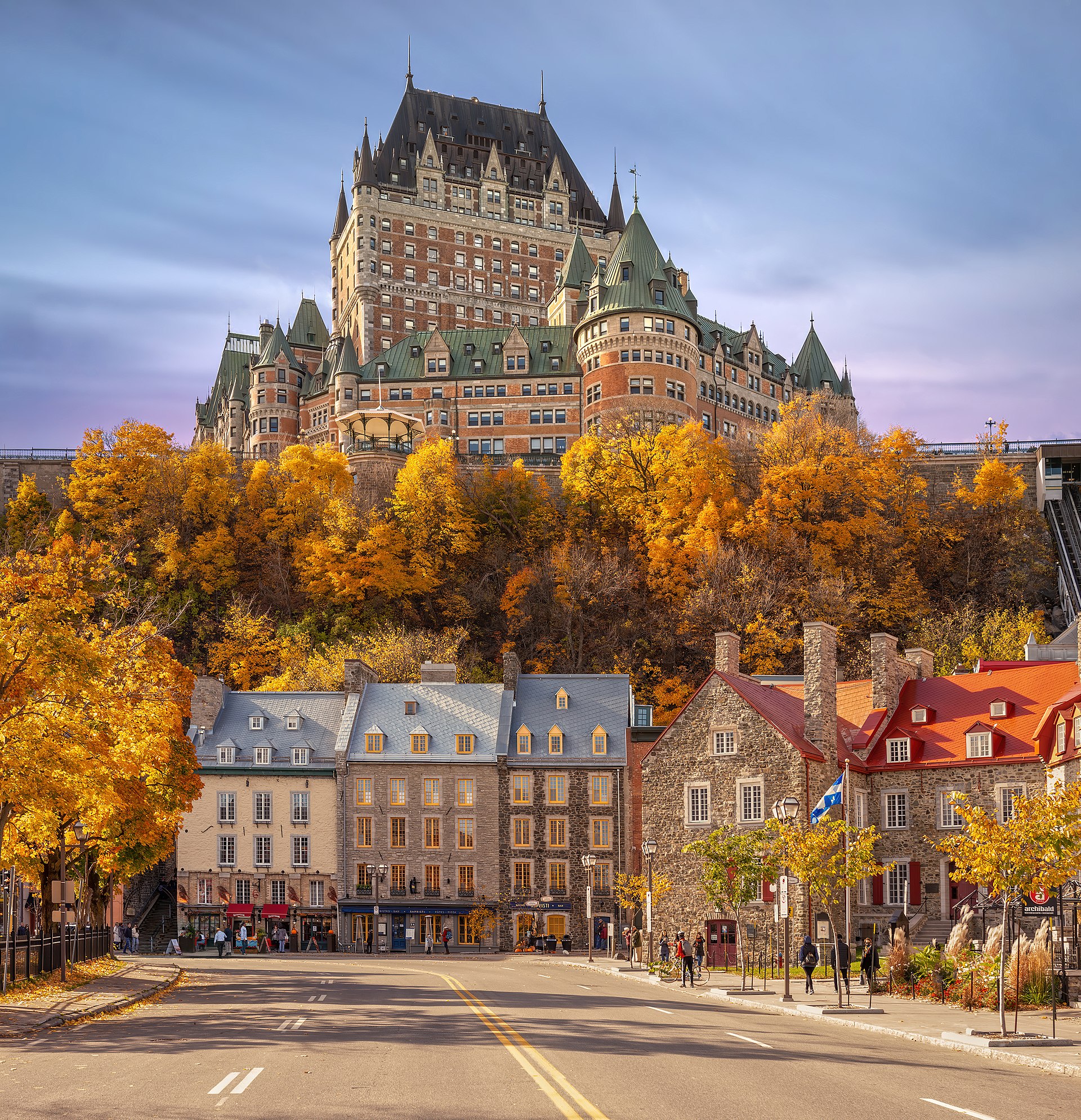
Perched on the crest of Cap Diamant where the St. Lawrence River narrows into a swift channel, Chateau Frontenac has commanded Quebec City's skyline since American architect Bruce Price completed its first wing in 1893. The Canadian Pacific Railway commissioned the building as a luxury stopover for transcontinental travellers, and Price drew on the Loire Valley chateaux for a design of steep copper roofs, cylindrical turrets, and red-brick facades that blended Romanesque weight with French Renaissance flair. Successive expansions over the next four decades added a central tower, a riverside wing, and a ballroom, culminating in the seventeen-storey tower that became the hotel's signature silhouette in 1924. During the Second World War, Winston Churchill and Franklin Roosevelt chose the Frontenac as the site of two secret Quebec Conferences in 1943 and 1944, where Allied leaders planned the D-Day invasion behind its thick stone walls. The broad Dufferin Terrace boardwalk wraps along the cliff edge directly below the hotel, offering sweeping views of the river, Ile d'Orleans, and the Laurentian mountains beyond.
Fortification History
Bruce Price's 1893 design introduced the chateau style that would define Canadian railway hotels from coast to coast — a distinctly Canadian architectural vocabulary that blended Loire Valley turrets with rugged Quebec masonry, creating grand hotels that served as symbols of national identity along the transcontinental rail route. The hotel's strategic position on Cap Diamant echoes the military significance of the site: this clifftop commanded the narrowing of the St. Lawrence and was fortified by both French and British armies for over two centuries before the railway era transformed it into a hospitality landmark. During the Second World War, Churchill and Roosevelt met here for the Quebec Conferences of 1943 and 1944, where Allied leaders charted the course of the D-Day campaigns — the guided tour passes through the very rooms where those decisions were made. The broad Dufferin Terrace, a 671-metre boardwalk cantilevered over the cliff and originally built by Lord Dufferin in 1879, offers an unobstructed panorama of the Lower Town, the river, and the distant Laurentian ridgeline. From December through March, a traditional wooden toboggan run operates on the terrace, sending riders hurtling down a frozen chute at speeds that surprise even locals. After dark, the chateau is illuminated in warm gold, and its reflection shimmers across the river — the most recognisable nightscape in all of Quebec.
Notable Rooms
The guided tour threads through a sequence of rooms that build from grand public spaces to intimate wartime chambers. The Salon Rose ballroom, with its crystal chandeliers and gilded ceiling, hosted Confederation-era balls and society weddings that defined Quebec's Francophone elite social calendar. The Salon Vercheres preserves the atmosphere of the wartime conference rooms where Churchill and Roosevelt debated invasion plans in 1943-1944 — original furnishings, period maps, and photographs line the walls. The Champlain Restaurant occupies a vaulted dining room whose windows frame the St. Lawrence and Ile d'Orleans — the space where Canadian Pacific Railway once served its most distinguished transcontinental passengers. The lobby, with its massive stone fireplace, heraldic shields, and dark-wood panelling, captures the chateau style at its most atmospheric — a deliberate evocation of medieval French aristocratic interiors transplanted to the Canadian wilderness. The 1924 central tower added the hotel's most dramatic public space: a soaring atrium that channels light downward through multiple floors and provides the vertical signature visible from across the river.
When to Visit
Guided tours: Daily departures, typically 10 AM - 5 PM (check seasonal schedule for exact times). Dufferin Terrace: Open around the clock, year-round. Best time: Late afternoon in summer, when the copper roofs glow amber in the low sun and the terrace fills with street musicians. Quietest period: Weekday mornings in October and November, after the leaf-peeping crowds thin but before the holiday decorations draw new visitors.
Admission and Costs
Guided historic tour: CA$22 per adult for a narrated walk through the hotel's corridors, ballrooms, and wartime conference rooms. Dufferin Terrace boardwalk: Free — stroll, photograph, or simply lean on the railing and watch ships pass below. Afternoon tea at Place Dufferin: Approximately CA$60 per person for a tiered service of finger sandwiches, scones, and pastries inside the chateau. Room rates: From CA$350 per night for a standard room; river-view suites climb considerably higher during peak summer and Carnaval season.
Tips for Visitors
Book the tour in advance: Guided history tours sell out on summer weekends; reserve online at least a day ahead to secure your spot. Non-guests welcome: You do not need a room reservation to enter the lobby, browse the shops, or take the guided tour. Photography angles: The best exterior shot comes from the Levis ferry — the crossing provides a full-frontal view of the chateau rising above the cliff. Combine with Old Quebec: The hotel sits at the heart of the Upper Town; step outside and you are immediately on the cobblestone streets of the UNESCO-listed historic district. Dining without staying: Reservations at the chateau's restaurants are open to non-guests and include complimentary access to the lobby and public spaces.