
.jpg)
Overview
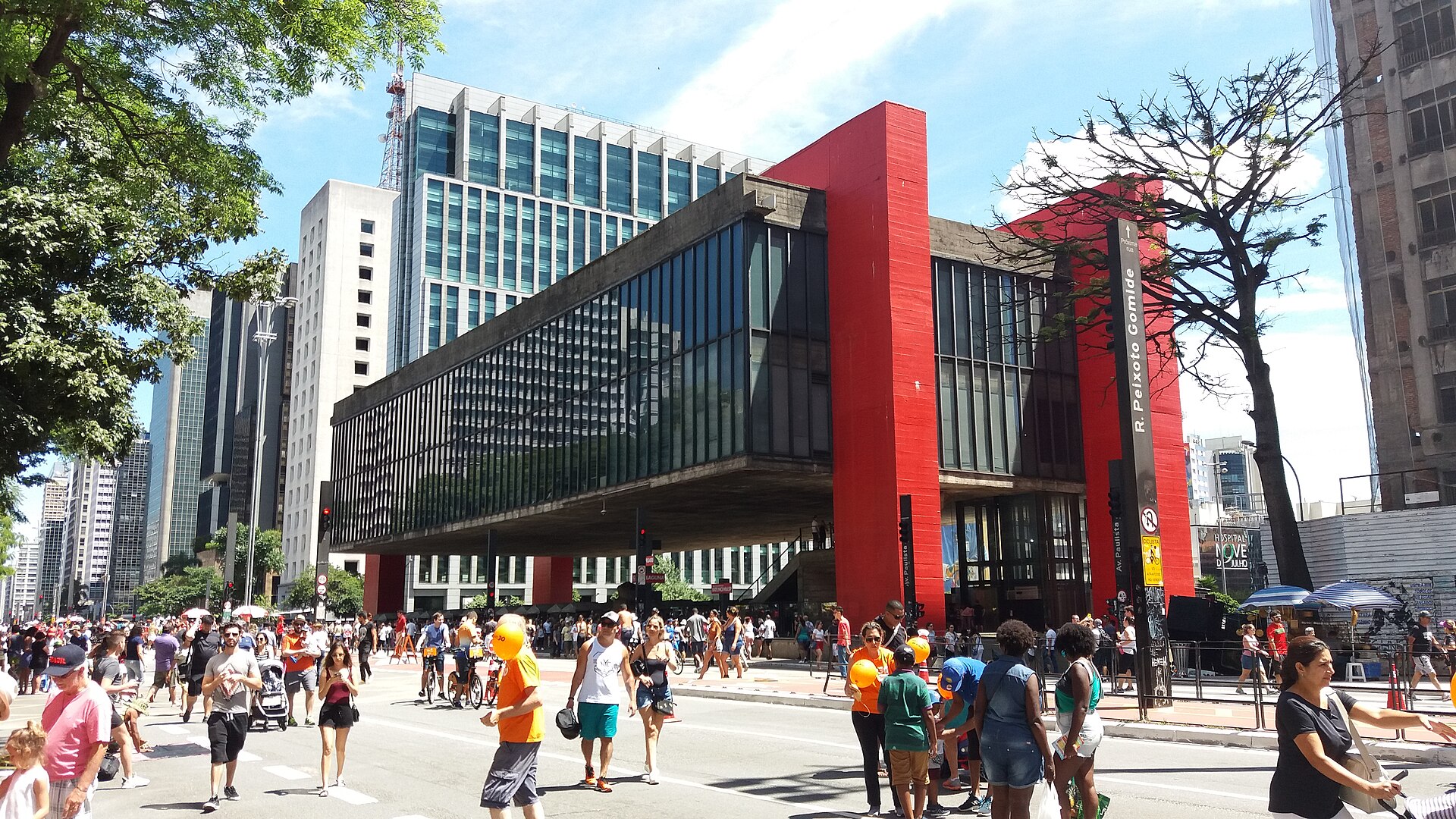
The Museu de Arte de Sao Paulo (MASP) is Brazil's most important art museum, housed in an iconic 1968 Brutalist building by architect Lina Bo Bardi that appears to float above Paulista Avenue on massive red concrete beams — a radical design decision that freed the belvedere below as public gathering space for Sao Paulo's citizens. Founded in 1947 by media magnate Assis Chateaubriand and Italian curator Pietro Maria Bardi, MASP holds the finest collection of European art in the Southern Hemisphere alongside significant Brazilian and Latin American works. The Bardis acquired works by Raphael, Velazquez, Rembrandt, Degas, Renoir, Monet, Van Gogh, and Picasso in post-war Europe when prices were depressed by wartime dislocation, assembling a world-class collection in record time. MASP's innovative cavaletes de cristal (glass easel) display system — Lina Bo Bardi's signature innovation — suspends paintings on transparent glass panels at eye level without frames, allowing visitors to experience art from all angles and breaking the traditional museum hierarchy of wall placement. An art historian guide transforms these display choices from confusing to revelatory, connecting each floating canvas to broader movements in Brazilian and European art, and tracing the philosophical evolution from Tarsila do Amaral's Antropofagia canvases through the movement that reshaped Brazilian cultural identity in the twentieth century.
Collections Highlights
European masters: Van Gogh's "The Student," Renoir's "Bather with Griffon Dog," Monet, Picasso, Rembrandt's "Self-Portrait," and Velazquez — the strongest European collection in Latin America, assembled by the Bardis during the post-war period when works were available at depressed prices. Brazilian art: Candido Portinari's social realist canvases depicting coffee workers and northeastern migrants, Di Cavalcanti's Samba scenes celebrating Afro-Brazilian culture, and Tarsila do Amaral's revolutionary modernist works including the landmark Antropofagia paintings that catalyzed the Movimento Antropofagico — Brazil's assertion that it could "cannibalize" European influences and produce something entirely original. Architecture: Lina Bo Bardi's suspended red concrete box, with its 74-meter free span between supports, remains one of the most daring museum buildings in the world. The cavaletes de cristal (glass easel) display system is itself a work of conceptual art, democratizing the viewing experience by removing the hierarchical wall placement that traditional museums use to signal importance.
Guided Tours
Art historian guides at MASP decode the layers of meaning in both the collection and the building itself. They explain how Lina Bo Bardi's decision to suspend the museum on red concrete beams was a political statement — freeing the ground-level belvedere as democratic public space in a city with precious little of it. The cavaletes de cristal display system becomes legible with expert interpretation: Bo Bardi intended viewers to encounter artworks as autonomous objects rather than decorative wall elements, a philosophical position about art's relationship to its audience. Guides trace the Brazilian art narrative from Portinari's social realism through Tarsila do Amaral's Antropofagia to contemporary Brazilian artists, connecting museum works to the living cultural movements visible in Sao Paulo's galleries and streets. They also contextualize the European collection within the extraordinary story of how Assis Chateaubriand — a press baron with no art expertise — partnered with Pietro Maria Bardi to build a world-class museum in a city that had none, acquiring Renaissance and Impressionist masterworks at post-war prices.
When to Visit
Open: Tuesday-Sunday 10 AM - 6 PM (Thursday until 8 PM). Closed: Mondays. Best: Tuesday mornings (10-11 AM) — free entry and fewer early crowds (though Tuesday attracts larger numbers overall). Thursday evenings: Extended hours with a less busy atmosphere after 6 PM. Temporary exhibitions on the second floor change quarterly and often rival the permanent collection in quality — check the MASP website for current shows. Allow 2-3 hours for the permanent collection plus temporary exhibitions. The open plaza beneath the museum hosts a popular antiques fair on Sundays.
Admission and Costs
General entry: R$30. Students/seniors: R$15 (bring ID). Free Tuesday: All day for everyone — the best value but expect larger crowds. Audio guide: Available in English via MASP app. Guided tour with art historian: R$200-300 for a 2-hour private tour covering collection highlights, architectural context, and Brazilian art movements. Temporary exhibitions are included in general admission. The Sunday antiques fair under the belvedere is free to browse.
Tips for Visitors
The cavaletes de cristal (glass easels) display paintings at eye level without frames — walk around them to see the backs and read the contextual cards on each work. Tuesday admission is free and draws large crowds, so arrive right at 10 AM opening if you plan to visit then. The open plaza beneath the elevated museum building hosts a popular antiques fair on Sundays — combine museum and market in one visit. Temporary exhibitions on the second floor change quarterly and are often outstanding. Paulista Avenue stretches in both directions from MASP's entrance — stroll the cultural corridor to Japan House, Itau Cultural, and SESC Avenida Paulista. Ibirapuera Park is a short taxi ride away for a half-day combining art and green space.