

Overview
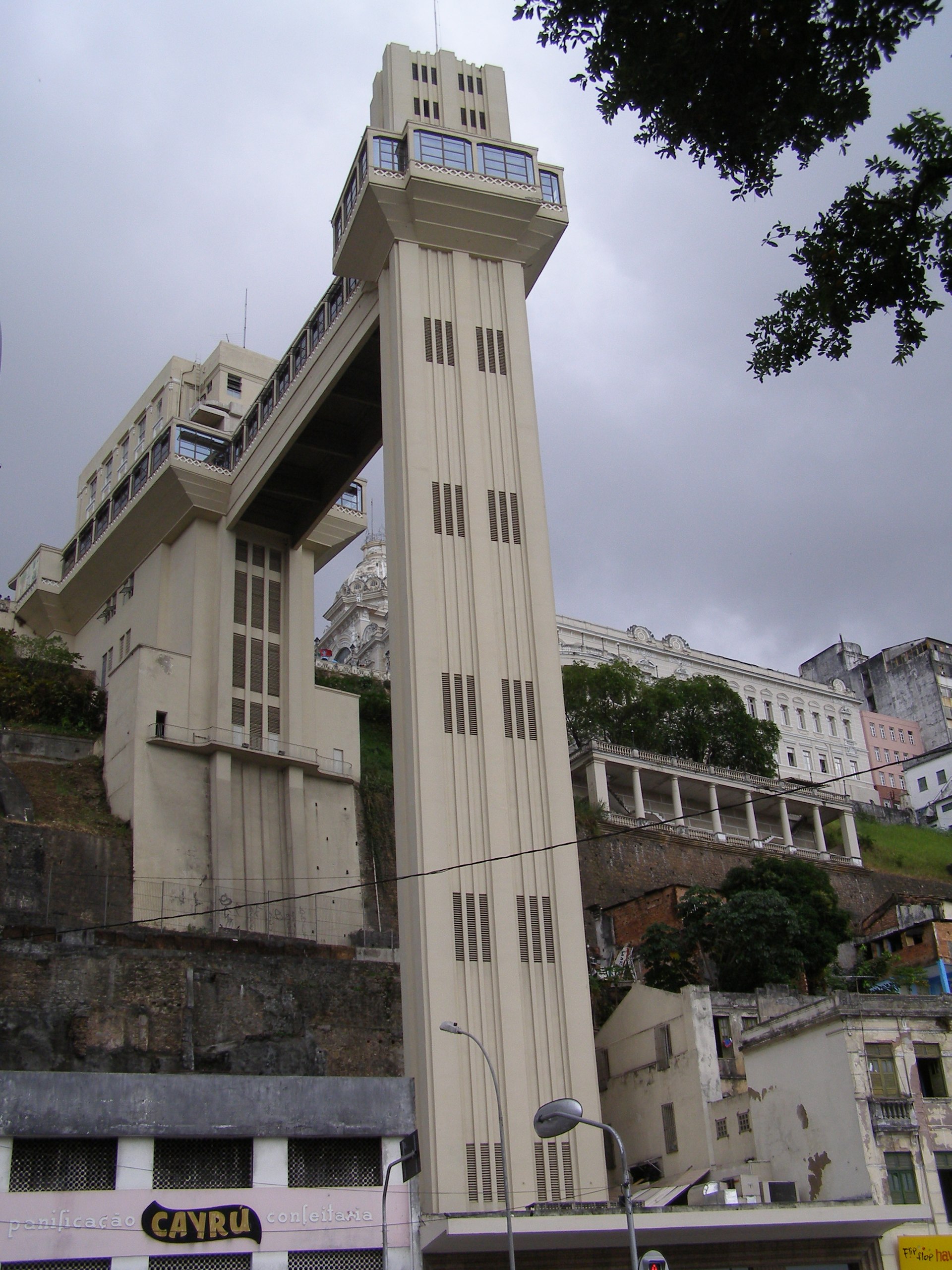
The Elevador Lacerda is Salvador's most recognizable landmark, an Art Deco public elevator connecting the Cidade Alta (Upper City) with the Cidade Baixa (Lower City) across an 85-meter vertical cliff face. Built in 1873 by engineer Augusto Frederico de Lacerda and modernized in its current Art Deco style in 1930, the 72-meter elevator makes the steep climb in just 30 seconds, carrying up to 128 passengers in four cars. It is one of the world's busiest public elevators, transporting over 28,000 people daily. The Upper City exit deposits you near Pelourinho and the historic colonial administrative quarter, while the Lower City connects to the Mercado Modelo — a former customs house where arriving ships were taxed — and the panoramic sweep of All Saints Bay (Baia de Todos os Santos). A guide transforms this half-minute ride into a window on Salvador's social geography, explaining how the original hydraulic lift replaced dangerous footpaths that enslaved people once climbed while hauling goods between the port below and the colonial masters above — a vertical division of labor that still echoes in the city's class structure today.
Historical Significance
Built in 1873 by engineer Augusto Frederico de Lacerda, the elevator replaced dangerous footpaths that enslaved people once climbed while hauling goods between the port and the colonial administrative quarter above — a vertical geography of labor exploitation that physically embodied Brazil's slave economy. The original hydraulic system was revolutionary for its time, one of the first public elevators in the Americas. Modernized in Art Deco style in 1930 by architects Fleming Thiesen and Kenneth Conser, the tower became an architectural landmark that combined industrial function with aesthetic ambition. The elevator remains a working symbol of Salvador's enduring division between the Cidade Alta (historically the administrative and ecclesiastical center, home to the colonial elite) and the Cidade Baixa (the commercial port, markets, and working-class neighborhoods) — a social geography rooted in Brazil's colonial class structure that persists in modified form today. The 1930 renovation coincided with Brazil's Vargas era modernization, when the country sought to project technological progress while its social inequalities remained entrenched.
Architecture
The Elevador Lacerda's current Art Deco exterior dates to the 1930 modernization that transformed the original 1873 industrial structure into a streamlined architectural statement. The tower's clean vertical lines, geometric detailing, and reinforced concrete construction exemplify the Art Deco style that swept through Brazilian cities during the 1930s. The upper station opens onto a panoramic terrace with sweeping views of All Saints Bay, the Mercado Modelo below, and the harbor where ferries depart for Itaparica island. The lower station connects to the Mercado Modelo — itself housed in a handsome 1861 Neoclassical customs building with thick stone walls, arched windows, and a central courtyard now filled with craft stalls. The elevator shaft spans 72 meters of vertical cliff face, a dramatic engineering achievement that remains structurally sound after nearly 150 years of continuous operation. From across the bay, the tower reads as a distinctive vertical punctuation mark in Salvador's skyline, its pale concrete form contrasting with the pastel colonial facades of the Cidade Alta above.
When to Visit
Daily: 5 AM - 11 PM. Best: Sunset hours (5-7 PM) for golden light over All Saints Bay from the upper station. Avoid: Rush hour (7-9 AM, 5-7 PM) when commuter crowds fill all four cars and the experience becomes cramped rather than scenic. The ride takes just 30 seconds — budget extra time for exploring both the Upper and Lower City destinations. The elevator runs continuously with minimal wait times outside peak hours.
Admission and Costs
Elevator ride: R$0.15 (approximately 3 cents USD) — one of the cheapest tourist experiences in the world. Payment: coins or Salvador Card (transit card). The Mercado Modelo at the bottom station is free to browse (crafts, souvenirs, Candomble items). Walking tour including Elevador Lacerda: R$100-150 per person covering the elevator, Mercado Modelo, and Pelourinho colonial district. Private guide: R$200-350 for a half-day covering all of Salvador's Cidade Alta and Cidade Baixa.
Tips for Visitors
Have small change ready: R$0.15 in coins or a prepaid transit card. The experience lasts just 30 seconds but the views from both stations are worth lingering over. Explore both levels: the Mercado Modelo craft market at the bottom station, restaurants and Pelourinho at the top. Watch for pickpockets in crowded conditions during rush hours. The upper station terrace offers excellent panoramic photography of All Saints Bay — arrive at sunset for the best light. Combine with Pelourinho: take the elevator up and walk directly into Salvador's UNESCO-listed historic center. The lower station connects to the ferry terminal for boats to Itaparica island.