
Trails
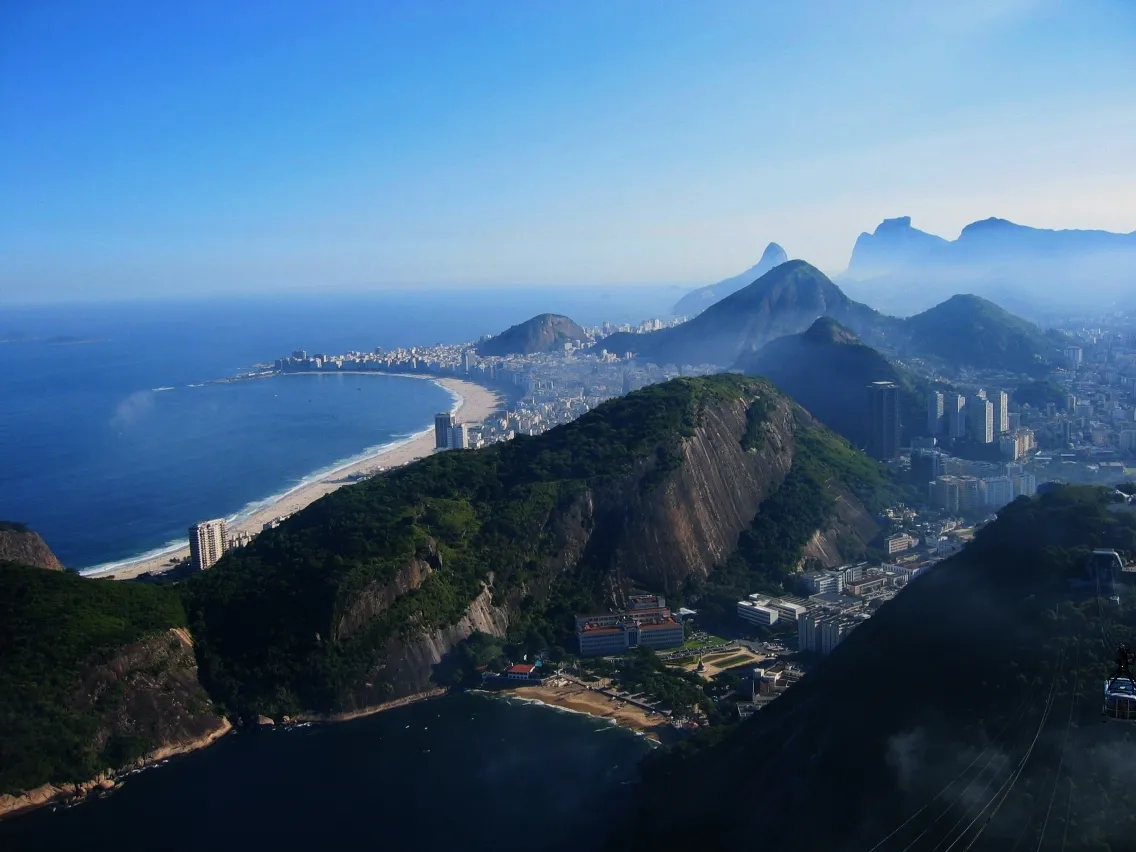
Morro da Urca offers several walking trails through Atlantic Forest fragments that most cable car visitors overlook. The Pista Claudio Coutinho trail follows the waterline at the base of Sugarloaf for 1.25 kilometers along a paved path — flat, shaded, and accessible to all fitness levels, with views of Praia Vermelha and the open Atlantic. The Costao rock climbing route attracts experienced climbers scaling Sugarloaf's granite face (equipment and guide required). A hiking trail from Praia Vermelha ascends through forest to Morro da Urca's summit in approximately 30-40 minutes — a free alternative to the first cable car stage that passes through canopy where sagui marmosets are frequently spotted. At the summit, a short circuit trail around the platform's perimeter offers different angles on Guanabara Bay, the Fortaleza de Sao Joao below, and the Niteroi skyline across the water.
Wildlife
The Atlantic Forest fragments on Morro da Urca harbor surprising biodiversity for an urban setting. Common sagui marmosets (Callithrix jacchus) — small, tufted-ear New World monkeys — are the most visible residents, frequently approaching visitors along trails and at the midpoint platform. Toucans, tanagers, and various hummingbird species occupy the canopy, while the rocky coastline below hosts colonies of brown boobies and frigatebirds. Quatis (coatis) — raccoon-like mammals with long ringed tails — occasionally appear on forest trails foraging for fruit. In the waters around Sugarloaf's base, sea turtles surface periodically, and during winter months (June-September), humpback whales migrating along the Brazilian coast are occasionally visible from the summit. Bromeliads and orchids cling to the granite face, creating micro-habitats for insects and tree frogs audible at dusk.
When to Visit
Daily: 8 AM - 9 PM (cable cars depart every 20-30 minutes). Best: Late afternoon (5-7 PM) for golden hour light over Guanabara Bay and sunset behind the city skyline. Least crowded: Early morning (8-10 AM) when tour groups have not yet arrived. Avoid: Midday (11 AM - 2 PM) when heat and crowds peak at the summit platform. Weather watch: Skip if cloudy — the views are everything, and overcast conditions eliminate the panoramic payoff. Evening hours: The last cars descend at 9 PM, allowing you to see Rio lit up at night from the summit — a spectacular sight.
Admission and Costs
Cable car: R$140 (about $28) round trip covering both stages. Online booking at bondinho.com.br saves queue time. Guided tour: R$200-300 with transport from hotel. Private guide: R$400-600 for a personalized experience including geological and historical commentary. Sunset tours: R$250-350 (popular, book ahead). Free alternative: Hiking trails on Morro da Urca provide free access to the midpoint, though the second stage cable car to the summit still requires a ticket.
The Case for a Guide
The cable car views are magnificent from any seat, but the geological story of Sugarloaf's formation, the WWII military history hidden on the summit, and the optimal sunset photography positions are knowledge that only someone who knows the mountain intimately can provide.
- Original Tupi name meaning: The Tupi word Pau-nh-acuqua (later Portuguese-ized to Pão de Açúcar) described the mountain's resemblance to the conical clay molds used to refine sugar in colonial Brazil — guides explain both the Indigenous linguistic heritage and the sugar trade that made the name commercially resonant to Portuguese settlers.
- Two-stage cable car engineering: The original 1912 cable car was a single-stage wooden cabin; the current glass-walled gondolas date from 1972 and make the crossing in distinct stages at Morro da Urca — guides explain the specific engineering challenges of spanning these distances over water and through shifting Atlantic wind patterns.
- WWII fortifications on the summit: The Forte São João and Forte da Praia Vermelha at the mountain's base, and the military installations that controlled harbor access during WWII when Brazil joined the Allies in 1942, are explained in historical context — including why Sugarloaf was a strategic chokepoint for controlling Guanabara Bay.
- Best sunset photography angles: Guides know that the northwest corner of the summit platform offers the Cristo Redentor silhouette against the sunset sky, while the southeast edge frames the Niterói Bridge at golden hour — specific positions that casual visitors discover only after the light is already gone.
- Local beach access route: The Pista Cláudio Coutinho trail along the base of Sugarloaf connects to Praia Vermelha, a calm bay beach used by locals rather than tourists — guides include this in the visit plan as the perfect cool-down after descending, a spot most foreign visitors never find on their own.
Tips for Visitors
Buy cable car tickets online at bondinho.com.br to skip the booth queue at Praia Vermelha station. The trip involves two cable car rides — Praia Vermelha to Morro da Urca, then Urca to the summit — and both stops have viewing platforms worth exploring. Time your visit for late afternoon to catch sunset from the top, when Christ the Redeemer is silhouetted against the sky. The Morro da Urca midpoint has a restaurant and shorter crowds if you want to linger. Hiking trails on Morro da Urca provide a free alternative to the first cable car, though the second stage still requires a ticket. Most visitors combine Sugarloaf with Cristo Redentor in one day — do Christ the Redeemer in the morning, Sugarloaf for sunset.
Frequently Asked Questions
What are the opening hours and best visiting times for Sugarloaf Mountain?
Daily: 8 AM - 9 PM (cable cars every 20-30 min). Best: Late afternoon (5-7 PM) for golden hour views and sunset. Least crowded: Early morning (8-10 AM). Skip if cloudy — views are everything.
How much does it cost to access Sugarloaf Mountain?
Cable car: R$140 ($28) round trip both stages. Guided tour: R$200-300 with transport. Private guide: R$400-600. Sunset tours: R$250-350 (popular, book ahead).
What practical tips should visitors know before visiting Sugarloaf Mountain?
Buy cable car tickets online to skip the booth queue at Praia Vermelha station. Time your visit for late afternoon to catch sunset from the top. Hiking trails on Morro da Urca provide a free alternative to the first cable car, though the second stage still requires a ticket.