

Overview
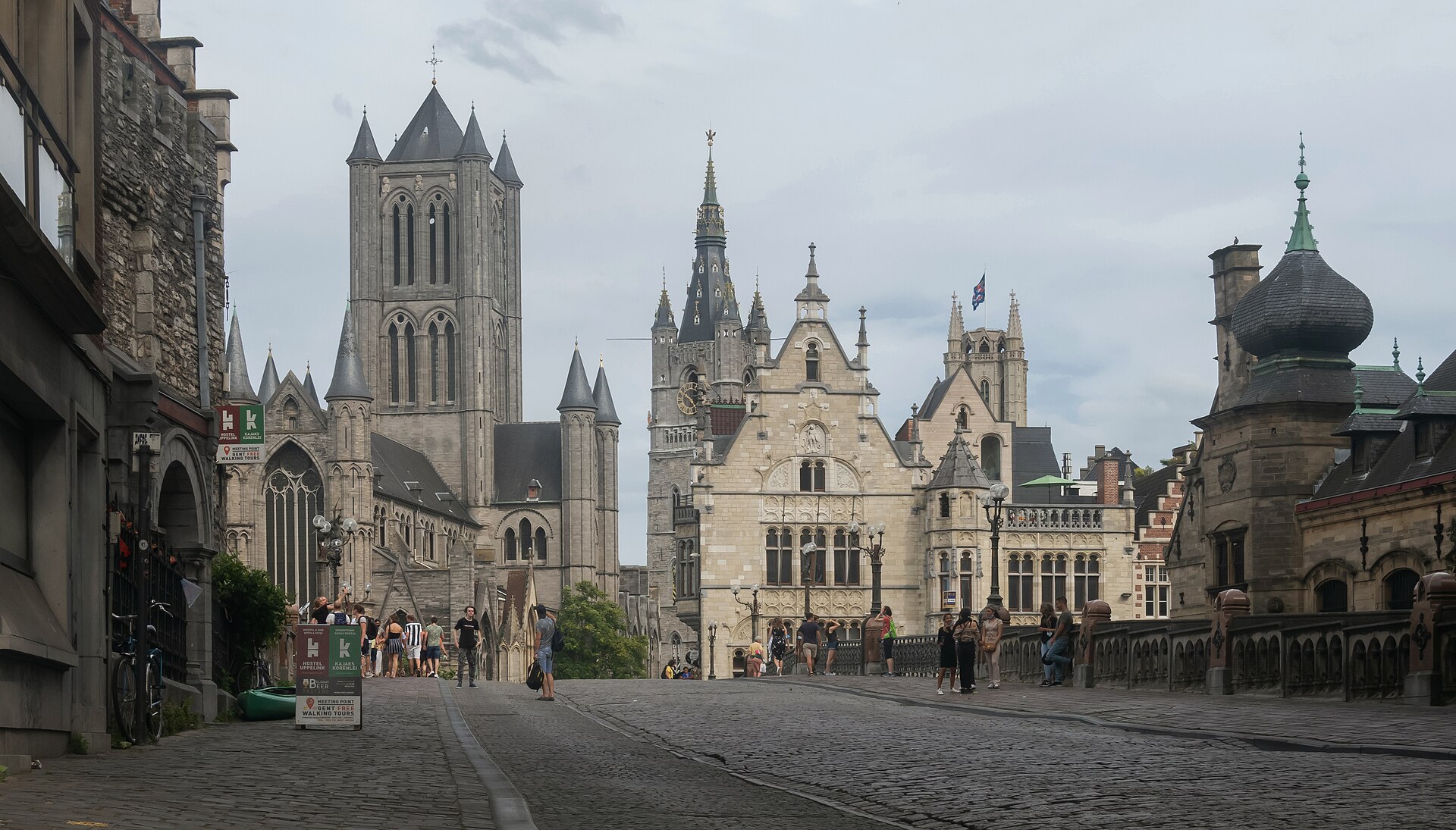
St. Bavo's Cathedral anchors the Sint-Baafsplein in central Ghent, its massive Brabantine Gothic tower dominating the surrounding square with an authority that has defined this city's skyline since the 1420s. The cathedral began as a modest 10th-century Romanesque chapel dedicated to Saint John the Baptist, then expanded dramatically during Ghent's textile-boom prosperity in the 14th-15th centuries when civic wealth funded ambitious Gothic reconstruction. The name changed to St. Bavo's in 1540 when the original St. Bavo's Abbey (located outside the city walls) was demolished by Holy Roman Emperor Charles V as punishment for Ghent's rebellions, and the abbey's patron saint designation transferred to this former parish church simultaneously elevated to cathedral status. This political history matters because St. Bavo's represents more than architectural achievement — it embodies Ghent's medieval economic power, its turbulent relationship with Habsburg authority, and the Flemish tradition of civic-funded religious monuments that expressed urban pride through stone, glass, and artistic patronage. Entering the cathedral through the western portal reveals a vast Gothic interior organized along traditional Latin cross plan: a central nave with side aisles, transept arms crossing perpendicular, and choir extending eastward toward the high altar. The nave arcades rise in dramatic pointed arches supported by clustered columns that draw the eye upward toward ribbed vaulting soaring 28 meters overhead. Unlike many medieval cathedrals that present dark, mysterious interiors, St. Bavo's feels surprisingly luminous thanks to enormous clerestory windows flooding the space with natural light that illuminates the white-painted vaults. This brightness represents deliberate 18th-century alteration when Baroque aesthetics favored bright, theatrical church interiors over medieval gloom — purists lament the loss of authentic Gothic atmosphere, but the luminosity undeniably enhances visibility for the artistic treasures distributed throughout the building. Walking the nave length takes you past side chapels endowed by wealthy guilds and noble families, each containing altarpieces, funerary monuments, and devotional paintings that collectively document four centuries of Flemish religious art from Gothic through Baroque periods. The cathedral's most famous treasure, the Ghent Altarpiece, occupies a dedicated climate-controlled chapel accessed via separate ticketed admission (€6, or €12.50 for full cathedral access including all chapels and crypts). This placement creates a curious bifurcation: you can wander the main cathedral freely without seeing the van Eyck masterpiece that makes St. Bavo's internationally renowned, or pay extra to view the altarpiece in an isolated modern chapel divorced from liturgical context. This separation resulted from conservation requirements — the panels needed controlled temperature and humidity plus security measures impossible to maintain in the open cathedral — but it fragments the visitor experience into "free general viewing" versus "paid altarpiece pilgrimage." For budget travelers, the free cathedral tour still offers substantial artistic rewards; for art history enthusiasts, the altarpiece justifies the extra cost despite the contextual displacement. Your priorities and budget determine which experience suits your visit. Beyond the Ghent Altarpiece, St. Bavo's houses several major paintings that alone would distinguish a smaller church. Peter Paul Rubens' "The Conversion of St. Bavo" (1624) hangs in the cathedral for which it was originally commissioned, depicting the patron saint's dramatic transformation from dissolute nobleman to penitent monk with characteristic Rubens dynamism: swirling compositions, robust flesh tones, and theatrical lighting that makes the spiritual conversion visually explosive. In the choir, Anthony van Dyck's "Christ Carrying the Cross" demonstrates the artist's more refined, elegant approach compared to his teacher Rubens — less bombastic, more psychologically nuanced. Laurent Delvaux's rococo pulpit (1745) represents sculptural virtuosity transformed into functional church furniture: a marble tree trunk supports the preaching platform while carved allegorical figures representing Faith and Time recline among realistically rendered oak bark and foliage. These works don't receive the international fame accorded to the van Eyck altarpiece, but they represent comparable artistic quality within their respective periods and deserve sustained attention rather than quick smartphone snapshots while rushing toward the more famous attraction. The baroque high altar commands the cathedral's liturgical focus, a monumental ensemble combining marble columns, gilded decorations, and sculptural groups in a theatrical composition designed to overwhelm viewers with divine magnificence made materially manifest. Baroque church design deliberately deployed sensory overload — bright light, precious materials, dramatic space, emotional sculpture — to create religious experiences that engaged bodies as well as souls, offering Counter-Reformation Catholicism's response to Protestant austerity. The high altar epitomizes this strategy: your eye can't rest on a single element but instead travels across the composition encountering constantly shifting perspectives, decorative details, and symbolic meanings. Modern secular visitors might find this aesthetic exhausting or excessive, but understanding the theological intentions behind baroque design helps appreciate why 17th-18th century Catholics considered such environments appropriately magnificent for housing the Eucharist and conducting divine worship. The altar functions best experienced during mass when liturgical action activates the space for its intended purpose rather than standing empty as architectural backdrop for tourist photography. The cathedral crypts descend beneath the choir into the archaeological foundations of earlier churches that occupied this site since the 10th century. Wandering these underground chambers (included in the €12.50 full admission ticket) transports you through architectural strata: Romanesque foundations from the original St. John's chapel, Gothic crypt vaults added during 14th-century expansions, and funerary monuments spanning medieval through modern periods. The crypts maintain perpetual cool dampness and shadowy illumination that creates atmospheric contrast with the bright cathedral above, making you physically feel the accumulated centuries of worship and burial compressed into these subterranean layers. Several carved sarcophagi display medieval bishops in stone effigy, hands folded in eternal prayer, features worn smooth by 500 years of touch and moisture. The crypt visit rewards those interested in architectural archaeology and religious history but can be skipped by visitors primarily focused on the cathedral's artistic masterpieces upstairs — it depends whether you value atmospheric historical experience versus concentrated art viewing. St. Bavo's functions as an active cathedral, not merely a museum, creating occasional conflicts between religious and tourist uses of the space. Sunday masses restrict visitor access during services (particularly the 11:00 AM high mass), and religious feast days can close the cathedral entirely to sightseeing. Conversely, attending mass provides opportunity to experience the building activated for its designed purpose: organ music filling the Gothic vaults, liturgical processions animating the architectural spaces, candlelight supplementing natural illumination, and congregational worship creating the communal religious atmosphere that medieval builders intended. Non-religious visitors comfortable attending Catholic mass might find this experience more meaningful than empty church tourism, though obviously this requires respecting the service rather than wandering around photographing during prayers. The cathedral also hosts concerts leveraging the excellent acoustics, particularly organ recitals that demonstrate the massive instrument's capabilities within the reverberant Gothic interior. Visiting logistics require navigating the cathedral's complex admission structure. Basic cathedral access is free during open hours (Monday-Saturday 8:30 AM - 6:00 PM, Sunday 1:00 PM - 6:00 PM), allowing you to walk the nave, view the Rubens and van Dyck paintings, examine the baroque high altar, and photograph the Gothic architecture. The Ghent Altarpiece requires separate €6 admission and has restricted hours (see the dedicated altarpiece page for details). Full cathedral access costs €12.50 and includes the altarpiece plus crypts, side chapels, and tower access when available. The admission options create confusion: many visitors inadvertently pay nothing and miss the altarpiece entirely, while others pay €12.50 when they only wanted the van Eyck panels and could have saved €6.50. Before entering, decide what you want to see and purchase the appropriate ticket. The cathedral can be visited quickly (30 minutes for basic nave walkthrough) or explored extensively (2-3 hours for full admission including crypts and sustained art viewing) — your interest level and schedule determine the appropriate approach. A knowledgeable guide contextualizes the artistic and architectural elements within Ghent's history and Flemish religious culture in ways self-guided visits struggle to achieve.
Visitor Etiquette
Sint-Baafskathedraal functions as an active cathedral with daily masses, confessions, weddings, and funerals — visitor behavior must respect these religious functions. Dress modestly (covered shoulders and knees), silence mobile phones, and speak in whispers throughout. During Sunday high mass (11:00 AM), tourist access is restricted to the rear nave — sit respectfully if you attend, do not photograph during services, and remain until the service concludes if you choose to stay. Photography is generally permitted outside service times (no flash), but the Ghent Altarpiece chapel prohibits photography entirely. The crypts require quiet reverence — these are burial chambers containing the remains of bishops and prominent citizens. Do not touch carved sarcophagi, stone effigies, or architectural surfaces.
Spiritual Significance
St. Bavo's Cathedral embodies Ghent's turbulent religious history: the 1540 forced transfer of the patron saint's name from the demolished abbey — destroyed by Emperor Charles V as collective punishment for Ghent's rebellions — made this former parish church the city's cathedral, merging civic humiliation with ecclesiastical elevation. The Ghent Altarpiece (Het Lam Gods) represents the theological centerpiece: Jan van Eyck's 1432 visualization of the Apocalypse's vision of redemption. Rubens' 1624 "Conversion of St. Bavo" depicts the patron saint's transformation from dissolute Frankish nobleman to penitent monk — a Counter-Reformation narrative of spiritual conversion deployed in a city where Catholic and Protestant factions competed throughout the 16th-17th centuries. The Rococo pulpit by Laurent Delvaux (1745) represents Baroque Catholicism's deployment of sensory beauty as devotional argument. The cathedral crypts preserve ten centuries of continuous Christian worship on this site, from Romanesque foundations through Gothic expansion to Baroque renovation.
When to Visit
Cathedral hours: Monday-Saturday 8:30 AM - 6:00 PM, Sunday 1:00 PM - 6:00 PM — free access to nave and main chapels. Altarpiece hours: Monday-Saturday 9:30 AM - 5:00 PM, Sunday 1:00 PM - 5:00 PM — separate €6 admission, see dedicated Ghent Altarpiece page. Sunday morning closure: No tourist access before 1:00 PM Sundays due to morning masses — plan around this restriction. Best: Weekday mid-mornings (10:00-11:30 AM) for quietest viewing before lunchtime tour groups arrive. Avoid: Saturday afternoons when locals attend confession and weddings alongside tourist crowds. Mass attendance: Sunday 11:00 AM high mass for experiencing the cathedral in active liturgical use. Natural light: Morning visits provide best illumination through eastern choir windows; afternoon light enters via western rose window.
Admission and Costs
Basic cathedral: Free — nave, side aisles, Rubens and van Dyck paintings, Baroque high altar accessible without charge. Altarpiece only: €6 — climate-controlled chapel with the van Eyck panels and augmented reality tablets. Full cathedral access: €12.50 — includes altarpiece, crypts, all chapels, and tower (when open). Youth discount (under 26): €10 for full access. Combined ticket: €20 for St. Bavo's Cathedral + Gravensteen castle — modest savings versus separate admission. Guided tour: €15-20 added to admission for 60-minute expert-led tour (check website for schedule). Private guide: €200-280 for 2-hour tour covering cathedral, altarpiece, and Ghent's religious art context.
Tips for Visitors
Admission confusion: Basic cathedral is FREE. The van Eyck altarpiece costs €6 extra. Full access (altarpiece + crypts) costs €12.50. Decide what you want before paying. Altarpiece priority: If you only have time for one thing, prioritize the Ghent Altarpiece — it's the internationally significant masterwork. The rest of the cathedral, while beautiful, is secondary. Free art viewing: The Rubens and van Dyck paintings in the main cathedral are FREE to view. Don't skip these because you're rushing to the paid altarpiece. Crypt value assessment: The crypts add €6.50 to your ticket cost (€12.50 full vs €6 altarpiece-only). Worth it for history enthusiasts, skippable for casual visitors focused on art. Sunday morning closure: No tourist access before 1:00 PM Sundays. Don't waste morning hours arriving to locked doors — plan for afternoon visits on weekends. Combined tickets: The €20 St. Bavo's + Gravensteen package saves a few euros if visiting both attractions. Natural lighting: The cathedral's brightness helps photography but creates glare on glass-covered artworks. Angle yourself to minimize reflections. Baroque high altar: View from multiple positions — the composition reveals different perspectives and sculptural details as you move through the choir. Mass attendance: Sunday 11:00 AM high mass restricts tourist wandering but offers authentic experience of liturgical space activated for designed purpose. Respectful visitors welcome. Guided context: The cathedral makes more sense with expert explanation of Ghent's history, Flemish religious art traditions, and architectural evolution. Self-guided visits miss crucial context. Photography rules: Photos generally permitted in empty cathedral but prohibited during masses. Flash always forbidden to protect artworks. Time budget: Quick visit (30 minutes nave walkthrough) versus full exploration (2-3 hours with crypts and altarpiece) — plan according to your interest level and schedule.