
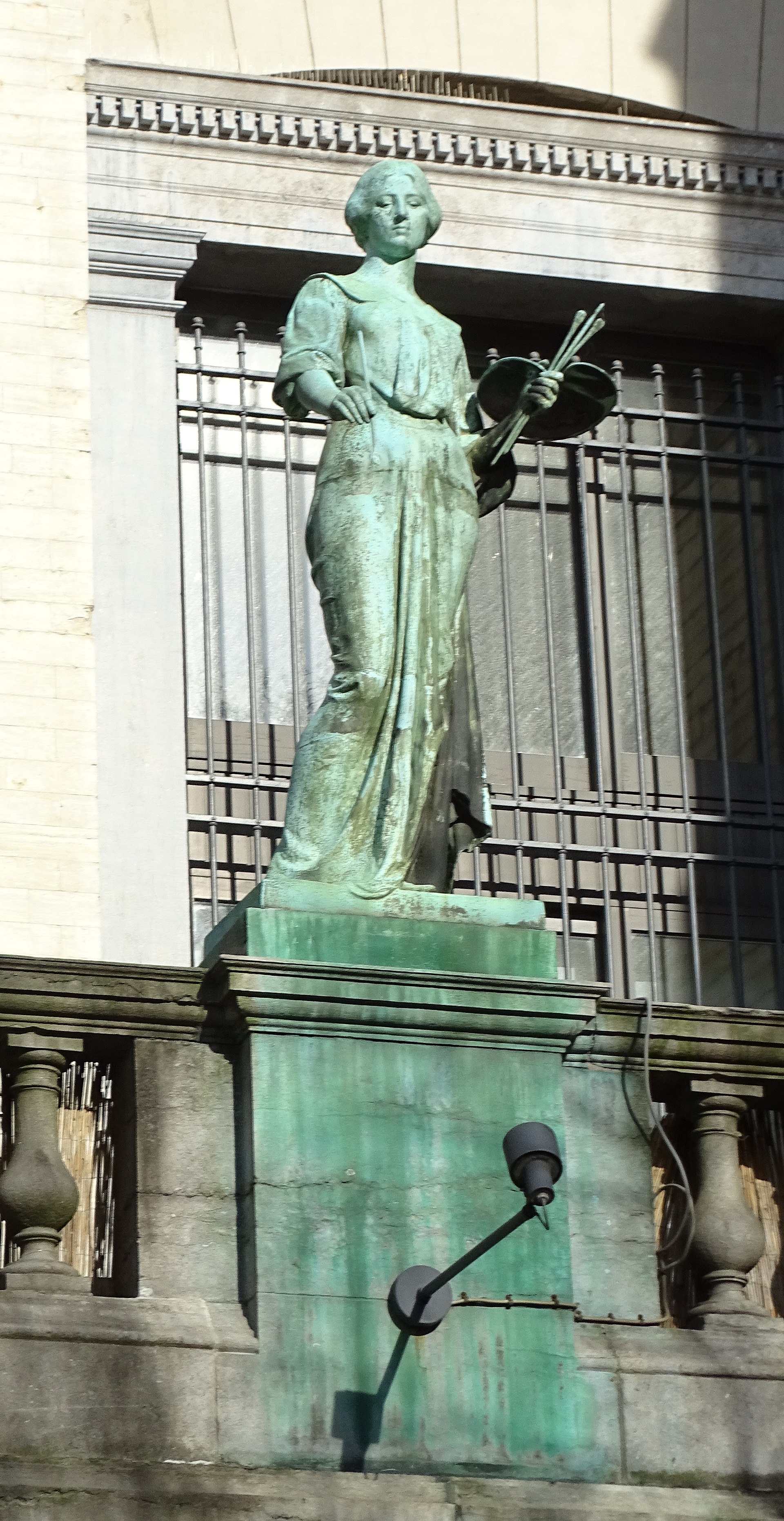

Overview
The Royal Museums of Fine Arts of Belgium (Musees royaux des Beaux-Arts / Koninklijke Musea voor Schone Kunsten) constitute one of Europe's most comprehensive art complexes, housing six interconnected museums on a hillside overlooking Brussels. The collection spans from the Flemish Primitives of the 15th century through Bruegel's peasant scenes and Rubens' Baroque drama to modern Belgian art and the world's largest Magritte collection. What distinguishes this institution is its commitment to Belgian and Flemish art specifically — its holdings of Bruegel paintings rival Vienna's, and its collections of Belgian modernists (James Ensor, Leon Spilliaert, Paul Delvaux) are unmatched globally. The museum complex divides into specialized sections: the Oldmasters Museum descends through underground galleries exhibiting Flemish Primitives, Bruegel, Rubens, and Jordaens; the Magritte Museum dedicates 200+ works across five floors to the surrealist who made bowler hats and floating apples synonymous with visual philosophy; the Fin-de-Siecle Museum captures the 1880s-1910s explosion of Art Nouveau, Symbolism, and early modernism; the Modern Museum covers post-1945 Belgian art; the Wiertz Museum showcases Antoine Wiertz's melodramatic 19th-century works in his former studio; and the Meunier Museum honors Constantin Meunier's sculptures of industrial workers. A knowledgeable guide transforms a potential four-hour marathon into a coherent narrative, prioritizing masterpieces and explaining how Belgian art evolved distinct characteristics despite its proximity to France, Netherlands, and Germany.
Collections Highlights
Pieter Bruegel the Elder: "The Fall of Icarus" and "The Census at Bethlehem" — peasant scenes where biblical or mythological drama unfolds almost unnoticed amid ordinary life. The Icarus barely visible in the corner while plowmen continue working is a meditation on indifference. Peter Paul Rubens: Multiple masterpieces including "The Martyrdom of St. Livinus" — Baroque drama with muscular figures, dynamic composition, and theatrical lighting. Rene Magritte: The dedicated museum traces his evolution from early experiments to iconic paintings like "The Treachery of Images" ("Ceci n'est pas une pipe"). James Ensor: "Christ's Entry into Brussels in 1889" — a massive satirical painting with grotesque masked figures that shocked contemporaries. Ensor's macabre carnival aesthetic influenced Expressionism. Paul Delvaux: Surrealist works featuring somnambulant nudes, classical architecture, and Belgian train stations — dreamlike tableaux that feel simultaneously erotic and cold. Constantin Meunier sculptures: Monuments to industrial workers — dock workers, coal miners, puddleurs — rendered with dignity and monumental scale usually reserved for heroes and gods.
Guided Tours
Specialist guides at the Royal Museums navigate the complex's six interconnected institutions, crafting itineraries that match visitor interests — from concentrated Bruegel-and-Rubens Oldmasters tours to comprehensive surveys connecting Flemish Primitives through Symbolism to Surrealism. Art historians decode Bruegel's hidden social commentary (why is Icarus drowning unnoticed while peasants plow?), explain how Rubens' workshop system produced hundreds of paintings, and trace the philosophical evolution from Ensor's masked grotesques to Magritte's painted paradoxes. Combining the Royal Museums with Grand Place and Manneken Pis creates a full-day circuit through Brussels' cultural and architectural highlights, descending from the Coudenberg hilltop museums to the medieval city center below.
When to Visit
Tuesday-Friday: 10 AM - 5 PM. Saturday-Sunday: 11 AM - 6 PM. Closed: Mondays and some public holidays (Jan 1, May 1, Nov 1, Dec 25). Best: Tuesday-Thursday mornings (10-11 AM) or late afternoons (3-5 PM) when school groups and tour buses are absent. Duration: Minimum 3 hours for highlights; full day for comprehensive visit.
Admission and Costs
Combined ticket (all museums): €15 adults, €13 seniors, free under 18. Magritte Museum only: €10 adults. First Wednesday afternoon: Free entry 13:00-17:00 (extremely crowded). Guided museum tour: €60-90 for 2-hour specialist tour (on top of entry). Audio guide: €4 (worthwhile for Magritte Museum).
Tips for Visitors
Prioritize: If time is limited, focus on Oldmasters (Bruegel, Rubens) and Magritte Museum. The Fin-de-Siecle deserves a full afternoon if Art Nouveau interests you. Free afternoon crowds: The first Wednesday free entry attracts massive crowds. Pay €15 for a quieter experience another day. Magritte fatigue: 200+ Magrittes across five floors can overwhelm. Break it into two visits or focus on floors 3-4 (his mature work). Underground navigation: The Oldmasters galleries descend eight floors underground with no windows. It's architecturally impressive but potentially claustrophobic. Combine with nearby sites: The museums sit at the base of the Coudenberg hill. Walk up to Place Royale, see the Palais Royal exterior, and continue to Grand Place (10 minutes downhill). Cafe options: The museum cafe is adequate but uninspired. Better to exit and lunch at the nearby Sablon district (5-minute walk) with superior brasseries. Photography: Allowed without flash in permanent collections. Temporary exhibitions may prohibit photos.