
Visitor Etiquette
This is a working Catholic shrine. Dress respectfully, silence your phone, and keep conversation quiet in both chapels. During services, the chapel in use is reserved for those attending. Follow the steward’s directions during veneration, let each person approach at their own pace, and ask before taking photographs. Procession participants are members of a living religious and civic tradition; keep the route clear and respect the ceremony.
Spiritual Significance
Local tradition associates the relic with Thierry of Alsace returning from the Second Crusade in 1150; present that as a devotional tradition rather than scientifically established provenance. The shrine’s importance lies in the worship, pilgrimage, and civic customs that developed around it.
The official procession history records a surviving reference from 1291 and explains that the calendar changed over time. The modern Ascension Day event, recognized by UNESCO in 2009, continues that shared expression of faith. The treasury’s 1617 reliquary helps explain how the small relic is carried through the city as a focus of communal devotion.
Basilica of the Holy Blood timeline
- 1134–1149
Lower St. Basil's Chapel built
The Romanesque lower chapel is raised beside the residence of the Counts of Flanders and survives today as one of the best-preserved 12th-century interiors in Belgium.
-
Relic of the Holy Blood arrives
Thierry of Alsace, Count of Flanders, is traditionally said to bring the vial of cloth stained with Christ's blood to Bruges on his return from the Second Crusade.
-
Earliest surviving procession reference
A guild charter records participation in the procession. This documents an existing tradition, not a known first event; its present Ascension Day schedule came later.
- 1480–1534
Gothic upper chapel rebuilt
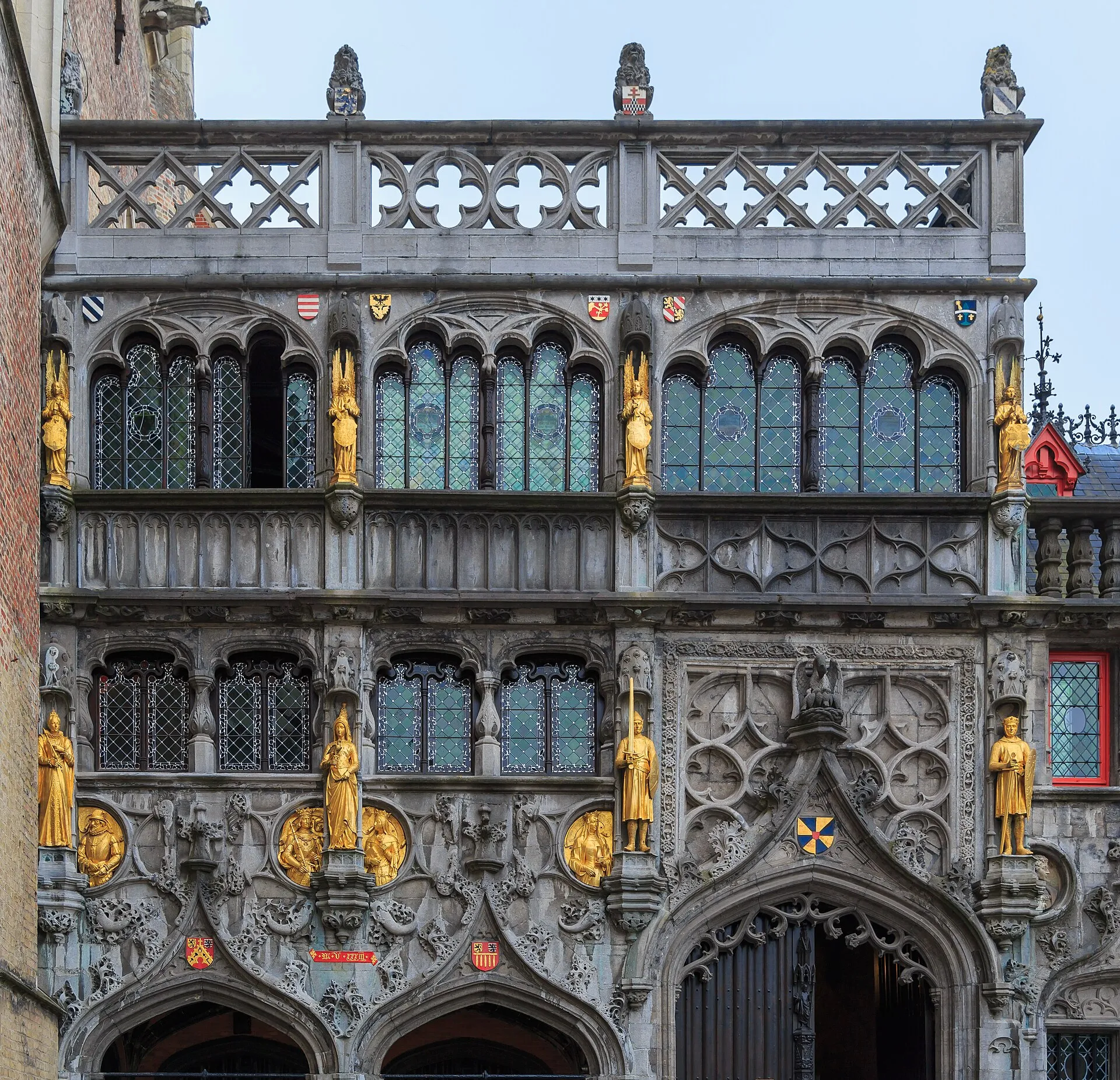
The fire-damaged upper chapel is reconstructed in late-Gothic style to shelter the relic above the older Romanesque sanctuary.
-
Processional reliquary crafted
A two-tier silver-and-gold shrine is made to carry the vial through the city; it is the star object of the attached treasury museum.
- 1850s
Neo-Gothic restoration
Victorian-era restorers add stained glass, wall frescoes, and gilding to the upper chapel, giving it today's jewel-box appearance.
-
UNESCO Intangible Cultural Heritage
The Procession of the Holy Blood is inscribed on UNESCO's Representative List of the Intangible Cultural Heritage of Humanity.
When to Visit
Open daily: 10 AM–5:15 PM, according to the basilica’s official schedule. There is no advertised daily midday closure. A chapel holding a service is reserved for participants during that service.
Relic veneration: daily 2–4 PM, plus Friday 10:15–11 AM. Check for special services before travelling. The next Ascension Day procession is scheduled for 6 May 2027; use the organiser’s programme for event arrangements.
Admission and Costs
Basilica admission is free. The museum and treasury charge €5 (about $6); children under 12 enter free. The museum ticket covers the treasury collection, including the processional shrine, rather than access to the relic itself. These are the prices published by the basilica.
A guided city walk is a separate purchase. Before booking, check whether the basilica is an interior stop or only discussed from the Burg, whether the treasury ticket is included, and how worship schedules affect entry. Obtain a current quote for a private guide instead of assuming a church ticket includes one.
The Case for a Guide
The basilica is tiny, mostly free, and thinly explained — the museum labels are largely in Dutch and the chapels carry almost no interpretation — so context is precisely what a guide supplies, turning two small rooms and a sealed vial into a legible chapter of Crusade-era history and Flemish civic religion.
- Reading the two chapels as one timeline: A guide walks you from the compressive Romanesque mass of the 1134–1149 lower chapel to the 1480–1534 Gothic room above, explaining what the 1850s neo-Gothic overpaint added and obscured — the single staircase is a lesson in four centuries of church design that the building never signposts.
- Decoding relic veneration: The scheduled veneration can be unfamiliar to visitors; a guide explains the medieval economy of pilgrimage, why authenticity mattered less than continuous devotion, and how the relic associated with the Count of Flanders in local tradition became the spiritual anchor of a trading city.
- Framing the Procession: The Procession of the Holy Blood is Bruges' living link to 1291, and a guide clarifies which parts are medieval survival and which are 19th-century revival — indispensable if you time your visit to Ascension Day.
- Placing it on the Burg: The basilica shares the square with the Gothic City Hall and the old registry; a guide reads the Burg as an ensemble of civic and religious power a short walk from the Markt and Belfry, so the corner porch stops feeling like an afterthought.
- Building the wider circuit: The most efficient half-day pairs the basilica with the Groeninge Museum's Flemish Primitives and a canal boat tour; a guide sequences the three so you beat the day-tripper crush that fills the center between 10:00 and 16:00.
Tips for Visitors
Start downstairs. The compact lower chapel rewards a pause before you climb to the more richly decorated upper room. If a service is underway, return later for sightseeing rather than moving through worshippers.
Choose the treasury for its objects. The chapels are free, so the paid museum is an optional addition for visitors interested in reliquaries and the procession. Combine the Burg with the Markt and Belfry, then continue to the Groeninge Museum or a canal cruise.
Check procession arrangements separately. Ascension Day changes date each year and event crowds alter a normal city walk. Check the published route and any reserved seating before choosing where to watch. Follow posted photography rules and avoid taking pictures of people at prayer without permission.
Frequently Asked Questions
When is the most meaningful time of year to visit the Basilica of the Holy Blood?
Ascension Day is the annual procession date, but it moves with Easter rather than always falling in late May. The next procession is scheduled for 6 May 2027. The tradition has medieval roots and received UNESCO recognition in 2009; outside procession day, a quieter weekday visit lets you compare the two chapels without the event crowds.
What days is Basilica of the Holy Blood open to non-worshippers?
The basilica advertises daily opening from 10 AM to 5:15 PM. During services, the chapel in use is reserved for worshippers. Veneration is normally daily from 2 to 4 PM, with an additional Friday session from 10:15 to 11 AM. Check the official visitor information for exceptions.
Does visiting Basilica of the Holy Blood require a paid ticket?
Entry to the basilica is free. The museum and treasury cost €5 (about $6), with free entry for children under 12; this is separate from the chapels. The treasury is most useful if you want to see the elaborate processional reliquary rather than simply visit the shrine.
What should visitors know before visiting Basilica of the Holy Blood?
Allow time for both levels: the lower St. Basil’s Chapel has a restrained Romanesque interior, while the upper chapel houses the relic. Keep voices low, give worshippers space, and follow staff instructions during services or veneration. The Burg square and nearby Markt make an easy walking circuit.