
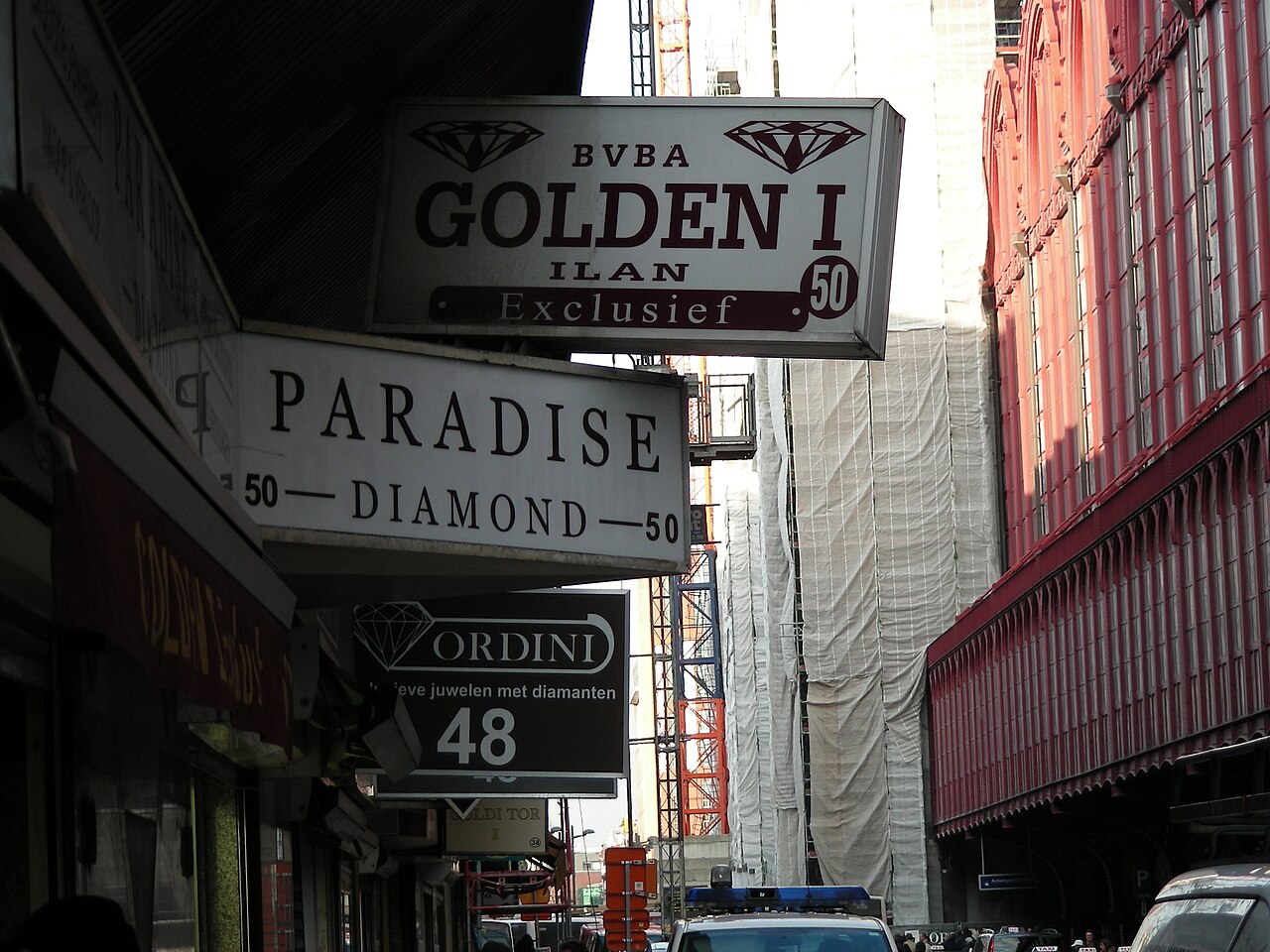

Overview
The Diamond District occupies a compact rectangle centered on Pelikaanstraat and extending roughly four blocks around Antwerp's Central Station, geographically unremarkable except for extraordinary economic activity concentrated within its boundaries. Approximately 1,500 diamond companies operate here, employing 8,000 people who handle €54 billion in annual transactions — 84% of the world's rough diamonds and 50% of polished stones pass through these streets at some point in their journey from mine to retail counter. The district evolved gradually across five centuries, beginning when Bruges' diamond trade migrated to Antwerp in the early 16th century after Bruges' port silted up and Antwerp emerged as the Low Countries' commercial hub. Jewish merchants expelled from Spain and Portugal in the 1490s established cutting workshops, their expertise combining with Flemish metalworking traditions to create concentrated diamond craftsmanship that persisted through wars, occupations, and economic disruptions. Walking through the district reveals few obvious signs of its economic importance. Building facades appear ordinary — late 19th and early 20th-century architecture housing ground-floor shops and upper-story offices. Security is omnipresent but deliberately low-profile: cameras monitor every entrance, buzzers control access to building interiors, and plainclothes security staff circulate among the cafes and shops. The diamond bourses (trading exchanges) occupy nondescript buildings with minimal signage, their lobbies guarded but their operations invisible to tourists walking past. Hasidic Jewish men in traditional black coats and wide-brimmed hats constitute the most visible marker of the district's identity — approximately 80% of diamond traders are Orthodox Jews, maintaining commercial networks established centuries ago and conducting business according to religious principles that emphasize trust, personal reputation, and verbal agreements sealed with "mazel und bracha" (luck and blessing in Yiddish). Four diamond bourses operate within the district, each functioning as private members-only trading floor where dealers examine stones under standardized lighting, negotiate prices, and complete transactions worth millions of euros based on handshakes. The Antwerp Diamond Bourse (founded 1893), the Diamondclub (1929), the Beurs voor Diamanthandel (1904), and the Vrije Diamanthandel (1973) together maintain approximately 2,500 member firms. Access is restricted to credentialed dealers — tourists cannot enter trading floors or observe actual commerce, frustrating visitors who expect to witness diamonds changing hands. This opacity reflects industry necessity: diamond trading depends on absolute trust, insider knowledge, and confidential pricing information that public exposure would compromise. The bourses exist to facilitate and regulate trade among trusted parties, not to provide spectacle for outsiders. Retail shops selling finished jewelry line Schupstraat and Pelikaanstraat, offering tourist-facing experiences that contrast sharply with wholesale operations occurring in floors above. These retailers target international visitors with polished showrooms, multilingual sales staff, and gemological certificates verifying stone quality according to internationally recognized standards (the "Four Cs": carat weight, cut, color, clarity). Prices are generally competitive with other diamond retail centers because proximity to wholesale markets reduces intermediary markups, though vigorous comparison shopping remains essential — diamond pricing opacity means that identical stones can sell at significantly different prices across shops separated by 50 meters. Some retailers offer free cutting demonstrations or brief factory tours, primarily as sales tools but providing genuine glimpses of craftsmanship processes that remain fundamentally unchanged since the 16th century. The DIVA museum (Diamant- en Silvermuseum, opened 2018 in a renovated 1930s building at Suikerrui 17) provides the district's most accessible cultural interpretation. Permanent exhibitions explore diamond geology, mining operations, cutting techniques, and Antwerp's historical dominance in the trade. Interactive displays explain how crystal structure determines cutting possibilities, why certain facet arrangements maximize brilliance, and how technological advances (laser cutting, computer modeling) have transformed traditional crafts. The collection includes historical jewelry, uncut rough stones, antique cutting tools, and documenting photographs showing workshops from different eras. Temporary exhibitions examine broader themes connecting diamonds to power, wealth display, and cultural symbolism — past shows have covered engagement ring traditions, blood diamond conflicts, and synthetic diamond development. Admission costs €12 (€8 students/seniors) and includes audio guides in six languages, making DIVA the best introduction to understanding why Antwerp became and remains central to global diamond commerce. The district's Jewish heritage remains inseparable from its diamond identity. Sephardic Jews arrived from Spain and Portugal in the 1490s-1500s, Ashkenazi Jews from Eastern Europe in the late 19th century, and Holocaust survivors reestablished businesses after 1945 despite Antwerp's Jewish community losing 60% of its pre-war population to Nazi genocide. Contemporary Orthodox families maintain unbroken business lineages spanning multiple generations, sons apprenticing with fathers in cutting workshops, daughters managing administrative operations, family networks spanning Antwerp, Tel Aviv, New York, and Mumbai. This cultural continuity creates business practices that seem archaic to outsiders — verbal contracts honored across decades, disputes resolved through rabbinical mediation rather than courts, transactions conducted in Yiddish among multilingual dealers who switch languages mid-sentence depending on their interlocutor. Several shops offer cutting demonstrations that provide authentic glimpses of skilled labor transforming rough stones into polished gems. Demonstrations typically show later finishing stages (polishing, faceting) rather than initial cleaving that risks shattering valuable rough stones — understandably, shops don't demonstrate techniques where single errors destroy tens of thousands of euros. A skilled cutter working at a traditional scaife (horizontal polishing wheel) achieves precision measured in microns, creating mirror-smooth facets aligned to crystallographic axes that maximize light refraction. Modern workshops employ laser cutting and computer modeling for complex shapes, but final polishing still requires hand skills developed through years of apprenticeship. Watching a cutter work for 10-15 minutes communicates the meditative concentration and tactile sensitivity that distinguish master craftspeople from competent technicians.
Walking Routes
Four diamond bourses: Private trading floors where 84% of world's rough diamonds change hands — members-only access but architecturally interesting exteriors. DIVA museum: €12 admission covering diamond geology, cutting techniques, and Antwerp's trade dominance — best introduction to understanding the district's global importance. Cutting demonstrations: Free workshops showing master cutters polishing facets to micron precision on traditional scaifes — 10-15 minute demonstrations revealing centuries-old craft. Jewish heritage: Hasidic dealers in traditional dress conducting business in Yiddish — visible continuity with centuries of Jewish diamond expertise. Retail shops on Schupstraat and Pelikaanstraat: Direct access to wholesale markets means competitive pricing compared to other cities — extensive comparison shopping essential for significant purchases. Trader cafes: Hoffy's and other local cafes where dealers conduct informal meetings — observing (not eavesdropping) reveals business culture of personal relationships and verbal agreements.
Local Life
The Diamond District pulses with a rhythm dictated by the Jewish calendar and the global diamond market rather than typical tourist schedules. On weekday mornings, Hasidic traders in black hats stride between bourses carrying leather satchels, pausing at Hoffy's kosher bakery on Lange Herentalsestraat for coffee and rugelach before the trading floors open. The neighborhood's kosher restaurants — including Hoffy's, Kleinblatt, and the bakeries along Pelikaanstraat — serve the community rather than tourists, offering challah, knishes, and traditional Ashkenazi fare. Friday afternoons transform the district as businesses close early for Shabbat: shop shutters roll down, the streets empty of traders, and families walk to synagogues in their finest clothes. The Romi Goldmuntz Synagogue on Hoveniersstraat anchors the community's religious life. Indian traders from Surat and Mumbai have established a growing presence since the 1980s, their offices alongside traditional Jewish firms, adding Hindi and Gujarati to the district's multilingual commercial chorus.
When to Visit
District hours: Monday-Friday 9:00 AM - 6:00 PM, Saturday 9:00 AM - 5:00 PM — most shops closed Sundays and Jewish holidays. DIVA museum: Tuesday-Sunday 10:00 AM - 6:00 PM, closed Mondays. Best for atmosphere: Tuesday-Thursday mornings (10:00-12:00 PM) when dealers actively circulate between bourses and cafes. Cutting demonstrations: Typically scheduled 11:00 AM and 2:00 PM — call shops ahead to confirm timing. Avoid: Saturday afternoons when many businesses close early for Shabbat preparation (starts sunset Friday, observed strictly in Orthodox community). Jewish holidays: District essentially closes during major Jewish holidays (Rosh Hashanah, Yom Kippur, Pesach, Sukkot) — check calendar before visiting September-October when holidays concentrate.
Admission and Costs
Walking the district: Free — public streets accessible to all, window shopping costs nothing. DIVA museum: €12 adults, €8 students/seniors (65+), free for children under 12. Cutting demonstrations: Free at shops offering them (functions as sales tool, no obligation to purchase). Guided walking tours: €30-40 per person for 90-minute tours explaining district history and diamond trade mechanics. Private specialist guide: €250-350 for 2-3 hour tour including DIVA museum, cutting demonstration, and Jewish heritage context. Purchasing diamonds: Prices vary enormously based on quality — competent independent appraisal recommended before significant purchases.
Tips for Visitors
Manage expectations: You cannot enter diamond bourses or observe actual wholesale trading — the district's economic heart remains deliberately opaque to outsiders. Visit to understand cultural context and see retail/cutting operations, not to witness million-euro transactions. DIVA museum first: Start with the museum (€12, 90 minutes) to understand geological, technical, and historical context before walking the district. Without this background, the streets appear unremarkable. Cutting demonstrations: Call shops ahead to confirm demonstration schedules — many advertise "free cutting shows" but actually run them only by appointment or when sufficient visitors gather. Purchasing diamonds: If considering significant purchases, hire an independent gemologist (€150-200) to verify stone quality and price fairness. The district's competitive pricing advantages exist but require knowledge to access — naive tourists overpay just like anywhere else. Cultural sensitivity: The Orthodox Jewish community maintains this district — respect religious practices (no photography of individuals without permission, modest dress appreciated, awareness of Shabbat closures). Combine with Cathedral of Our Lady: The 600-meter walk (8 minutes) connects diamond wealth to religious art patronage — Rubens' altarpieces were commissioned by merchants whose fortunes derived from trade in gems, spices, and colonial goods. Security awareness: The district maintains heavy but discreet security. Don't photograph building entrances, bourse exteriors, or security personnel — guards will politely but firmly ask you to delete images. Language: Dealers speak Dutch, French, English, Hebrew, and Yiddish fluently — retail shop staff are exceptionally multilingual to serve international clientele from China, India, Russia, and Arab states.