
.jpg)
Overview
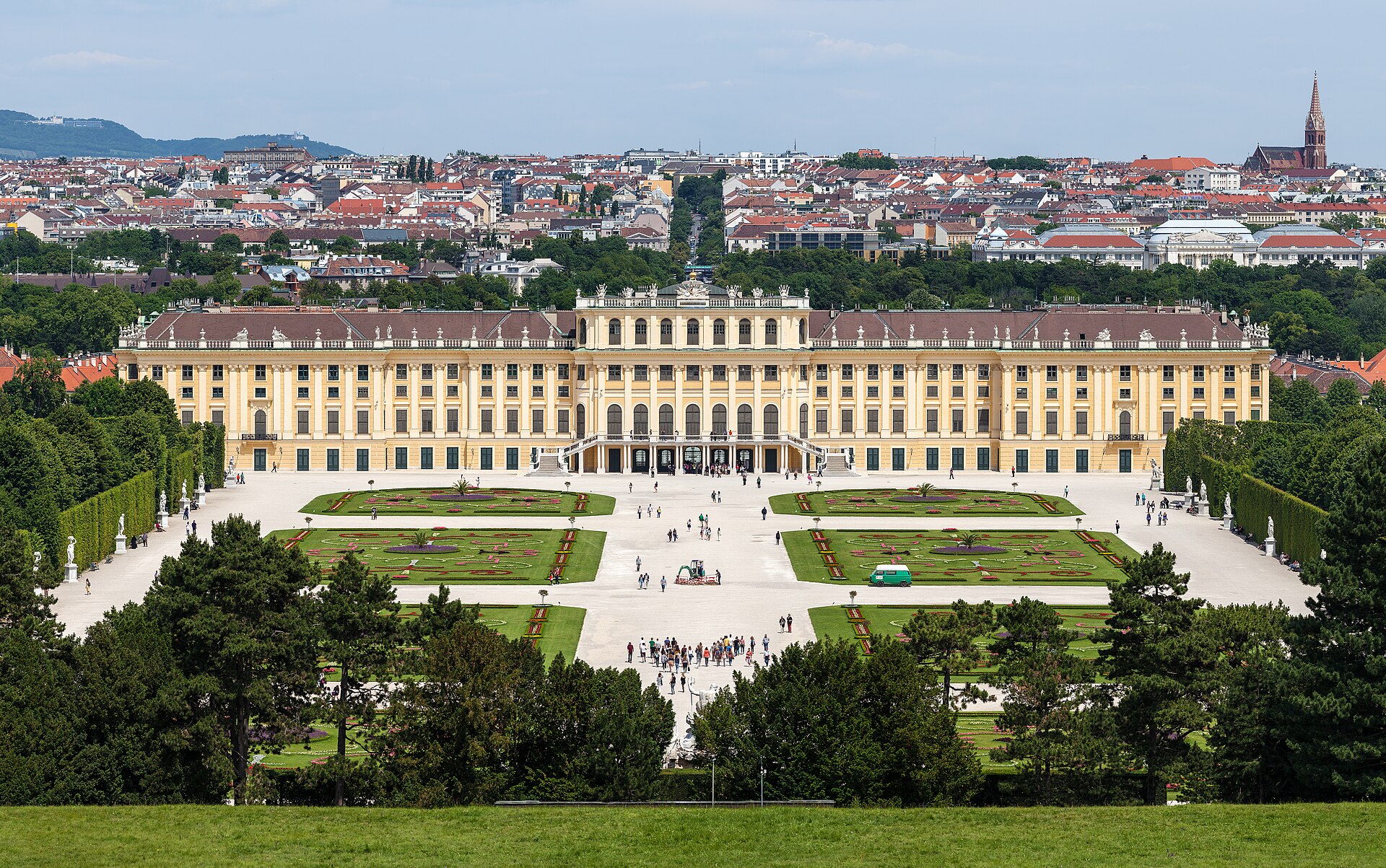
Schönbrunn Palace served as the principal summer residence of the Habsburg dynasty from the mid-18th century until the fall of the empire in 1918. Empress Maria Theresa transformed the palace into its current rococo form during the 1740s-1750s, and it was here that the six-year-old Mozart performed for her in 1762. With 1,441 rooms spread across a complex rivaling Versailles, plus 1.2 kilometers of formal gardens, a palm house, the world's oldest zoo (Tiergarten, founded 1752), and the Gloriette hilltop pavilion, Schönbrunn is Vienna's most-visited attraction. Combined with Hofburg Palace and Belvedere Palace, it completes the trio of imperial residences that define the city.
Architecture
Große Galerie (Great Gallery): 40-meter-long hall of mirrors and frescoes where state banquets were held — Vienna's answer to Versailles' Hall of Mirrors. Spiegelzimmer (Mirror Room): Where the six-year-old Mozart performed for Empress Maria Theresa in 1762. Millionenzimmer (Millions Room): Indo-Persian rosewood miniatures inlaid under glass — priceless and unique in European palace design. Gloriette: Neoclassical hilltop colonnade with sweeping views over the palace, gardens, and Vienna's skyline. Kronprinzengarten (Privy Garden): Symmetrical rose garden flanking the palace — quieter than the main parterre. Tiergarten: The world's oldest zoo, continuously operating since 1752. Palmenhaus: One of the largest glass structures in Europe, housing tropical and desert ecosystems.
Historical Significance
Habsburg dynasty decoded: Guides untangle the family tree from Maria Theresa through Franz Joseph and Empress Sisi. Room-by-room stories: Discover why the Millionenzimmer is paneled with Indo-Persian miniatures and how Napoleon slept here twice — in 1805 and 1809 — using the palace as his headquarters during the occupation of Vienna. The Große Galerie hosted the Congress of Vienna in 1814-1815, where Europe's borders were redrawn after Napoleon's defeat. Emperor Franz Joseph was born here in 1830, ruled from here for 68 years, and died in these rooms in 1916, just two years before the empire's dissolution. Garden secrets: The Neptune Fountain, Roman Ruins folly, and privy garden areas that most visitors walk past all carry layers of Habsburg symbolism a guide reveals.
When to Visit
Palace open: Daily 8:30 AM-5:30 PM (extended to 6:30 PM in summer). Gardens: Open 6:30 AM until dusk, free entry. Best time: Arrive at 8:30 AM opening — tour buses begin around 10 AM. Evening option: Summer evening concerts in the Orangerie offer a different Schönbrunn experience. Duration: Imperial Tour (22 rooms) takes 30-40 minutes; Grand Tour (40 rooms) takes 50-60 minutes.
Admission and Costs
Imperial Tour (22 rooms): €22 adults, €17 ages 6-18. Grand Tour (40 rooms): €29 adults, €21 ages 6-18. Sisi Ticket (Schönbrunn + Hofburg + Imperial Furniture): €44. Gardens and Gloriette terrace: Free (Gloriette interior €4.50). Zoo entry: €26 adults, €13 children. Private guide: €200-350 for a 2-3 hour palace and grounds tour.
Tips for Visitors
Book timed entry online: Summer queues can reach 60-90 minutes without a reservation. Audio guide included: Palace admission comes with an audio guide, but a live guide adds far richer context. No photography inside: Interior photography is prohibited in all state rooms. U4 Schönbrunn station: Direct metro access from central Vienna in 12 minutes. Half-day minimum: Palace tour plus gardens, Gloriette, and zoo easily fills 4-5 hours. Café Residenz: On-site restaurant serves Sachertorte and apple Strudel in the former riding school. Christmas and Easter markets: Seasonal markets in the courtyard draw huge but festive crowds.