

Overview
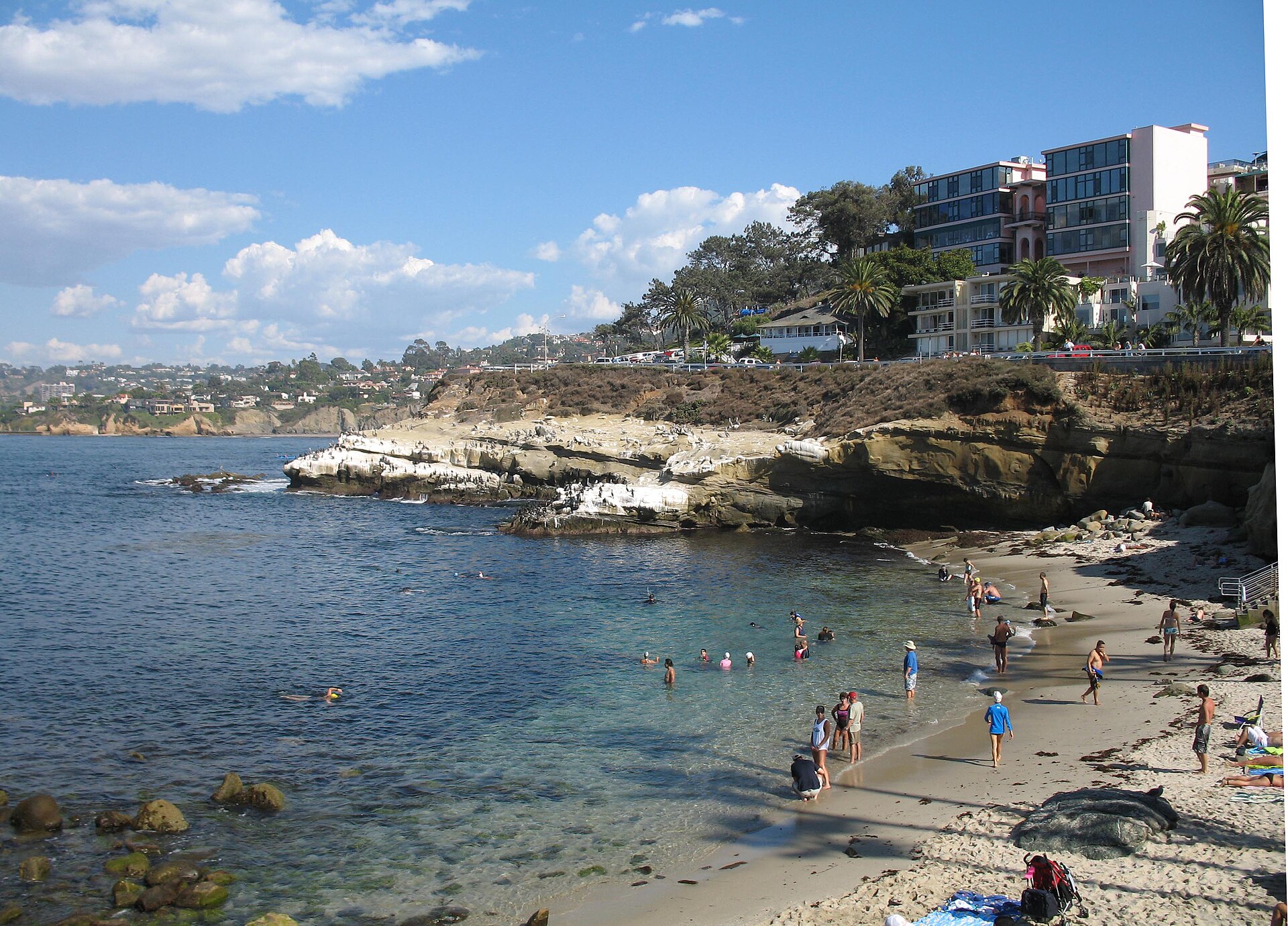
Tucked beneath the sandstone cliffs of La Jolla, this small crescent beach sits within the San Diego-La Jolla Underwater Park Ecological Reserve, a protected marine sanctuary where fishing and collecting are prohibited. The result is some of the clearest water and richest marine life on the Southern California coast. Bright-orange garibaldi fish, leopard sharks, and swaying kelp forests draw snorkelers and scuba divers, while sea lions haul out on the rocky ledges in noisy colonies. Just north, the sea caves carved into the bluffs are accessible by kayak or through the hand-dug tunnel of the historic Sunny Jim Cave. A guide familiar with tide charts and seasonal currents can turn a simple beach visit into an immersive encounter with the Pacific's underwater world. Plan a combined day with nearby Coronado Island or head downtown to the Gaslamp Quarter, all part of the broader San Diego and United States guide.
Wildlife
Sea lion rookery: Hundreds of California sea lions and harbor seals rest on the rocks at the south end of the cove, close enough to photograph with a phone. Pupping season (January-March) at Children's Pool is especially compelling. Garibaldi: California's bright-orange state marine fish is abundant in the protected waters.
Leopard sharks: Gentle bottom-dwellers that gather in the shallow warm waters from June through September, often visible to snorkelers. Kelp forests: Giant Macrocystis kelp creates underwater cathedrals swaying in the current, home to nudibranchs, bat rays, and sheephead fish. Tide pool creatures: Low tide reveals hermit crabs, anemones, sea urchins, and sea hares camouflaged against purple algae.
Trails
Check tide charts before visiting: Low tide exposes the best tide pools and makes beach access easiest; minus tides are ideal for exploring. Arrive early for parking: The small lot on Coast Boulevard fills by 9 AM on weekends; street parking extends several blocks uphill into the village. Water shoes recommended: The rocky entry into the water is slippery with algae; reef-safe water shoes protect your feet and improve footing. Respect the marine reserve: Taking shells, rocks, or any marine life is prohibited and carries fines; look but do not touch living creatures. Smell warning: During sea lion pupping season (January-March), the rocks near Children's Pool carry a strong odor; upwind positions help. Combine with La Jolla village: Walk up Prospect Street for restaurants, the Museum of Contemporary Art, and ocean-view dining patios overlooking the cove
When to Visit
Beach access: Open 24 hours, no admission fee. Best snorkeling: Summer and early fall when water visibility reaches 20-30 feet and temperatures hit 68-72 degrees. Tide pools: Visit at low tide, check tide charts the day before; minus tides expose the most creatures. Kayak tours: Morning departures (8-10 AM) offer calmest seas and best chance of seeing marine life in the caves. Seal and sea lion watching: Year-round, but pupping season (January-March) at Children's Pool is especially compelling
Admission and Costs
Beach and cove access: Free -- no fee to swim, snorkel, or explore tide pools. Kayak tour (guided, 90 minutes): $39-65 per person, includes equipment and sea cave paddle. Snorkel gear rental: $15-25 for mask, snorkel, fins, and wetsuit top.
Scuba dive with guide: $95-150 per person for a two-tank shore dive with a certified divemaster. Sunny Jim Cave entry: $10 adults, $6 children, accessed through the Cave Store on Coast Boulevard. Private naturalist walk: $200-350 for up to 6 people, covering tide pools, geology, and marine ecology. in the current. Tide pools at Shell Beach: Low-tide visits uncover sea stars, hermit crabs, anemones, and tiny sculpins in shallow rock basins. Sunset from Ellen Browning Scripps Park: The grassy clifftop park above the cove offers unobstructed views of the sun setting over the Pacific. La Jolla Cove Swim Club: Open-water swimmers gather daily for ocean swims alongside the kelp beds, a tradition spanning decades. Coast Boulevard murals and galleries: The streets above the cove host galleries, boutiques, and outdoor art that reward a post-beach stroll
Tips for Visitors
Beneath the surface at La Jolla Cove, an underwater world teems with life that untrained eyes easily overlook. Naturalist guides point out nudibranchs no larger than a fingernail clinging to rocky outcrops, bat rays gliding silently along sandy channels, and the intricate cleaning stations where small fish groom larger species. Their trained eyes transform what might be a pleasant swim into a genuine wildlife encounter, revealing creatures camouflaged against kelp fronds or hidden within crevices that most snorkelers never notice.
Safety becomes paramount when exploring La Jolla's famous sea caves by kayak. Seven caverns carved by millennia of wave action await paddlers, but entering them requires precise timing and an intimate understanding of swell patterns, surge behaviour, and seasonal conditions. Experienced kayak guides read the ocean instinctively, steering their groups into cathedral-like chambers during calm moments and knowing exactly when to paddle back out. They also understand rip currents and undertows that can catch swimmers off guard, making them invaluable companions for anyone venturing beyond the protected inner cove.
When the tide retreats, a different world emerges in the rocky pools along Shell Beach. Guides crouch beside these miniature ecosystems and reveal hermit crabs exchanging shells, anemones waving tentacles at passing prey, and sea hares camouflaged against purple algae. They also narrate the 75-million-year geological drama written in the sandstone cliffs above, connecting the visible landscape to the submarine canyons that drop thousands of feet just offshore.