

Overview
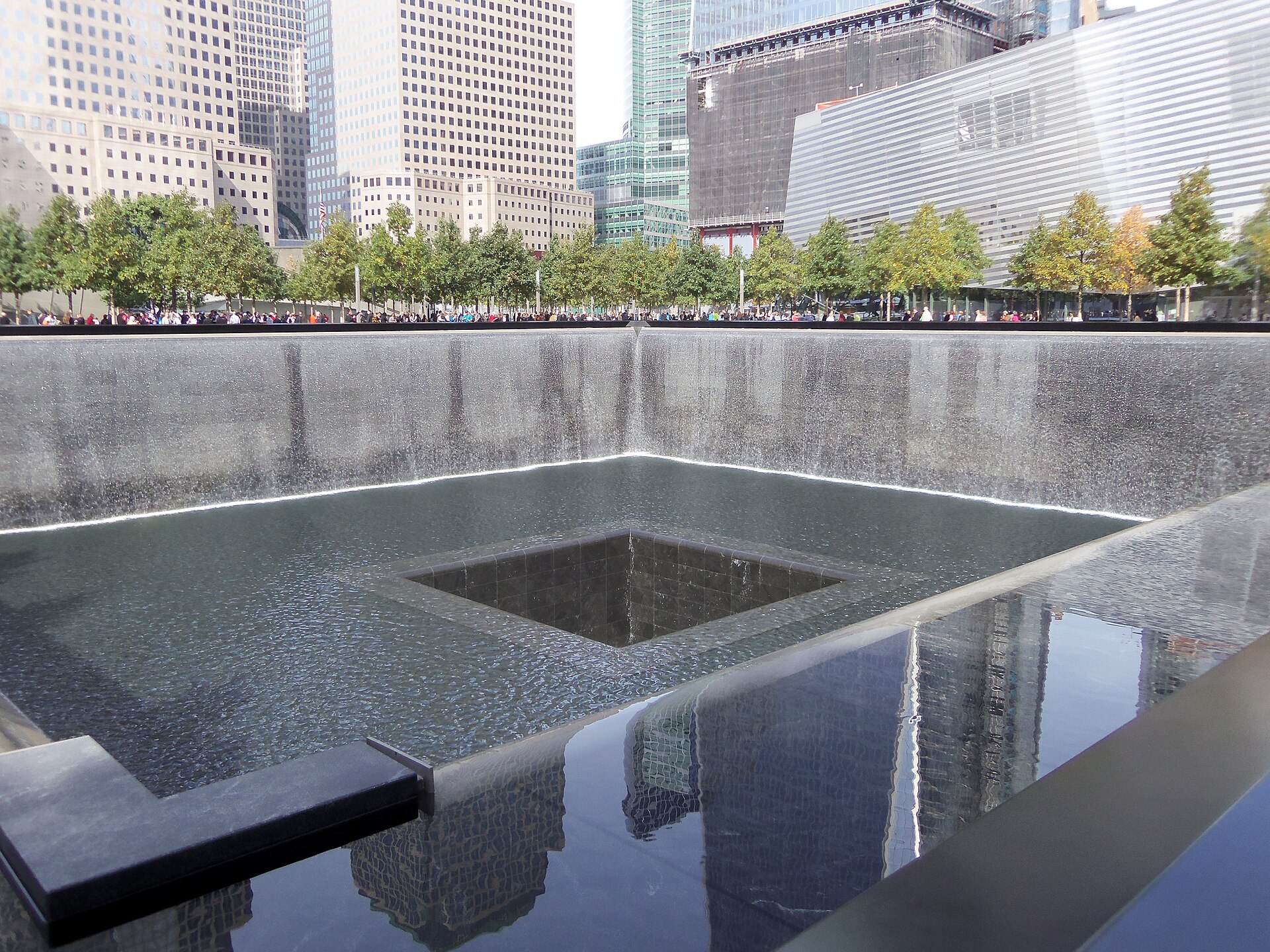
Situated on the eight-acre World Trade Center site in Lower Manhattan, the National September 11 Memorial & Museum stands as the principal tribute to the 2,977 people killed in the terror attacks of September 11, 2001, and the six victims of the 1993 World Trade Center bombing. The outdoor memorial, designed by architect Michael Arad and landscape architect Peter Walker, features two enormous reflecting pools set within the footprints of the original Twin Towers, each nearly an acre in size with the largest man-made waterfalls in North America cascading thirty feet into their voids. Bronze parapets encircling each pool bear the names of every person who perished, arranged not alphabetically but by meaningful adjacency so colleagues, friends, and family members rest side by side for eternity. Below the plaza, the museum descends seventy feet underground to bedrock, where artifacts, oral histories, and exposed slurry wall foundations tell the story of that day and its lasting impact on New York City, the United States, and the world.
Historical Significance
This is not a site that rewards rushing. Experienced guides provide the context and personal narratives that help visitors process an emotionally intense experience with appropriate reverence. They explain why the names on the bronze parapets are arranged by meaningful adjacency rather than alphabetically, so colleagues, friends, and family members rest beside one another. They identify the Survivor Tree, a Callery pear pulled from the rubble and nursed back to health, and describe the years of community debate that shaped every design decision. Inside the museum, seventy feet below the plaza, guides illuminate exhibits that visitors often walk past without understanding their significance. The Last Column, a thirty-six-foot steel beam covered in memorial inscriptions, was the final piece of wreckage ceremonially removed from Ground Zero. The Vesey Street staircase, now preserved behind glass, carried hundreds of survivors to safety. The exposed slurry wall held back the Hudson River during the attacks and stands today as a monument to engineering resilience. Many tours extend beyond the memorial to the One World Observatory above and the Oculus transit hub below, weaving together destruction and rebirth into a complete narrative of Lower Manhattan's transformation.
Architecture
Dress respectfully: While there is no formal dress code, visitors generally wear muted colors and maintain a quiet, contemplative demeanor on the plaza. Allow at least two hours for the museum: The collection is vast and emotionally absorbing; rushing diminishes the experience. Tissue advisory: Even visitors with no personal connection to the events often find themselves moved to tears; the museum provides tissues at several stations. Food options nearby: Brookfield Place food hall is a five-minute walk west; Eataly Downtown is a block north of the memorial. Combine your visit: The One World Observatory sits directly adjacent, and the Brooklyn Bridge walkway entrance is a fifteen-minute walk east along Fulton Street. Subway access: Take the E train to World Trade Center, the 1 to Cortlandt Street, or the R/W to Cortlandt Street for the closest stations
When to Visit
Reflecting pools at dusk: As daylight fades the illuminated waterfalls create a profoundly moving atmosphere unlike any other time of day. The Survivor Tree: A Callery pear tree pulled from the rubble, nursed back to health, and replanted on the plaza as a living symbol of resilience. The Last Column: A 36-foot steel beam covered in memorial inscriptions, the final piece of wreckage ceremonially removed from Ground Zero in May 2002. The retaining wall: The original slurry wall that prevented the Hudson River from flooding the site, now visible in the museum's Foundation Hall. In Memoriam exhibition: Individual profiles and photographs of every victim, a deeply personal tribute that takes the scale of loss beyond numbers. The Oculus: Santiago Calatrava's stunning white transit hub adjacent to the memorial, designed to evoke a bird released from a child's hands
Admission and Costs
Memorial plaza: Free to visit, no reservation needed. Museum adult admission: $26. Seniors (65+) and veterans: $20. Youth (7-17): $15. Children 6 and under: Free. Guided museum tour (private): $250-400 for groups of up to 6, typically 2 hours with a licensed NYC guide. Walking tour including memorial
- Lower Manhattan: $35-55 per person for 2.5-3 hours
Tips for Visitors
Memorial plaza: Open daily 9:00 AM – 8:00 PM (free, no ticket required). Museum: Wednesday–Monday, 9:00 AM – 7:00 PM (last entry at 5:30 PM); closed Tuesdays except during peak weeks. Quietest hours: Weekday mornings from opening until 11:00 AM, when school groups typically have not yet arrived. Anniversary week (Sept 7-13): Expect heavy visitation and special ceremonies; plan extra time. Free Tuesday evenings: The museum offers free entry from 5:00 PM to closing on Tuesdays; reserve timed-entry tickets online as they go quickly