

Overview
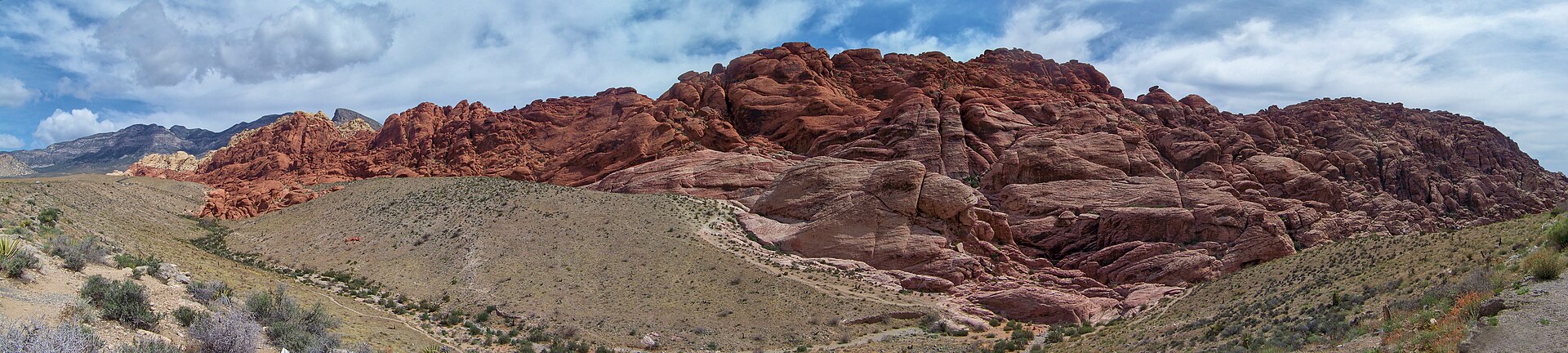
Red Rock Canyon National Conservation Area lies just 17 miles west of The Strip, a startling contrast between the neon of Las Vegas and 195,819 acres of protected desert wilderness. The canyon's signature feature is the Calico Hills -- towering formations of crimson and cream Aztec Sandstone that began as sand dunes 180 million years ago during the Jurassic period and gradually petrified into the dramatic rock faces visible today. The geological story spans 600 million years, from ancient seafloors to desert dunes to the tectonic collision of the Keystone Thrust Fault, where older gray limestone was pushed over younger red sandstone in a visible overthrust visible from the scenic loop.
The 13-mile one-way scenic loop drive winds through the conservation area with pullouts and trailheads providing access to hikes ranging from flat desert washes to strenuous canyon scrambles. Ancient peoples left petroglyphs at several sites, and the canyon supports a surprising diversity of wildlife including desert bighorn sheep, wild burros, desert tortoises, and red-tailed hawks. The area is also one of the premier rock climbing destinations in the American Southwest, with over 2,000 established routes on the sandstone and limestone walls.
Wildlife
Desert bighorn sheep: The canyon's most prized wildlife sighting, often visible on the rocky slopes above the scenic loop, particularly near the Calico Hills and along the escarpment in early morning and late afternoon. Wild burros: Descendants of mining-era animals, frequently spotted near road pullouts and trailheads, especially at dawn.
Desert tortoise: A threatened species that emerges from burrows during spring and fall -- never touch or pick up a tortoise, as handling can cause them to void their water reserves and die. Red-tailed hawks and golden eagles: Soar above the canyon walls, particularly visible during spring migration. Gila monsters: Nevada's only venomous lizard inhabits the rocky terrain but is rarely seen due to its nocturnal habits. Canyon wrens: Their distinctive cascading song echoes off cliff faces throughout the conservation area. The desert ecosystem is surprisingly rich once you learn to read the landscape -- guides trained in desert ecology spot tracks, scat, and behavioral signs that most visitors walk past unknowingly.
Trails
Calico Tanks: A 2.5-mile round-trip moderate scramble over sandstone to natural water tanks (tinajas) with views of the Las Vegas skyline from the summit -- the most popular hike in the conservation area. Keystone Thrust Trail: A 2.2-mile round-trip easy hike to the geological contact zone where gray limestone sits atop red sandstone, one of the most visible thrust faults on Earth.
Ice Box Canyon: A 2.6-mile round-trip moderate hike into a narrow slot canyon that stays cool even in warm weather, ending at a seasonal waterfall during spring snowmelt. Pine Creek Canyon: A 3-mile round-trip easy-to-moderate trail through a riparian habitat with ponderosa pines and the ruins of a historic homestead. Turtlehead Peak: A 5-mile round-trip strenuous climb to 6,323 feet with panoramic views of the entire conservation area and the Las Vegas Valley. White Rock-Willow Springs loop: A 4.5-mile moderate loop passing petroglyph panels left by ancestral Puebloan and Southern Paiute peoples, connecting to Lost Creek for a seasonal waterfall.
When to Visit
Scenic loop hours: 6 AM to 7 PM (spring/summer), 6 AM to 5 PM (fall/winter). The visitor centre opens at 8 AM daily. The one-way loop takes approximately 30-45 minutes by car without stops, or 2-4 hours with hiking and photography stops.
Best seasons: October through April when temperatures are comfortable for hiking (50-75 degrees F). Summer caution: Temperatures regularly exceed 110 degrees F from June through August -- if visiting in summer, start at dawn and finish hiking by 10 AM. Timed entry reservations: Required during peak season (October-May) for the scenic loop; book online in advance. Drive time from The Strip: 30-40 minutes via Charleston Boulevard.
Admission and Costs
Vehicle entry fee: $15 per car. Annual pass: $30 (valid for unlimited visits). National parks passes (America the Beautiful): Accepted for entry. Visitor centre: Free with exhibits on geology, wildlife, and cultural history.
Guided hiking tours from Las Vegas: $80-150 per person for half-day excursions including hotel pickup and transportation. Guided scenic driving tour with naturalist commentary: $60-100 per person. Private guide: $200-350 for up to 6 people, with customised routes based on fitness level and interests. Rock climbing guide: $150-300 per person for a half-day introductory session with equipment provided.
Tips for Visitors
Bring at least 1 litre of water per person per hour of hiking -- the desert air dehydrates far faster than most visitors expect. Wear sturdy shoes with ankle support for rocky trails, and carry sun protection including hat, sunscreen, and UV-blocking sunglasses. Cell service is limited throughout the canyon.
Start early: The scenic loop fills with cars by mid-morning on weekends; arriving at 6 AM means emptier trails and cooler temperatures. Calico Hills first: The first major pullout on the scenic loop accesses the most photogenic formations and the most popular short hikes. For a quieter experience, continue to the less-visited western trailheads like Ice Box Canyon or Pine Creek. Combine strategically: A morning at Red Rock pairs well with an afternoon on The Strip or an evening at Fremont Street, providing the natural counterpoint to Las Vegas's built environment.