
.jpg)
Overview
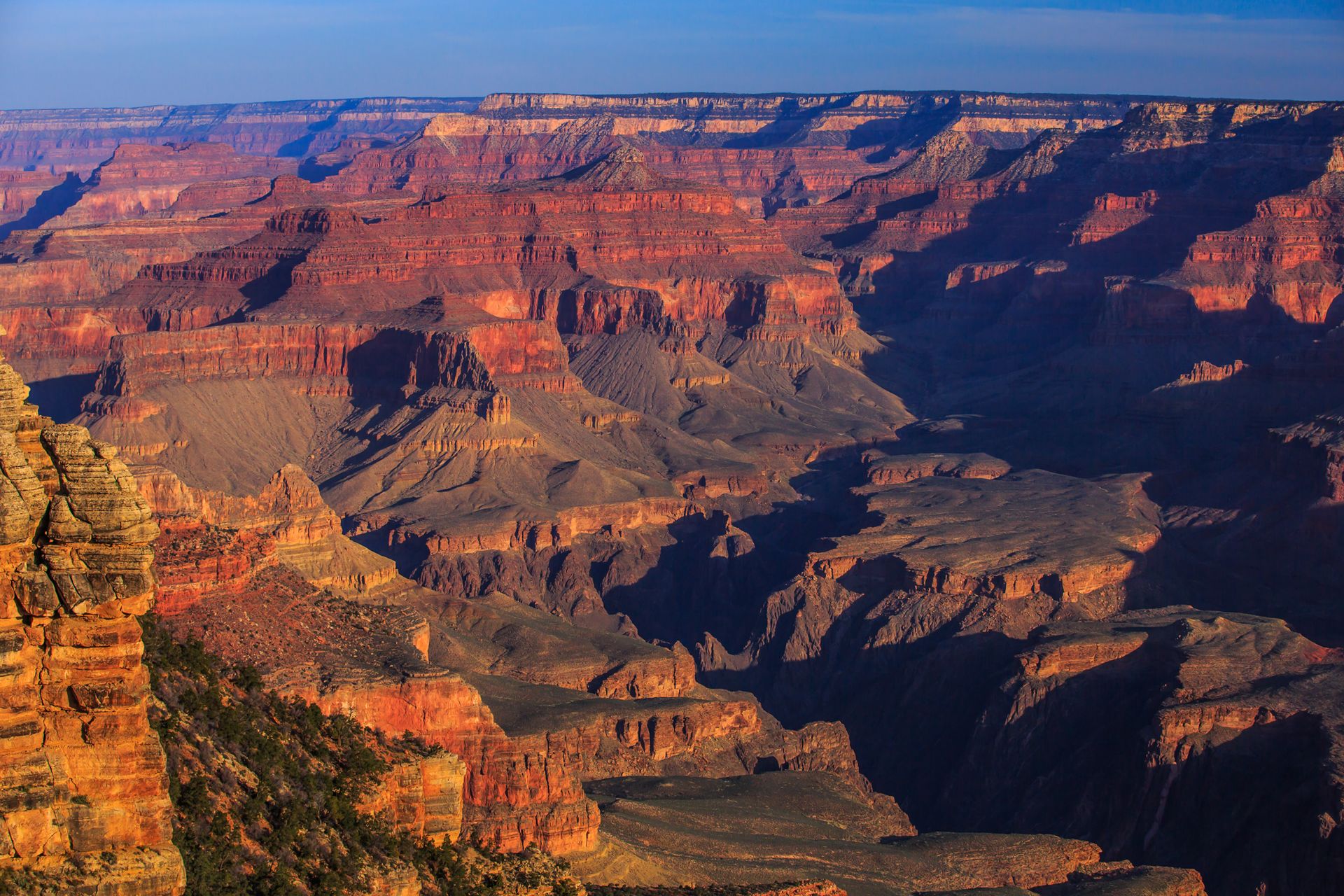
The Grand Canyon, one of the Seven Natural Wonders of the World, stretches 277 miles long and up to 18 miles wide with depths reaching 6,000 feet. From Las Vegas, visitors can reach the West Rim (2 hours) or South Rim (4.5 hours) for views of nearly 2 billion years of geological history exposed in the canyon's colourful strata. The canyon is sacred to multiple Native American peoples including the Hualapai, Havasupai, and Hopi, whose ancestors have called this landscape home for centuries.
Standing at the rim, you see layers of rock that span nearly two billion years of Earth's history. Without an expert beside you, those colourful bands remain beautiful but mysterious. Guides trained in geology can point to a specific stratum and explain that it formed when this region lay beneath an ancient sea, or identify fossils embedded in limestone that most visitors walk past without noticing. This geological literacy transforms the canyon from a spectacular photograph into a readable document of planetary time. The logistical value of a guided tour from Las Vegas cannot be overstated -- the drive to either rim takes hours through remote desert terrain, and guides handle every detail from hotel pickup to park admission to meal stops.
Wildlife
California condors: The Grand Canyon is one of the best places in the world to spot these critically endangered birds, reintroduced to the area in 1996 -- their 9.5-foot wingspan makes them unmistakable soaring above the rim. Mule deer: Common along the South Rim trails, especially at dawn and dusk near Bright Angel Lodge and the Greenway Trail.
Bighorn sheep: Desert bighorn sheep navigate the canyon's steep terrain with remarkable agility, most often spotted on the Bright Angel and South Kaibab trails. Elk: Large herds roam the South Rim forests and are frequently seen near the visitor centre and El Tovar Hotel, particularly in autumn. Rock squirrels: Ubiquitous at every viewpoint -- do not feed them, as they bite and carry diseases. Ravens: Intelligent and bold, canyon ravens are expert food thieves at picnic areas. The inner canyon supports an entirely different ecosystem from the rim, with ringtail cats, collared lizards, and pink rattlesnakes adapted to the desert heat below.
Trails
Skywalk glass bridge: West Rim only, walk 70 feet out over the canyon edge on a horseshoe-shaped glass platform -- not for those with vertigo, but the views straight down 4,000 feet are extraordinary. Helicopter landing: Descend 4,000 feet to the canyon floor for a champagne toast beside the Colorado River, available on West Rim helicopter tours.
Mather Point: South Rim's most accessible and dramatic viewpoint, a 5-minute walk from the main visitor centre with panoramic views spanning 180 degrees across the canyon. Yavapai Point: South Rim geology museum with panoramic windows and interpretive exhibits that explain the visible rock layers. Desert View Watchtower: A 70-foot stone tower designed by architect Mary Colter in 1932, modelled after ancestral Puebloan towers, with interior murals by Hopi artist Fred Kabotie. Eagle Point: West Rim's signature viewpoint, named for a naturally formed rock resembling an eagle with outstretched wings. Guano Point: West Rim 360-degree views with the remains of an aerial tram once used to transport bat guano from a cave across the canyon.
When to Visit
Tour duration: Full day (10-14 hours) including travel time. Departure times: Early morning (6-7 AM) for the best light and cooler temperatures at the rim. Best seasons: March-May and September-November when rim temperatures range 60-80 degrees F.
Summer caution: Rim temperatures can exceed 100 degrees F, and inner canyon temperatures soar even higher -- bring sun protection and extra water. Winter access: South Rim open year-round (occasional snow enhances the views dramatically); West Rim is weather-dependent. Return timing: Most tours return to Las Vegas by 7-9 PM, in time for evening activities on The Strip or Fremont Street.
Admission and Costs
West Rim bus tour: $100-150 per person (includes Hualapai tribal admission). South Rim bus tour: $180-250 per person (longer drive, National Park entrance included). Helicopter tours: $300-500 per person (West Rim landing with canyon-floor champagne toast, 4 hours total). Airplane and helicopter combo: $400-700 per person (includes Skywalk).
Private guide and driver: $800-1,200 for up to 6 people, with customised itineraries and flexible pacing. Skywalk glass bridge: $25 add-on at the West Rim (not included in most basic tours). South Rim individual entry: $35 per vehicle if driving independently (National Park annual pass accepted). Budget tip: West Rim bus tours offer the lowest cost for a Grand Canyon experience from Las Vegas, but the South Rim delivers the more iconic and dramatic views.
Tips for Visitors
Book at least 2-3 days in advance during peak season (March-May, September-November) -- popular helicopter tours and South Rim small-group excursions sell out. Bring at least 2 litres of water per person, sunscreen, a hat, and comfortable walking shoes. Temperatures at the rim can be 20-30 degrees cooler than Las Vegas, so pack layers for early morning departures.
West Rim vs South Rim: The West Rim is closer (2 hours) and offers helicopter landing options and the Skywalk, but the South Rim (4.5 hours) is the true National Park with the most iconic viewpoints including Mather Point, Yavapai Point, and Desert View Watchtower. Photography timing: Morning light at the South Rim paints the canyon walls in warm gold and red; afternoon light at the West Rim creates maximum depth and shadow at Guano Point. Combine with other day trips: Some multi-day itineraries pair the Grand Canyon with Hoover Dam stops along the route.