
Seating Guide
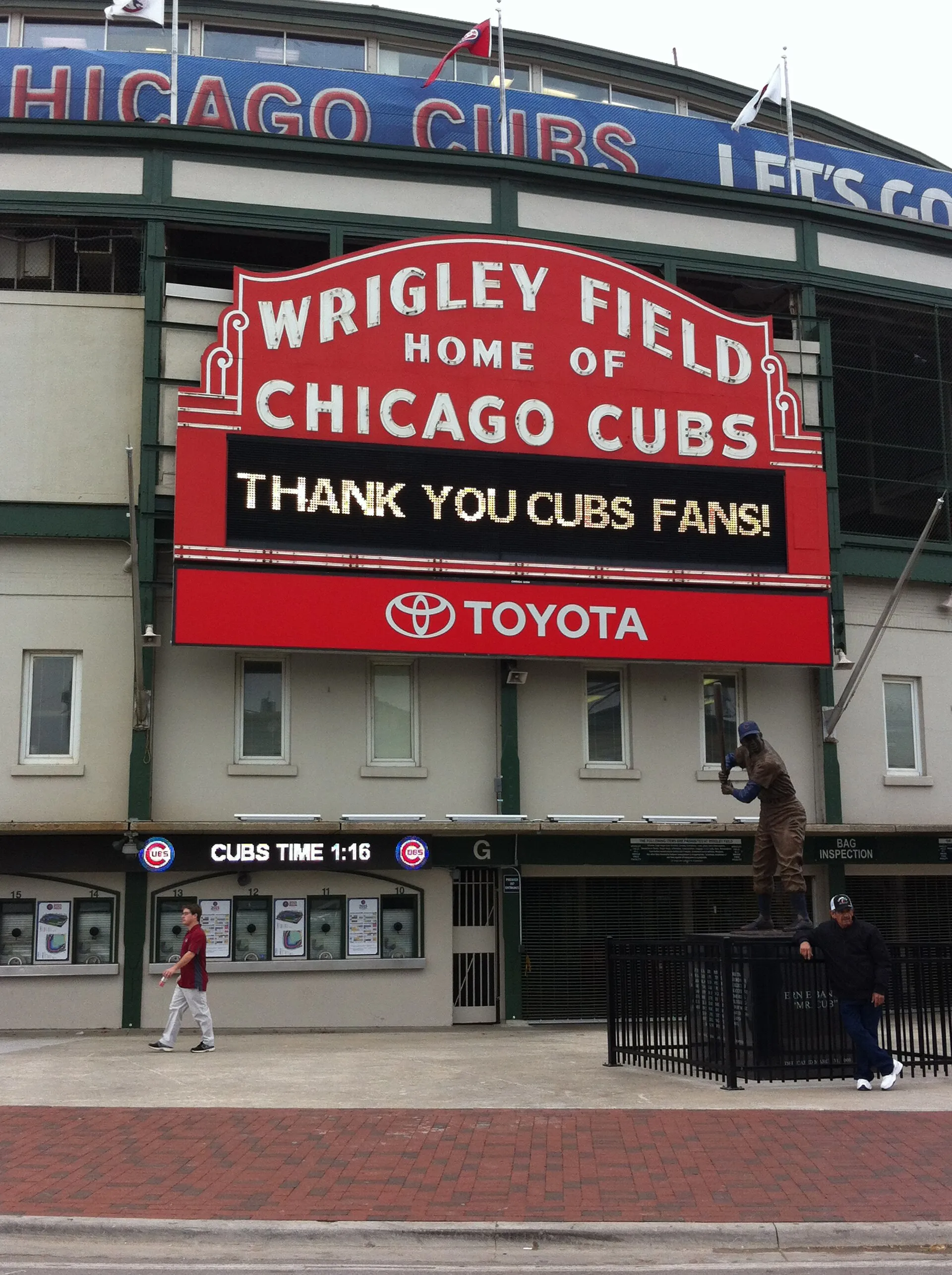
One hundred and ten years of baseball mythology cannot be absorbed from a wall plaque. Babe Ruth's called shot in the 1932 World Series, whether he actually pointed to center field before his home run or not, happened in this stadium. Ernie Banks played his entire 19-year career here, coined "Let's play two," and never reached the postseason. The Bartman incident in 2003 occurred in the left-field stands, and guides can point to the exact section where a fan's attempt to catch a foul ball may have cost the Cubs a pennant. The 2016 World Series championship, which ended the longest drought in professional sports history at 108 years, transformed Wrigleyville into the site of one of the most emotional celebrations in American sports. Guides bring these layers to life with the immediacy of someone who lived them. The ballpark itself is an engineering marvel born of constraint. Squeezed into an irregular residential block in 1914, Wrigley Field has been rebuilt and expanded repeatedly while maintaining its original footprint, resulting in quirks found nowhere else in baseball. The absurdly shallow left field necessitated the 37-foot Green Monster, originally a wooden advertising billboard now covered in Boston ivy planted in 1937. Guides explain why balls ricochet off it in patterns that still confound outfielders, how the hand-operated scoreboard inside the wall requires workers to manually hang numbered steel plates during every game, and why the Morse code embedded in the left-field scoreboard stripes pays tribute to former owners. Wrigleyville itself is a neighborhood shaped entirely by the ballpark's gravitational pull, where corner bars like Murphy's Bleachers became legendary institutions and rooftop owners fought bitter legal battles before eventually partnering with the Cubs. Understanding why wind direction changes everything about the game at Wrigley, why the four stars on the center-field flag represent Chicago's municipal flag, and why the seventh-inning stretch tradition of singing "Take Me Out to the Ball Game" started with Harry Caray in 1982 transforms a ballpark tour from sightseeing into pilgrimage. The Red Line delivers you back to Millennium Park or the Magnificent Mile within twenty minutes of leaving your seat.
Events Schedule
🌿 Ivy-covered outfield walls: Planted in 1937, the Boston ivy turns deep green in summer and brilliant red in October, creating one of the most photographed backdrops in sports. 🔢 Hand-operated scoreboard: Watch the 1937 scoreboard being updated in real time by operators inside the structure who manually hang numbered plates for every game across baseball. 🎶 Seventh-inning stretch: A guest conductor leads 41,000 fans in singing "Take Me Out to the Ball Game" from the broadcast booth, a tradition started by Harry Caray in 1982. 🏛 Rooftop views: The apartment buildings along Waveland and Sheffield Avenues have converted their roofs into seating areas, offering a perspective available at no other ballpark in baseball. 🥇 2016 Championship marker: A plaque and display near the main entrance commemorate the night the Cubs ended their 108-year championship drought, complete with images of the celebration that erupted in Wrigleyville. 🍺 Wrigleyville bars: Murphy's Bleachers, the Cubby Bear, and Sluggers are pre-game institutions, each with decades of stories soaked into their walls, and the blocks around the park become a massive outdoor gathering on summer game days
When to Visit
Ballpark tours: Non-game-day tours run daily at scheduled times, typically 9 AM to 4 PM (April through October); off-season tours available on a reduced schedule. Game days: Gates open 90 minutes before first pitch for most games; arrive early to watch batting practice and explore the concourses. Best for atmosphere: Afternoon weekend games in summer are the quintessential Wrigley experience — sunshine, packed bleachers, and the neighborhood bars overflowing before and after. Best for comfort: Weeknight games in April, May, and September draw smaller crowds, offer cooler temperatures, and make it easier to appreciate the architecture without the crush. Day games: The Cubs still play more day games than any other team, usually on Wednesdays and some Fridays, keeping the tradition alive
Admission and Costs
Ballpark tour: $30 adults, $20 children under 12; tours last approximately 75-90 minutes and cover the dugout, press box, visitors' clubhouse, and the field itself. Game tickets: $25-300+ depending on seat location, opponent, and day of week; bleacher seats ($30-50) offer the closest experience to the outfield ivy and the liveliest fan atmosphere.
Rooftop seats: $100-250 per person for the iconic rooftop experience on the apartment buildings across Waveland and Sheffield Avenues; includes food and drinks. Guided Wrigleyville neighbourhood tour: $35-60 per person for a 2-hour walking tour covering the ballpark exterior, surrounding bars and landmarks, and the neighbourhood's history.
Tips for Visitors
Take the Red Line: The Addison stop on the CTA Red Line is directly across the street from the ballpark's main entrance — by far the easiest way to arrive and avoid parking headaches. Bring cash: Some vendors outside the park and in the bleacher concessions still prefer cash; the main concourses accept cards. Clear bag policy: Wrigley Field enforces a clear-bag policy for game entry. Bags must be clear plastic, vinyl, or PVC and no larger than 16x16x8 inches. Small clutch purses under 5x8 inches are also permitted. Arrive early for tours: Ballpark tours often sell out, especially on weekends and when the team is on a homestand. Book online at mlb.com/cubs/tickets/tours at least a week ahead. Day-game magic: If your schedule allows, attend a weekday afternoon game. Day baseball at Wrigley — sunshine on the ivy, the hand-scored board, cold beer in the bleachers — is one of the purest experiences in American sports. Combine with downtown: After the game, the Red Line runs directly south to the Loop. You can be at Millennium Park or the Magnificent Mile within 20 minutes of leaving your seat
Frequently Asked Questions
What is the best time of year for a Wrigley Field experience?
The Cubs season from April through September is when Wrigley Field truly comes alive, with the ivy-covered outfield walls lush and green from June through August and the rooftop bleachers across Waveland Avenue packed with fans on warm summer afternoons. Day games in particular capture the classic Wrigley atmosphere that no other ballpark can replicate. The stadium is largely dormant from November through March, with Chicago's brutal winter making the Friendly Confines anything but friendly.
When can visitors attend events at Wrigley Field?
Ballpark tours: Non-game-day tours run daily at scheduled times, typically 9 AM to 4 PM (April through October); off-season tours available on a reduced schedule.
What do tickets cost at Wrigley Field?
Ballpark tour: $30 adults, $20 children under 12; tours last approximately 75-90 minutes and cover the dugout, press box, visitors' clubhouse, and the field itself.
How should visitors prepare for Wrigley Field?
Take the Red Line: The Addison stop on the CTA Red Line is directly across the street from the ballpark's main entrance — by far the easiest way to arrive and avoid parking headaches.