
Visitor Etiquette
Modest dress is strictly enforced at the entrance: shoulders and knees must be covered for all visitors regardless of gender. Sarongs and shoulder coverings are available for rent at the bottom of the staircase for those who arrive underprepared. Remove shoes before ascending to the main terrace and before entering any shrine building — shoe racks are provided. Monks have a protected status: do not touch monks, and women must not hand items directly to a monk (place offerings on a cloth or shelf instead). Photography is permitted throughout the grounds but is inappropriate during active ceremonies; lower your camera when monks are chanting or worshippers are making offerings. Speak quietly and switch phones to silent before entering the inner sanctuary area surrounding the golden chedi.
Spiritual Significance
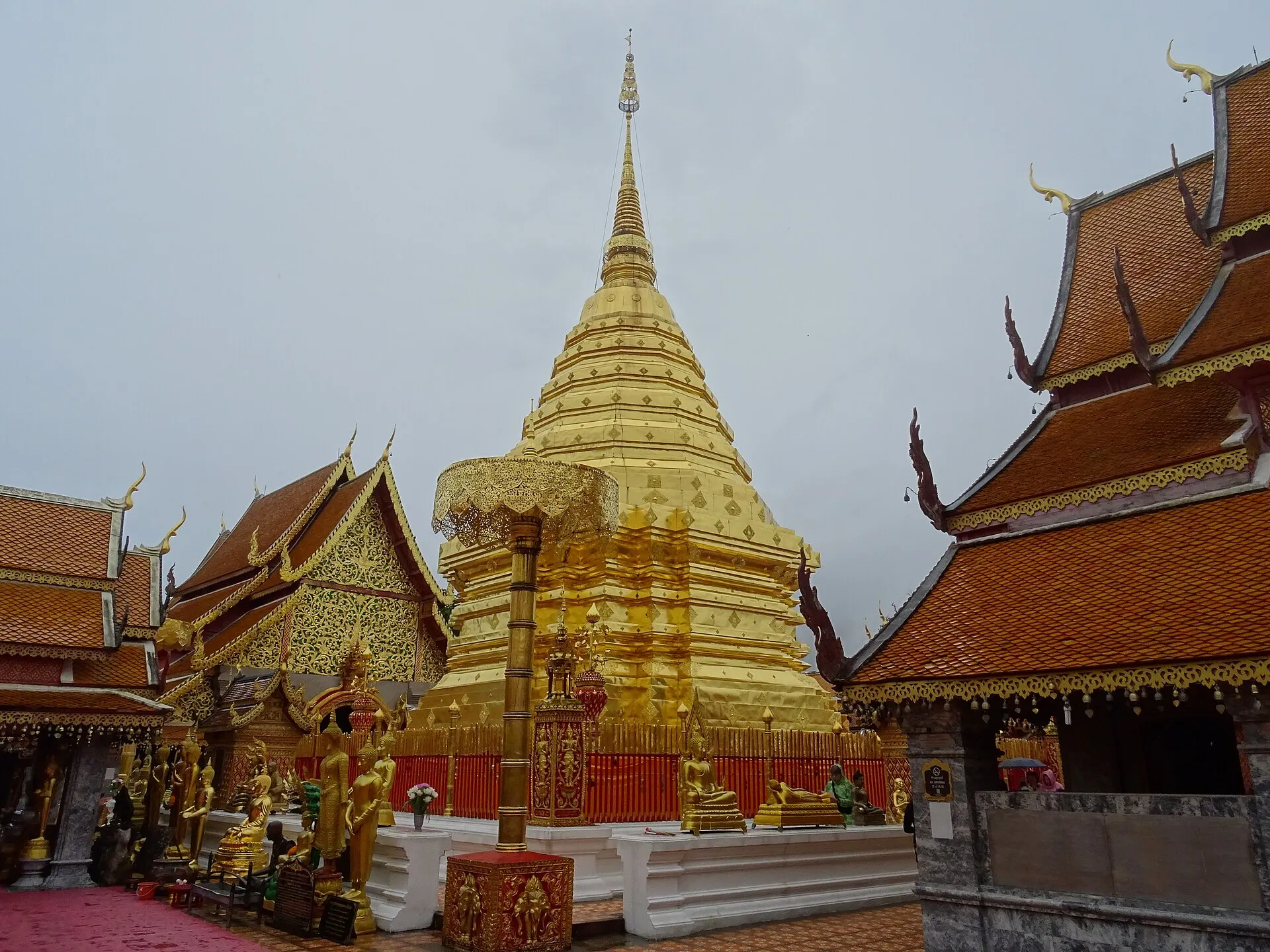
The golden chedi contains a relic of the Buddha's shoulder bone, making Doi Suthep one of the most spiritually significant pilgrimage sites in Northern Thailand. Tradition holds that a white elephant carrying the relic from Chiang Mai walked up the mountain, trumpeted three times, and died on the site — the temple was built where the elephant fell. Circumambulating the chedi clockwise three times is the central act of Buddhist devotion here; worshippers believe the full three circuits bring merit and good fortune. The bells suspended around the terrace are rung by pilgrims seeking blessings — each bell's tone adds to an accumulated sound of collective prayer. Morning chanting begins at 6:30 AM when resident monks assemble before the main shrine, creating a meditative atmosphere before the tourist rush. The white elephant shrine near the base of the mountain honors the founding legend and receives daily offerings from local believers who feel a deep personal connection to this story. The Lanna architectural style of the buildings — distinct from central Thai temple design — reflects Northern Thailand's separate kingdom history and its cultural ties to neighboring Myanmar and Yunnan.
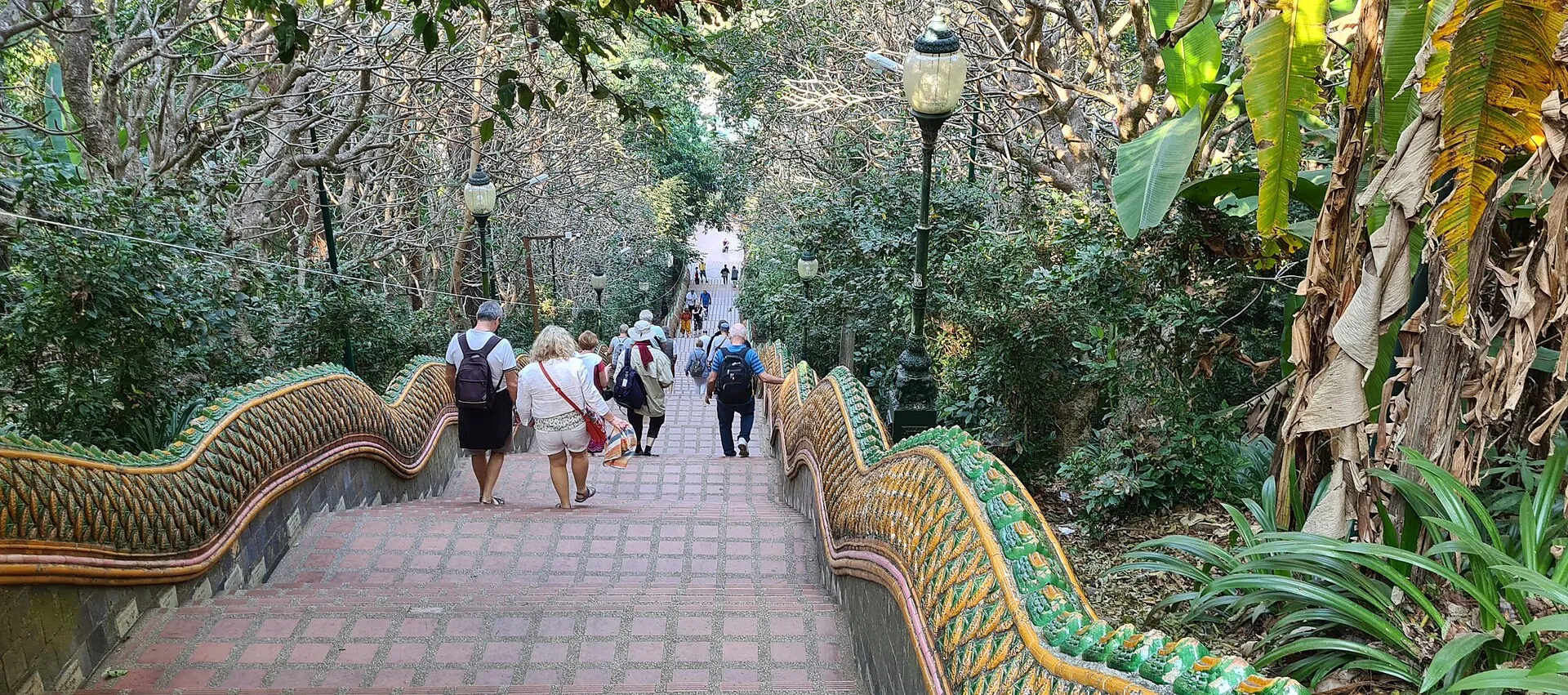
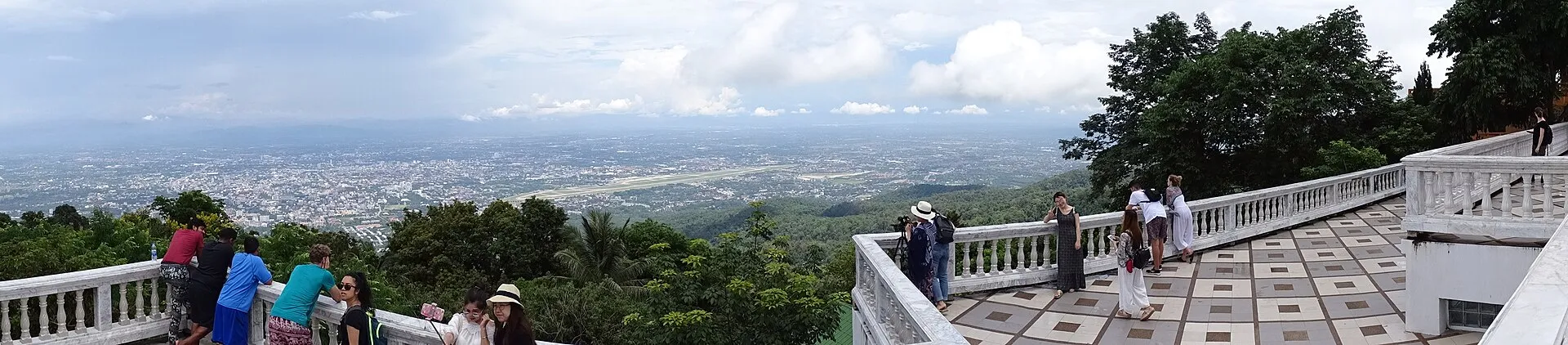
Doi Suthep Temple in Pictures
When to Visit
Hours: 6:00 AM - 6:00 PM daily. Best time: Early morning (6-8 AM) for monk chanting and fewer tourists. Sunset visits: 4-6 PM for golden light on chedi and city views. Avoid: Midday (hot, crowded with tour groups). Plan: 1-2 hours, add 30 minutes if climbing stairs instead of funicular
Admission and Costs
Temple entrance: ฿30 ($0.85) for foreigners. Funicular ride: ฿20 ($0.60) each way (or climb 309 steps free). Guided group tours: ฿600-1,000 ($17-29) per person with hotel pickup. Private guide + transport: ฿2,000-3,500 ($57-100) up to 6 people. Songthaew (shared truck): ฿40-50 ($1.20-1.45) from Old City. Private songthaew: ฿600-800 ($17-23) round trip
The Case for a Guide
Temple history and founding legend: A guide explains the white elephant story in its full context — why the Lanna king Keu Na released the elephant, what the trumpeting and circling meant within Buddhist belief, and how the legend shaped Northern Thai identity over seven centuries. Buddhist ritual explanation: Guides demonstrate the correct way to circumambulate the chedi, how to make a proper offering, and what the specific gestures and prayers mean — so visitors participate with understanding rather than just copying movements they've seen others make. Transport navigation: The winding 15km mountain road is shared with tour buses; a guide with a known driver avoids the worst congestion timing. Photography positioning: The best angles for the golden chedi against the sky and the panoramic city view require knowing exactly where to stand at what time of day — guides can get you there at the right moment. Ceremony timing: Guides track the morning chanting schedule and can position your group to observe monk ceremonies without disrupting them.
Tips for Visitors
Climb the stairs rather than taking the funicular — the 309-step naga staircase is culturally meaningful and the effort changes the arrival experience. Early morning visits (6-8 AM) catch the monks' chanting ceremony and see the golden chedi in soft light before tour groups arrive. Carry water: the mountain humidity and stair climb leave you thirsty before the viewing terraces. The songthaew shared truck from Chiang Mai's Old City costs ฿40-50 each way — far cheaper than private transport for solo travelers. Bhubing Royal Palace is 4km further up the same mountain road and pairs naturally with a Doi Suthep visit; check opening days (typically Tuesday-Friday and weekends) before including it. The best panoramic photos of the valley come from the northern terrace rather than the main entrance — most tourists miss it entirely.
Frequently Asked Questions
What is the ideal season for visiting Doi Suthep Temple?
November through February is the prime season, when the mountain air at 1,073 metres is refreshingly cool, skies are clear for panoramic views over the Chiang Mai valley, and the 306-step naga staircase climb feels invigorating rather than punishing. December often delivers the crispest visibility of the year. March and April bring the burning season, when agricultural fires create a thick haze that can completely obscure the famous valley views and make breathing uncomfortable at elevation.
What time does Doi Suthep Temple open to sightseers?
Hours: 6:00 AM - 6:00 PM daily. Best time: Early morning (6-8 AM) for monk chanting and fewer tourists. Sunset visits: 4-6 PM for golden light on chedi and city views. Avoid: Midday (hot, crowded with tour groups).
How much is admission to Doi Suthep Temple?
Temple entrance: ฿30 ($0.85) for foreigners. Funicular ride: ฿20 ($0.60) each way (or climb 309 steps free). Guided group tours: ฿600-1,000 ($17-29) per person with hotel pickup. Private guide + transport: ฿2,000-3,500 ($57-100) up to 6 people.
Why is it worth hiring a guide for Doi Suthep Temple?
Temple history: Explain founding legend, white elephant story, architectural significance. Buddhist rituals: Understand proper way to circle chedi, make offerings, behave respectfully.