
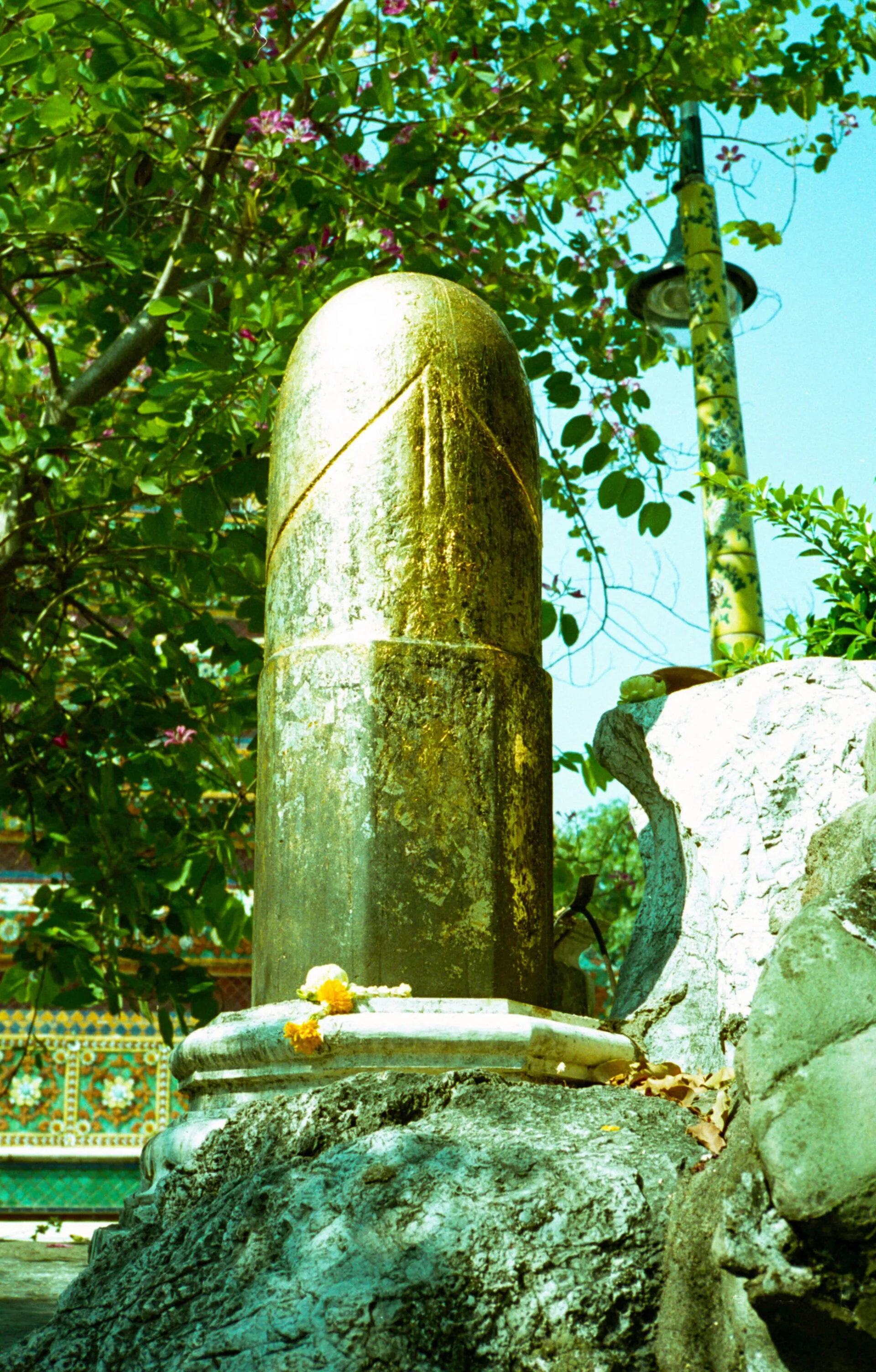
Visitor Etiquette
Dress code is required throughout the temple complex: shoulders and knees must be covered — enforcement is less strict than at the neighbouring Grand Palace but sarongs are available at the entrance for those who need them. Remove shoes before entering the Reclining Buddha hall and any chapel or prayer space; socks are recommended as marble floors become intensely hot in the afternoon sun. This is an active place of Buddhist worship — lower your voice inside any hall, avoid pointing your feet toward Buddha images (pointing feet at sacred objects is considered deeply disrespectful in Thai culture), and step aside if monks are conducting prayers or ceremonies. Photography is generally welcome, but do not pose irreverently in front of or touching Buddha statues. The massage school is inside the temple grounds — use only the school-certified practitioners inside; operators outside the temple gates are unaffiliated and may be scams.
Spiritual Significance
Wat Pho was one of the temples renovated by King Rama I when he established Bangkok as Thailand's capital in the 1780s, making it the religious heart of the Chakri dynasty from the city's founding moment. The 46-meter Reclining Buddha represents the moment of Parinirvana — the Buddha's final passing beyond the cycle of rebirth — not death as Westerners often assume, but the ultimate liberation that all Buddhist practice aspires toward. The 108 bronze bowls arranged along the hall's perimeter correspond to the 108 auspicious characteristics of a Buddha; dropping coins into each bowl is a merit-making practice that expresses the worshipper's aspiration to cultivate those same qualities across their own lifetimes of practice. King Rama III's decision in 1832 to encode traditional Thai medicine, astronomy, and martial arts into marble tablets throughout the temple grounds transformed Wat Pho into an institution that treated learning as devotion — the preservation of knowledge was understood as a religious obligation, not merely civic utility, and the temple's role as Thailand's first open university was inseparable from its identity as a sacred space. The four large chedis honoring the first four Chakri monarchs are not merely memorials but liturgical objects: by enshrining royal ashes in gold-plated structures decorated with Chinese porcelain fragments, the temple asserts the continuity between royal authority and Buddhist merit — each king having accumulated sufficient merit across previous lives to be reborn as a protector of the dhamma. Scattered through the courtyards, the contorted stone figures known as rusi dat ton demonstrate the therapeutic stretching postures that underpin Thai massage — devotion and healing made visible in the same sacred ground, and a living tradition still passed on at the temple's medical school.
Wat Pho Bangkok timeline
- 16th century
Founded in the Ayutthaya era
A temple called Wat Photaram stands on this stretch of riverbank generations before Bangkok exists, giving Wat Pho a lineage older than the capital itself.
-
Rama I rebuilds and renames
King Rama I orders a full reconstruction of the ruined temple, enlarging it and renaming it Wat Phra Chetuphon as the new Rattanakosin capital takes shape around it.
-
The first great restoration is consecrated
The rebuilt temple is completed and dedicated, already conceived as a public repository of Thai learning rather than a place of worship alone.
-
The Reclining Buddha is cast
King Rama III commissions the 46-metre gilded Reclining Buddha and launches a sweeping expansion that reshapes the entire complex.
- 1836-1848
Knowledge carved in stone
Rama III has treatises on medicine, massage, astronomy and literature inscribed on marble tablets set into the walls, making Wat Pho Thailand's first public university.
-
The Traditional Medical School opens
The temple formalises its healing legacy with a school of Thai traditional medicine and massage that still trains and certifies practitioners today.
-
UNESCO Memory of the World
Wat Pho's epigraphic archive of stone inscriptions is added to UNESCO's Memory of the World Register, recognising the marble tablets as documentary heritage of global importance.
When to Visit
Hours: 8:00 AM - 6:30 PM daily (massage pavilion 8 AM - 5 PM). Best time: Early morning (8-9 AM) for cooler temperatures, fewer crowds. Avoid: 10 AM - 2 PM (tour group peak, intense heat). Plan for: 1-2 hours for temple, add 1 hour if getting massage. Late afternoon: 4-6 PM offers beautiful light and smaller crowds
Admission and Costs
Temple entrance: 200 THB ($6 USD) (includes water bottle). Traditional Thai massage: 420-600 THB (30-60 minutes). Foot massage: 420 THB (30 minutes). Group tour with guide: 800-1,200 THB per person (combined with other temples). Private guide: 1,500-2,500 THB for up to 4 people (entrance separate)
The Case for a Guide
Wat Pho is simultaneously a royal temple, a medical school, and a repository of encyclopaedic knowledge inscribed in stone — a guide who understands all three dimensions reveals a place far stranger and more ambitious than any guidebook conveys.
- Reclining Buddha's mother-of-pearl foot symbols: The 108 auspicious characteristics of a Buddha are illustrated in mother-of-pearl inlay across the soles of the 46-metre figure; guides identify specific symbols — the wheel of dharma, the lotus throne, the throne of enlightenment — and explain the Buddhist significance of the Parinirvana pose showing the moment before nirvana.
- Massage school founded by royal decree: Rama III established the massage school in 1832 explicitly to preserve traditional medical knowledge by carving techniques, acupressure maps, and herbal remedies into marble tablets set into the temple walls; guides locate specific inscription panels and explain the royal motivation for encoding medicine in a sacred site.
- Temple as Thailand's first university: Before formal educational institutions existed in Thailand, Wat Pho's open-air galleries displayed knowledge of astronomy, literature, military science, and medicine for public study; guides trace the physical layout of this outdoor encyclopaedia and explain how each pavilion corresponded to a different field of learning.
- Behind the main temple meditation rooms: Beyond the Reclining Buddha hall lie smaller ordination chapels, meditation rooms, and monk dormitories that most tourists never reach; guides navigate these quieter spaces where active monastic community goes about its daily routines, offering a glimpse of temple life entirely separate from the tourist circuit.
- Chinese stone statue ballast origins: The peculiar stone figures flanking pathways throughout Wat Pho — Chinese officials, mythical beasts, European merchants — arrived as ballast in the holds of rice trading ships returning from China; guides explain this maritime commerce detail and how Bangkok's temple gardens became an inadvertent repository of Chinese export sculpture.
Tips for Visitors
- Entrance: the ticket gate is on Chetuphon Road (Soi Chetuphon) on the south side of the complex; the riverfront gate is an exit only.
- Getting there: the MRT Blue Line's Sanam Chai station is a five-minute covered walk away and the coolest, fastest arrival; alternatively ride the Chao Phraya Express Boat to Tha Tien pier.
- Three-temple circuit: Wat Pho is a ten-minute walk south of the Grand Palace, so open the palace at its 8:30 AM gate, cross to Wat Pho, then take the cross-river ferry from Tha Tien to Wat Arun for sunset.
- Hydration: a free water bottle comes with the ticket, and refill stations sit inside the grounds — welcome relief on the open-air marble.
- Massage: arrive early to cut the wait at the pavilion, and use only the school-certified therapists inside; a 50-100 THB tip is customary.
- Photography: allowed throughout, but step to one side rather than posing directly in front of a Buddha's face.
Frequently Asked Questions
What months are best for visiting Wat Pho?
November through February brings Bangkok's most pleasant weather, with temperatures around 28-30°C and low humidity that make exploring Wat Pho's sprawling 80,000-square-metre grounds comfortable rather than exhausting. The temple complex is largely open-air, so the hot season from March to May and the monsoon from June to October significantly diminish the experience with oppressive heat or unpredictable heavy rains that can leave you drenched between the chapel buildings.
Is Wat Pho Bangkok accessible to visitors daily?
Hours: 8:00 AM - 6:30 PM daily (massage pavilion 8 AM - 5 PM). Best time: Early morning (8-9 AM) for cooler temperatures, fewer crowds. Avoid: 10 AM - 2 PM (tour group peak, intense heat).
What is the entrance fee at Wat Pho Bangkok?
Temple entrance: 200 THB ($6 USD) (includes water bottle). Traditional Thai massage: 420-600 THB (30-60 minutes). Foot massage: 420 THB (30 minutes). Group tour with guide: 800-1,200 THB per person (combined with other temples).
What should visitors know before visiting Wat Pho Bangkok?
Dress code: Cover shoulders and knees - enforcement less strict than Grand Palace but still required. Footwear: Remove shoes before entering Reclining Buddha hall - socks recommended for hot floors.