

Overview
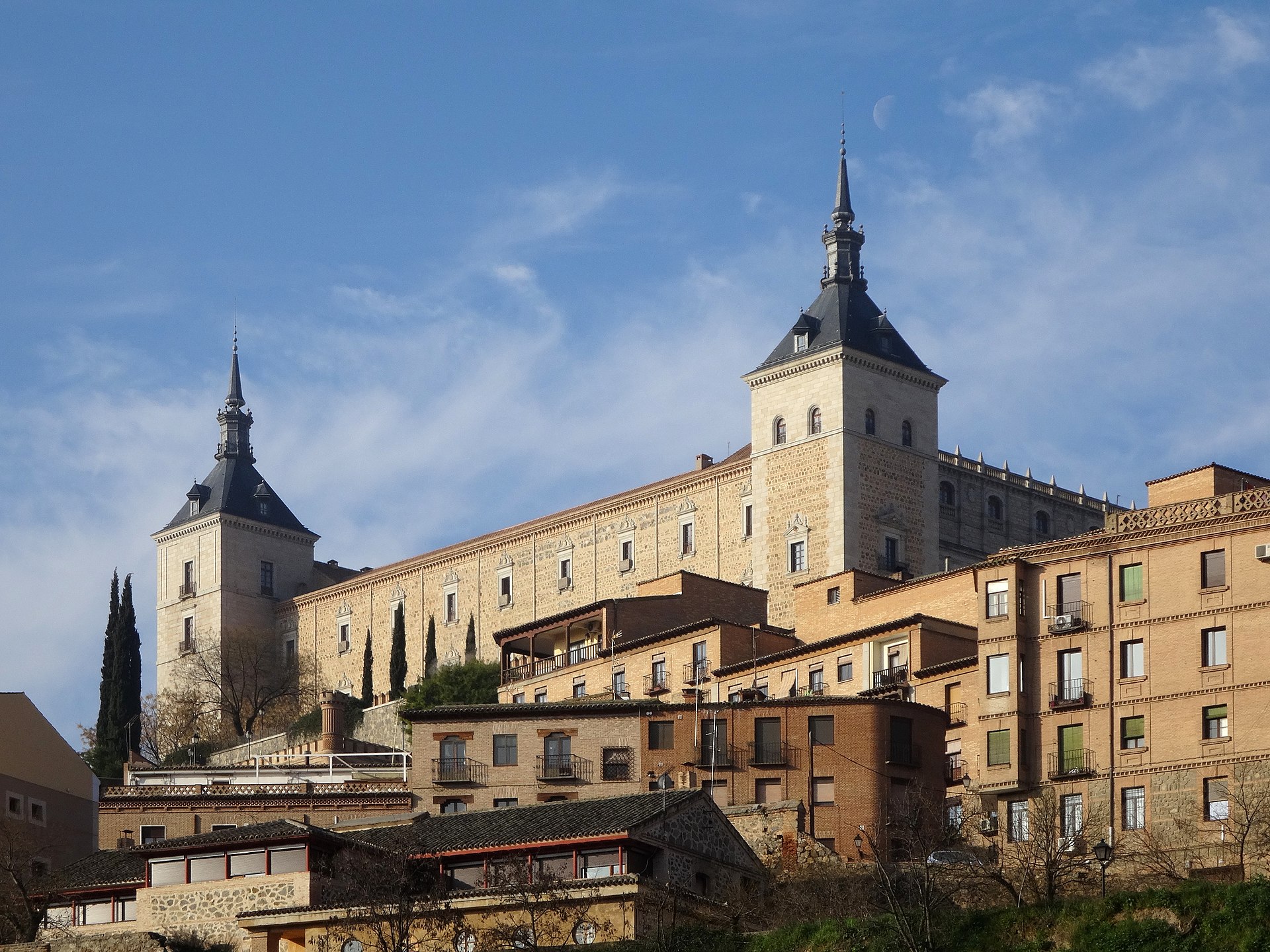
Dominating the skyline of Toledo from its highest point, the Alcázar is a fortress whose stones carry nearly two thousand years of military history. Romans first fortified this hilltop in the 3rd century, and every subsequent ruler -- Visigoths, Moors, and Castilian kings -- expanded and reshaped the stronghold to suit their needs. Emperor Charles V commissioned the grand Renaissance facade visitors see today, transforming a medieval castle into an imperial palace. The building's most recent chapter, the devastating 70-day siege during the 1936 Spanish Civil War, left it in ruins; the meticulous reconstruction that followed now houses Spain's premier Army Museum, with collections spanning from prehistoric weapons to modern military technology.
Notable Rooms
Layered history: Roman, Visigothic, Moorish, and Hapsburg chapters overlap here -- a guide untangles the timeline. Civil War context: The siege of 1936 is emotionally charged and politically complex; guides present balanced, informed narratives. Museum navigation: With over 8,000 objects across multiple floors, the collection can feel sprawling without direction. Charles V connection: Guides explain how the emperor's vision transformed a medieval fortress into a Renaissance showpiece. Strategic viewpoints: A guide will steer you to the best interior vantage points for views over the Tagus gorge
Fortification History
Grand courtyard: Stand in the central patio and look up at the harmonious arcaded galleries that Charles V ordered built in the 1540s. Army Museum halls: Trace the evolution of warfare in Spain through armour, firearms, maps, and uniforms spanning centuries. Siege exhibit: Walk through the rooms documenting the 1936 siege, including Moscardó's reconstructed office and original photographs. Tagus panoramas: Gaze across the river valley and the ochre plains of Castilla-La Mancha from the upper windows. Historical models: Detailed scale models show the Alcázar at different stages of its history, from Roman outpost to Renaissance palace. Weapons collection: Examine medieval swords, Moorish daggers, and ornate 16th-century crossbows in climate-controlled display cases
When to Visit
Tuesday to Sunday: 10:00 AM - 5:00 PM (last entry at 4:30 PM). Closed: Every Monday, January 1, May 1, December 24-25, and December 31. Best time to visit: Tuesday or Wednesday mornings see the fewest visitors. Allow: 1.5 to 3 hours depending on your interest in military history
Admission and Costs
General admission: €5 (full museum access). Free Sundays: Entry is complimentary every Sunday. Reduced rate: €2.50 for students, seniors, and large families. Guided group tour: €10-€15 per person (includes museum entry and expert commentary). Private guided tour: €15-€20 per person for tailored small-group experiences
Tips for Visitors
Wear comfortable shoes: The uphill walk from the city center is steep and mostly on cobblestones. Use the escalators: Mechanical escalators on the east side of the old town save your legs for the museum itself. Photography: Allowed throughout the museum without flash; some temporary exhibition rooms may restrict cameras. Combine with Zocodover: The Plaza de Zocodover sits just below the Alcázar and offers cafés for a post-visit rest. Accessibility: Elevators provide access to most floors; wheelchair-friendly routes are clearly signposted. Audio guide: Available in several languages at the ticket desk for a small supplement if you prefer a self-directed visit