

Overview
Perched on the Sabika hill overlooking Granada, the Alhambra stands as the finest surviving example of Islamic palatial architecture in Europe. Built primarily during the 13th and 14th centuries by the Nasrid dynasty — the last Muslim rulers of the Iberian Peninsula — this sprawling fortress-palace complex blends military fortification with breathtaking decorative artistry. Designated a UNESCO World Heritage Site in 1984, the Alhambra draws roughly 2.7 million visitors each year, making it Spain's most visited monument. Its intricate stucco carvings, geometric tilework, and sophisticated water gardens represent centuries of Moorish craftsmanship at its absolute peak. Explore more about Granada or browse the full Spain travel guide.
Notable Rooms
Unlock hidden meaning: Arabic calligraphy covers nearly every surface — guides translate inscriptions and explain their poetic and religious significance. Navigate the complex: The Alhambra spans 26 acres with multiple palaces, gardens, and fortifications; guides ensure you see everything without getting lost or running out of time. Nasrid Palaces timing: Your timeslot is strict — experienced guides pace the visit so you never feel rushed through the most important rooms. Historical depth: From the Reconquista to Washington Irving's rediscovery, the Alhambra's story stretches across centuries that a guide brings vividly to life. Skip the queues: Licensed guides use priority entry lanes, saving 30-60 minutes of waiting during busy periods
Fortification History
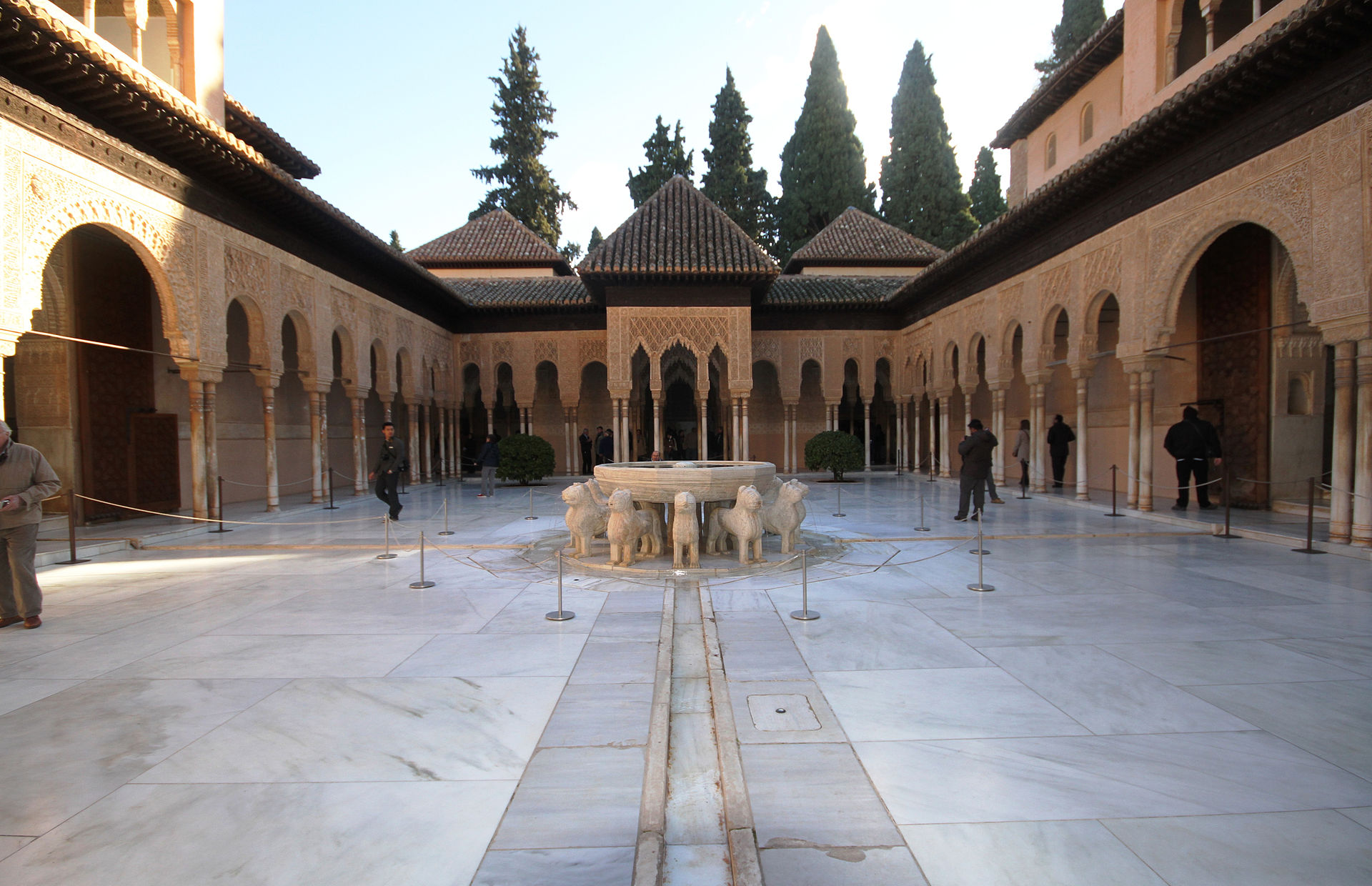
Court of the Lions: Twelve marble lions support a fountain at the center of this legendary courtyard, surrounded by 124 slender columns. Nasrid Palaces: Three interconnected palaces showcasing the pinnacle of Moorish decorative arts — the Hall of the Ambassadors alone took 14 years to complete. Generalife Gardens: The sultans' summer retreat features cascading terraces, long water channels, and intimate courtyards that feel worlds away from the main palace. Alcazaba fortress: The oldest section of the complex offers commanding views from the Torre de la Vela across Granada to the Sierra Nevada mountains. Palace of Charles V: A striking Renaissance circle-within-a-square design, housing the Alhambra Museum and the Fine Arts Museum (both free). Sunset from the towers: The warm light transforms the red fortress walls and creates unforgettable views over the Albaicín neighborhood below
When to Visit
Summer (April 1 - October 14): 8:30 AM - 8:00 PM (day visit) | 10:00 PM - 11:30 PM (night visit). Winter (October 15 - March 31): 8:30 AM - 6:00 PM (day visit) | 8:00 PM - 9:30 PM (night visit). Closed: December 25 and January 1. Best time: First slot at 8:30 AM avoids heat and crowds; late afternoon brings warm golden light. Least crowded: Weekdays from November through February
Admission and Costs
General admission: €14 (full complex including Nasrid Palaces with assigned timeslot). Gardens & Alcazaba only: €7 (excludes Nasrid Palaces). Night visit - Nasrid Palaces: €8 (Nasrid Palaces only, evening hours). Night visit - Generalife Gardens: €5 (gardens illuminated at night). Guided group tour: €40-75 per person (2.5-3 hours, skip-the-line entry included). Private guide: €180-300 for up to 6 people (tickets purchased separately)
Tips for Visitors
Arrive 20 minutes early: Security checks and the walk from the entrance gate to the Nasrid Palaces takes longer than you'd expect. Wear comfortable shoes: You'll walk 3-4 km across uneven stone paths, gravel, and steep inclines throughout the complex. Bring water: Summer temperatures in Granada regularly hit 40°C, and shade is limited between sections. Don't miss the free museums: The Palace of Charles V contains two excellent museums included with your general admission. Photography is allowed: No flash inside the Nasrid Palaces, and tripods are prohibited. Allow 3-4 hours: A thorough visit covering all areas requires half a day; the Generalife alone deserves at least 45 minutes