
City Guide
🇪🇸 Tour Guides in Córdoba
Mezquita-Cathedral, Moorish splendor & the golden age of three cultures

Why visit Córdoba?
Córdoba was once the largest and most sophisticated city in all of Europe. During the 10th century, when the Caliphate of Córdoba was at its zenith, the population surpassed half a million — dwarfing London and Paris combined. Scholars, poets, and physicians from Muslim, Jewish, and Christian traditions studied side by side in its libraries and academies, forging a spirit of intellectual exchange that still echoes through the city's winding streets. The crown jewel of that era is the Mezquita-Cathedral, a forest of 856 columns and double arches that remains one of the most astonishing architectural achievements in the world. Today Córdoba holds four UNESCO World Heritage designations — the Mezquita, the Historic Centre, the Festival of the Patios, and nearby Medina Azahara — more than almost any other European city of its size. Every May, residents throw open the gates of their private courtyards for the Patios Festival, revealing cascades of geraniums, jasmine, and bougainvillea against whitewashed walls. Beyond the old quarter, the Roman Bridge stretches across the Guadalquivir toward the Calahorra Tower, and the scent of orange blossom drifts through plazas where locals gather for salmorejo and Montilla-Moriles wine. A knowledgeable guide weaves together these layers — Caliphate grandeur, interfaith coexistence, Andalusian tradition — and connects them to the wider story of Spain.
What are the must-see spots in Córdoba?
- Mezquita at morning opening — Arrive when the doors unlock at 8:30 AM to walk the hypostyle hall in near-solitude, sunlight filtering through the forest of red-and-white arches
- Synagogue of Córdoba — One of only three medieval synagogues still standing in Spain, with intricate Mudéjar stucco work dating to 1315
- Alcázar gardens at dusk — Terraced pools, fountains, and sculpted hedges glow under warm lighting after dark in summer months
- Patios Festival courtyards — Generations of families compete to create the most beautiful flower displays, with geranium-filled walls, hanging pots, and central wells framed by jasmine
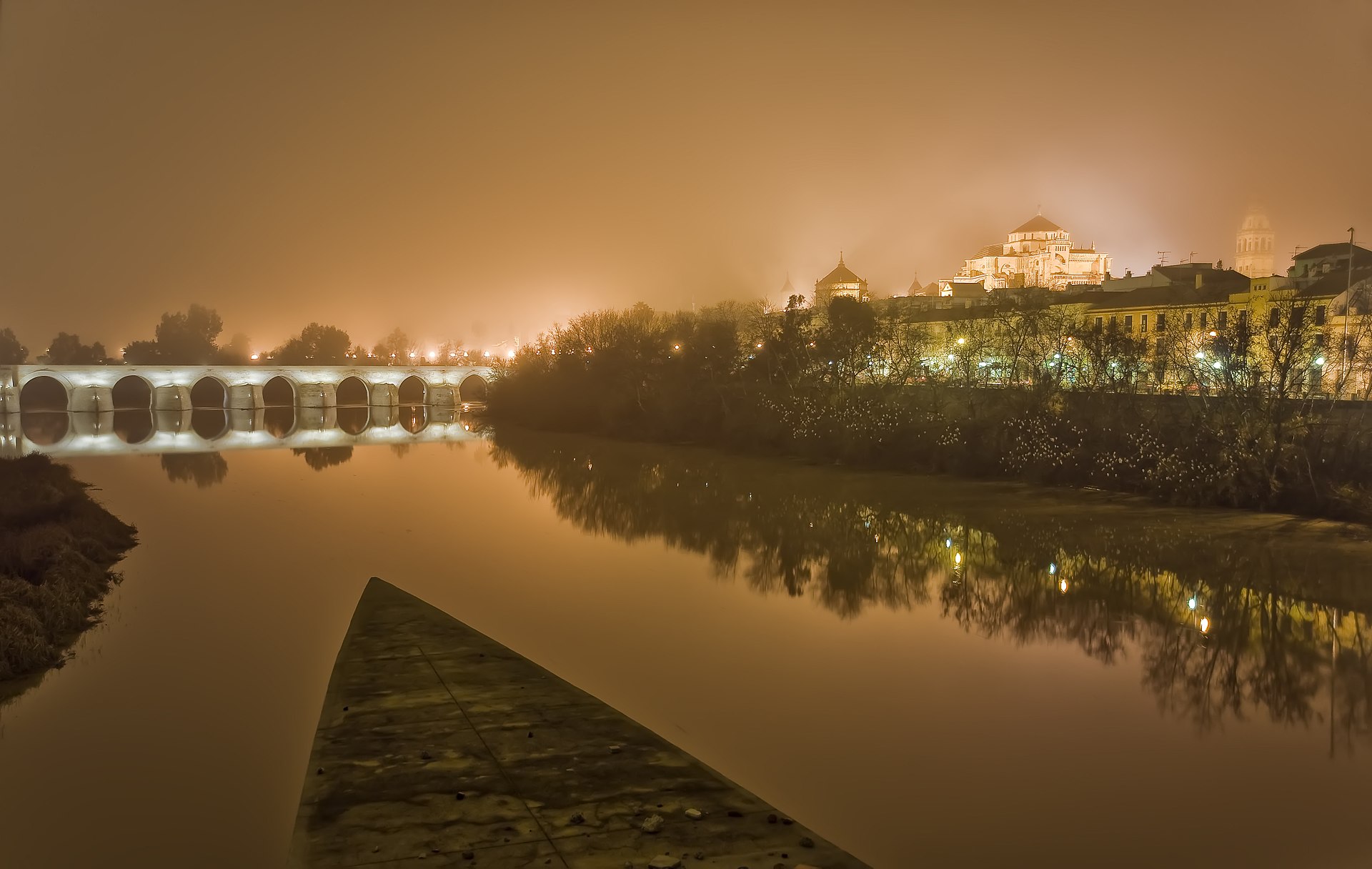
- Roman Bridge at sunset — The sixteen-arch span across the Guadalquivir dates to the 1st century BC, and the view back toward the Mezquita is unforgettable at golden hour
- Medina Azahara — The ruined palace-city eight kilometers west of town was built by Caliph Abd al-Rahman III and declared a UNESCO site in 2018
- Salmorejo in Plaza de la Corredera — Córdoba's signature cold tomato soup is thicker and creamier than gazpacho, served with jamón and hard-boiled egg
- 🏰 Alcázar de los Reyes Cristianos Fortress of monarchs, gardens of splendour | Prices, hours & guided visits
- 🏘️ Jewish Quarter (Judería) of Córdoba Sephardic heritage, medieval lanes & hidden courtyards | Walking tours, prices & local insights
- ⛪ Mezquita-Cathedral of Córdoba Navigate twelve centuries of layered history with a local expert | Prices, hours & free entry windows
How much should you budget for a guide in Córdoba?
Córdoba's layered history — Roman colony, Visigothic seat, Caliphate capital, reconquered Christian city — demands a guide who can move fluently between civilizations. Here's what distinguishes the best:
When is the best time to visit Córdoba?
- May: The Patios Festival (first two weeks) fills the city with flower-draped courtyards, live flamenco, and a carnival atmosphere — book guides well in advance
- March-April: Orange trees blossom, temperatures hover around 20-25°C, and Semana Santa processions wind through the old quarter
- October-November: Summer heat has broken, autumn light is golden on the limestone walls, and visitor numbers thin out considerably
- Avoid: July-August when temperatures routinely exceed 42°C — Córdoba is one of the hottest cities in Europe and outdoor touring becomes grueling
How do visitors get around Córdoba?
- Visit the Mezquita first thing — The doors open at 8:30 AM for a silent morning visit before the 9:30 AM mass — guides treasure this window for uninterrupted commentary inside the prayer hall
- Embrace patio culture — Even outside the May festival, many restaurants and small hotels have interior courtyards — guides know which ones welcome visitors year-round
- Try salmorejo, not just gazpacho — Córdoba's signature cold soup is a point of local pride, and the best versions are found in unmarked taverns a guide can lead you to
- Walk the Roman Bridge at sunset — Cross from the Mezquita side to the Calahorra Tower and back as the sky turns amber over the Guadalquivir — guides time the walk perfectly
- Wear comfortable shoes — The old quarter's cobblestone streets are uneven and narrow — a good guide keeps the route manageable and plans rest stops in shaded plazas
- Pair with Montilla-Moriles wine — Córdoba's local wine region produces sherries and amontillados that rival Jerez — ask your guide to recommend a bodega tasting
Frequently Asked Questions
What is the best time to visit Córdoba?
May: The Patios Festival (first two weeks) fills the city with flower-draped courtyards, live flamenco, and a carnival atmosphere — book guides well in advance.
How much does a tour guide cost in Córdoba?
Córdoba's layered history — Roman colony, Visigothic seat, Caliphate capital, reconquered Christian city — demands a guide who can move fluently between civilizations.
How do you get around Córdoba?
Cordoba's historic centre is compact and walkable. Local buses connect to the suburbs. The Mezquita is a short walk from the river.