
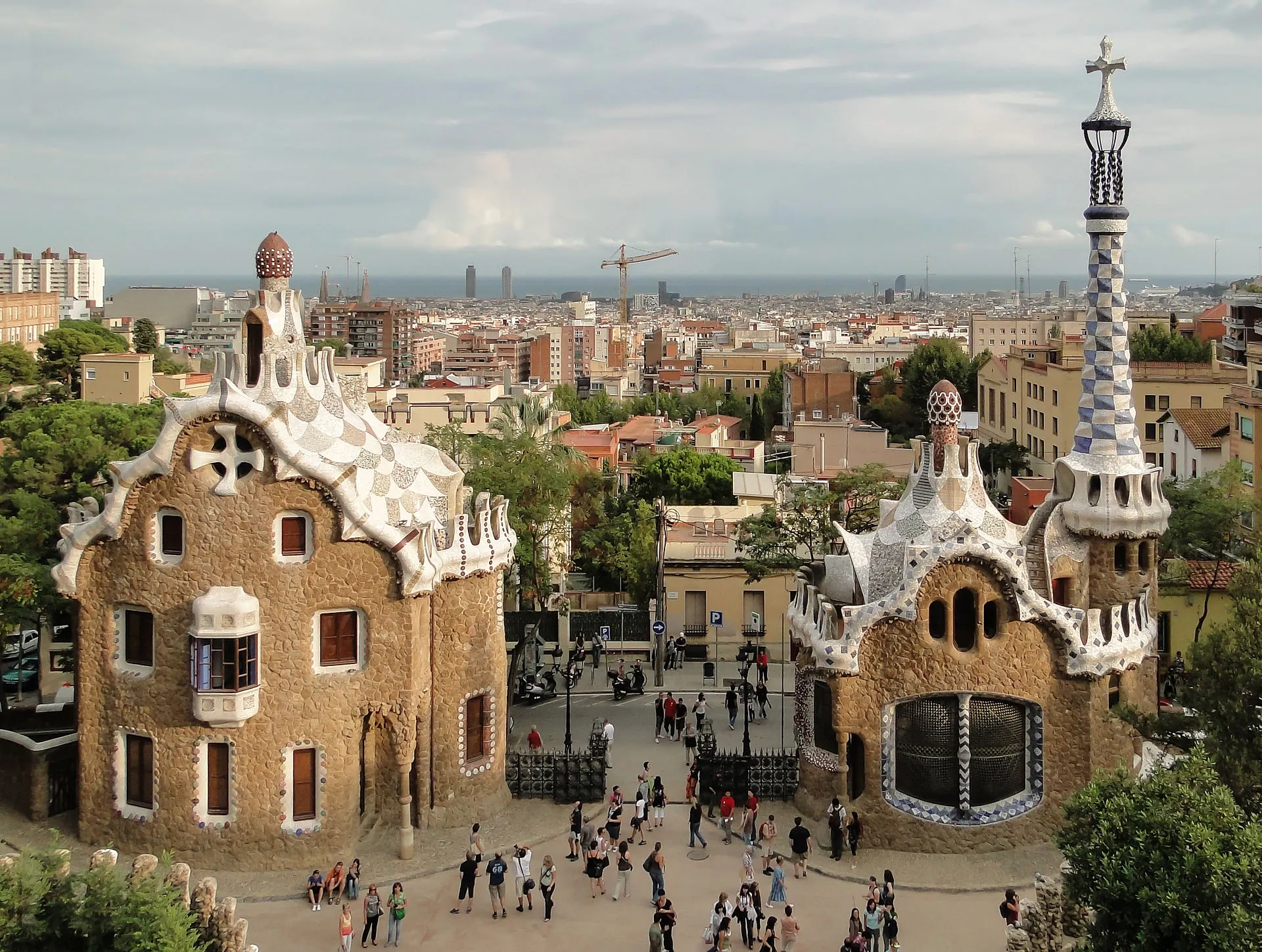
Observation Spots
Activities
Park Güell divides into two experiences, and the best visits use both. The ticketed Monumental Zone holds the icons — the Dragon Stairway, the Hypostyle Hall and the Nature Square terrace — and rewards an unhurried 90 minutes of close looking at the mosaics. Beyond it, the free hillside park is far larger and often overlooked:
- Walk the viaducts. The three stone bridges — including the leaning Pòrtic de la Bugadera — carry paths through the pine and carob woods, all outside the paywall.
- Climb to the Turó de les Tres Creus. The Calvary hill topped with three crosses is the park's highest point and its best free panorama over Barcelona to the sea.
- Visit the Gaudí House Museum. The pink show house where Gaudí lived from 1906 to 1925 is a separate, inexpensive ticket and displays furniture he designed.
- Rest in the Àustria Gardens. Once the estate's plant nursery, this flat, shaded lawn is the calmest corner for families with young children.
Combine the two zones and you can easily fill a half-day; a guide will sequence them so you hit the ticketed core at its best light and use the free trails to escape the crowds.
Seasonal Highlights
Spring (April–June): jacaranda and mimosa bloom across the terraced gardens, and mild temperatures make the uphill approach genuinely pleasant. Summer (July–August): long daylight means golden-hour light over Barcelona from the upper terrace — the panorama from roughly 150 metres elevation is at its most dramatic in the hour before sunset, though midday heat on the shadeless esplanade is fierce. Autumn (September–October): visitor numbers thin after August and the cooler air suits longer exploration of the free park zones. Winter: Christmas illuminations in the surrounding Gràcia neighbourhood complement a quieter, if greyer, park — the mosaics lose some sparkle under overcast skies.
Park Güell timeline
-
Güell buys the bald hill
Industrialist Eusebi Güell acquires the bare Muntanya Pelada and hires Gaudí to design a garden-city estate.
- 1900–1914
Gaudí builds the estate
The terraces, viaducts, columned marketplace and mosaic esplanade are laid out as shared infrastructure for the planned villas.
-
Gaudí moves in
The architect makes the estate's show house his home, living there until 1925 — today the Gaudí House Museum.
-
The scheme fails
With only two of sixty plots sold, work on the housing development stops for good.
-
The city steps in
Barcelona City Council buys the estate from the Güell family to save it as public land.
-
Opens as a public park
The grounds reopen to the people of Barcelona as a municipal park.
-
UNESCO World Heritage listing
Inscribed as part of the Works of Antoni Gaudí, cementing its global standing.
-
Ticketed Monumental Zone
Timed-entry tickets and a daily visitor cap are introduced to protect the mosaic core from overcrowding.
When to Visit
Hours: the Monumental Zone opens at 9:30 AM daily and closes between 6:30 PM (deep winter) and 9:30 PM (high summer), with the last timed-entry slot sold roughly an hour before closing. Entry is by half-hourly timeslot and you must arrive within your 30-minute window. Best time: the first slot at 9:30 AM for soft light on the mosaics and the thinnest crowds; the last summer slot for golden-hour views over the city. Least crowded: weekday mornings from November to February. The surrounding free park zones open earlier and close later than the ticketed core, so early risers can walk the viaducts before the gates to the Monumental Zone even open.
Admission and Costs
Prices below are the standard tiers sold through the official Park Güell ticketing site; onsite tickets cost more and routinely sell out.
- General admission: €10 ($11) online in advance, or €13 ($14) at the gate when available.
- Gaudí House Museum: a separate ticket of roughly €5.50 ($6), not included in general admission.
- Guided tours: €25-35 ($27-38) per person for a skip-the-line group tour of about 1.5 hours.
- Private guide: €150-250 ($162-270) for a group of up to six, admission not included — the most flexible option if you are also touring the Sagrada Família, which likewise sells out its own timed slots well ahead.
The wider hillside park beyond the Monumental Zone is free to enter, so budget travellers can enjoy the viaducts, woods and summit viewpoint at no cost.
The Case for a Guide
Every element of Park Güell carries deliberate meaning, and a good guide reveals the layer beneath the postcard. Expect them to cover:
- The symbolism: what the dragon staircase, the hypostyle columns and the serpentine bench were each designed to mean, and how the whole estate was planned as a self-contained community.
- The failed-development story: why Güell's estate of 60 planned villas attracted only two buyers (Güell and Gaudí themselves) and how that commercial failure created Barcelona's most-loved public space.
- The trencadís craft: how Gaudí's broken-tile mosaics were assembled from ceramic offcuts, and how the serpentine bench was shaped ergonomically — reportedly by pressing a workman into wet plaster — to fit the human body.
- The photo angles: the best positions for iconic shots with the Barcelona skyline and the Sagrada Família on the horizon, timed to the light.
- The free zones: the viaducts, woods and viewpoints outside the ticketed core that most day-trippers miss entirely.
Tips for Visitors
Book online well in advance — walk-up tickets frequently sell out and online booking is cheaper (€10 vs €13 at the gate). Arrive 15 minutes before your timed slot, as security checks at the entrance can cause delays, and note you must enter within your 30-minute window. From the metro (L3 at Lesseps or Vallcarca) the uphill approach is a steep 15-20 minute climb; the Bus Güell shuttle, city bus 24, or a taxi to the entrance saves energy for the park itself, and outdoor escalators help on the Vallcarca side. Large portions of the park outside the ticketed Monumental Zone are free to explore. Wear comfortable shoes: surfaces are uneven, stairs are steep, and pathways slope throughout. Allow 2 hours total — about 1.5 hours for the Monumental Zone and 45 minutes for the adjacent Gaudí House Museum (separate ticket). Pair the morning here with an afternoon at the Sagrada Família, a short metro ride away.
Frequently Asked Questions
Which months are best for visiting Park Güell?
May through September offers the best experience, with long sunny days that showcase Gaudí's mosaic work in vibrant natural light and comfortable temperatures for wandering the terraced gardens. Late spring and early autumn strike the sweet spot between pleasant weather and thinner crowds, while winter visits are still viable but overcast skies diminish the kaleidoscopic colours that define the park.
When does Park Güell open and what are the best visiting hours?
The Monumental Zone opens at 9:30 AM every day and closes between 6:30 PM in deep winter and 9:30 PM at the height of summer, with the last timed-entry slot sold roughly an hour before closing. The first slot at 9:30 AM gives you soft raking light on the mosaics and the thinnest crowds, while the final slot of a summer evening delivers golden-hour views across Barcelona to the sea. Weekday mornings from November to February are quietest of all.
Why is it worth hiring a guide for Park Güell?
A guide turns a pretty walk into a readable story. They decode the deliberate symbolism packed into El Drac, the hypostyle columns and the serpentine bench; explain how Eusebi Güell's failed luxury housing estate became Barcelona's most-loved park; and demonstrate the trencadís broken-tile technique that gives the terrace its shimmer. Just as usefully, a licensed guide books your timed slot, times the visit to the best light, and points you toward the free hillside zones most day-trippers never reach.
What are the iconic features to see at Park Güell?
The showpieces cluster in the Monumental Zone: El Drac, the mosaic salamander guarding the Dragon Stairway and the park's most-photographed image; the Nature Square terrace, ringed by the world's longest serpentine bench and perched above the city; and the Hypostyle Hall below it, where 86 Doric columns hold up the terrace like a petrified forest. Climb to the Turó de les Tres Creus for the highest 360-degree panorama in the park.
How do you get to Park Güell and is it accessible?
The park sits on a steep hill in the Gràcia district, about a 15-20 minute uphill walk from Lesseps or Vallcarca metro stations on line L3. The Bus Güell shuttle from Alfons X (L4) and city bus 24 stop closest to the entrance, and outdoor escalators climb part of the slope from Vallcarca. The Monumental Zone has a marked step-free route, but the wider park is hilly with uneven, sloping paths, so wear sturdy shoes and plan rests.