
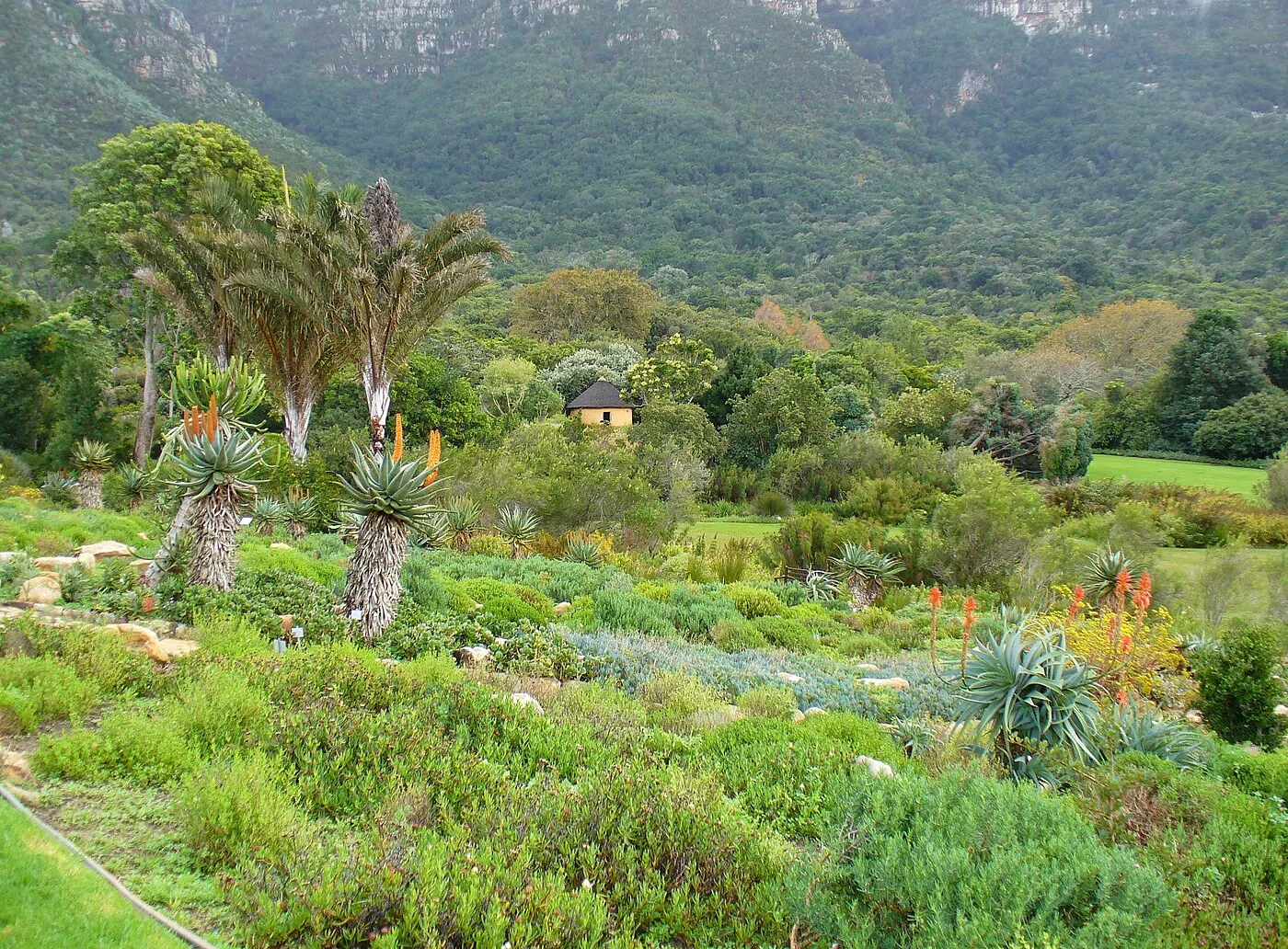
Observation Spots
Activities
Kirstenbosch rewards slow wandering, and a handful of set-pieces anchor most visits:
- The Boomslang canopy walkway — a sinuous steel-and-timber bridge about 130 metres long, rising some 12 metres into the arboretum, built for the garden's centenary and opened in 2014. Named for the tree snake it echoes, it carries you through the treetops for a slow arc of mountain and Cape Flats views.
- Camphor Avenue — a cathedral-like alley of camphor and Moreton Bay fig trees planted by Cecil Rhodes around 1898, and one of the garden's most photographed corners.
- The Protea Garden and Fynbos Walk — massed pincushions, king proteas and ericas found nowhere outside the Cape, at their most theatrical in spring.
- The Dell and Colonel Bird's Bath — a cool, fern-filled hollow around a spring-fed stone bath, among the oldest features on the estate.
- The Cycad Amphitheatre — a gathering of these living fossils, some of them species now extinct in the wild.
- The sculpture and fragrance gardens — Zimbabwean stone sculpture set among the beds, and a planting designed to be touched and smelled, with Braille labelling for visitors who are blind or partially sighted.
- Skeleton Gorge (the Smuts Track) — the forested ravine trail that starts inside the garden and climbs to the Table Mountain plateau in about three hours.
Seasonal Highlights
Spring, from August through October, is Kirstenbosch at full voice, when the fynbos beds and the wild slopes above them ignite with proteas, pincushions, daisies and ericas in the Cape's celebrated wildflower season. From late November to early April the garden hosts its Summer Sunset Concerts on Sunday evenings, when thousands spread picnic blankets on the main lawn as live music plays and the light fades behind the mountain. Summer days are hot and dry and best enjoyed early, while the wet Cape winter from June to August turns Skeleton Gorge lush and green and sends dramatic banks of cloud — Table Mountain's famous "tablecloth" — spilling over the ridge above the beds.
Kirstenbosch National Botanical Garden timeline
-
Van Riebeeck's wild-almond hedge
Jan van Riebeeck plants a boundary hedge of wild almond to mark the edge of the Dutch colony; surviving stretches still grow in the garden today.
-
Rhodes buys the estate
Cecil John Rhodes purchases the neglected eastern-slope farms and, a few years later, plants the Camphor Avenue.
-
Bequest to the nation
On Rhodes's death the land passes into public ownership, setting the stage for a national garden.
-
Kirstenbosch founded
Henry Harold Pearson becomes first director of the world's first botanical garden devoted to conserving a country's own indigenous flora.
-
UNESCO World Heritage status
Kirstenbosch is included in the Cape Floral Region Protected Areas, inscribed for its exceptional plant diversity.
-
Boomslang canopy walkway opens
The centenary tree-canopy walkway opens, lifting visitors into the arboretum canopy on a curving steel-and-timber bridge.
When to Visit
The garden is open daily — 8 AM to 6 PM from April to August and 8 AM to 7 PM in the summer months of September to March, so the gates stay open late enough for a sunset stroll in season. The Centre for Home Gardening, restaurant and Kirstenbosch tea room keep shorter hours, and the Conservatory glasshouse is open from 9 AM to 5 PM. Arrive at opening for the best birdwatching and the emptiest paths; spring mornings, from August to October, catch the wildflower display at its freshest. Sunday evenings from late November to early April fill quickly for the summer concerts, so come well before the music starts if you want a good patch of lawn.
Admission and Costs
For 2026–27, SANBI lists admission at R270 (about US$15) for adults from outside Africa; R110 (about US$6) for South African residents and SADC nationals with identification; and R150 (about US$8) for other African nationals with identification. Children aged 6–17 pay R40 (about US$2), and younger children enter free. South African tertiary students pay R60 (about US$3) with a student card. Admission is cashless; the USD amounts are rounded planning estimates.
SANBI membership and existing BotSoc Life membership carry garden-entry benefits; ordinary BotSoc membership does not. SANBI lists adult South African membership at R800 (about US$45) a year, so compare that with the entry rate you actually qualify for. Special events are excluded from standard membership entry. South African residents aged 60 and over can enter free on Tuesdays other than public holidays, with identification.
The garden's scheduled volunteer-led walks are included in admission, subject to availability. Private specialist tours and concerts are separately arranged: check the named operator or event listing for its price and inclusions instead of assuming an additional standard guiding fee.
The Case for a Guide
Most visitors walk the main paths, photograph the Boomslang and leave — but Kirstenbosch is a living index of the Cape Floral Kingdom, and a knowledgeable guide turns a pleasant garden stroll into a proper introduction to the world's richest concentration of plant life.
- Fynbos literacy — a botanical guide names the proteas, ericas and restios as you pass, and explains why this narrow strip of coast holds a floral kingdom all its own, most of it found nowhere else on Earth
- Reading the history in the planting — from Van Riebeeck's 1660 wild-almond hedge to Rhodes's Camphor Avenue and Pearson's grave, a guide threads three centuries of Cape history through the beds
- Seasonal timing — a guide knows which slopes are in flower that week and routes you straight to them, rather than leaving the wildflower season to chance
- The mountain connection — guides link the garden to the Table Mountain ecosystem above it, explaining fire, water and the fynbos life cycle, and can lead the Skeleton Gorge ascent safely
- Conservation context — SANBI's work on threatened species, cycad protection and seed banking is invisible to the casual visitor; a guide explains what the garden actually does beyond display
Tips for Visitors
- Wear proper shoes — the paths are well kept but the garden is steeply terraced, and an unhurried visit easily covers 5 km or more.
- Sun protection is essential — much of the garden is open to the sky and the Cape sun is fierce even under cloud, so bring a hat, sunscreen and water.
- Come early for birds — Cape sugarbirds, orange-breasted sunbirds and the occasional Knysna turaco are most active soon after the gates open.
- Picnics are welcome — spread a blanket on the lawns, but there are no braai (barbecue) facilities inside.
- Layer up in winter — the mountain flank catches wind and mist, and temperatures drop quickly when the tablecloth of cloud rolls in.
- Treat the Smuts Track seriously — Skeleton Gorge is a real mountain hike, so start early, carry water and check the weather, because the upper gorge is slippery and exposed after rain.
Frequently Asked Questions
When is the best time of year to visit Kirstenbosch?
The garden peaks from September through November, when the Cape fynbos and proteas burst into their spring bloom against the Table Mountain backdrop in one of the world's most extraordinary wildflower displays. The summer Sunday concert series from late November through early April adds a cultural dimension, with open-air performances on the main lawn as the sun sets behind the mountain. Winter from June through August brings Cape Town's rainy season, and while the garden is lush and green and the tablecloth of cloud is at its most dramatic, wet weather and shorter days make a long visit less rewarding.
What are Kirstenbosch's hours and when are the summer concerts?
The garden is open daily, 8 AM to 6 PM from April to August and 8 AM to 7 PM in the summer months of September to March; the Conservatory glasshouse and restaurant keep slightly shorter hours. Mornings are best for birdwatching and quiet paths, and spring (August to October) catches the wildflower display at its freshest. The Summer Sunset Concerts run on Sunday evenings from late November to early April and draw large picnic crowds, so arrive well before the music starts.
Is Kirstenbosch National Botanical Garden free to enter?
Admission is charged by visitor category: check SANBI’s 2026–27 admission categories before booking and bring identification for a concession. Children under six enter free. Free membership entry applies to SANBI members and qualifying existing BotSoc Life members, not ordinary Botanical Society membership; special events have separate conditions.
What can you do at Kirstenbosch National Botanical Garden?
Walk the Boomslang canopy walkway high into the arboretum treetops, wander the Protea Garden and Fynbos Walk, cool off in the fern-filled Dell around Colonel Bird's Bath, and explore the Cycad Amphitheatre and sculpture gardens. Picnics are welcome on the lawns (no braai facilities), and the forested Skeleton Gorge trail — the Smuts Track — starts inside the garden and climbs to Table Mountain's summit in about three hours.