

Overview
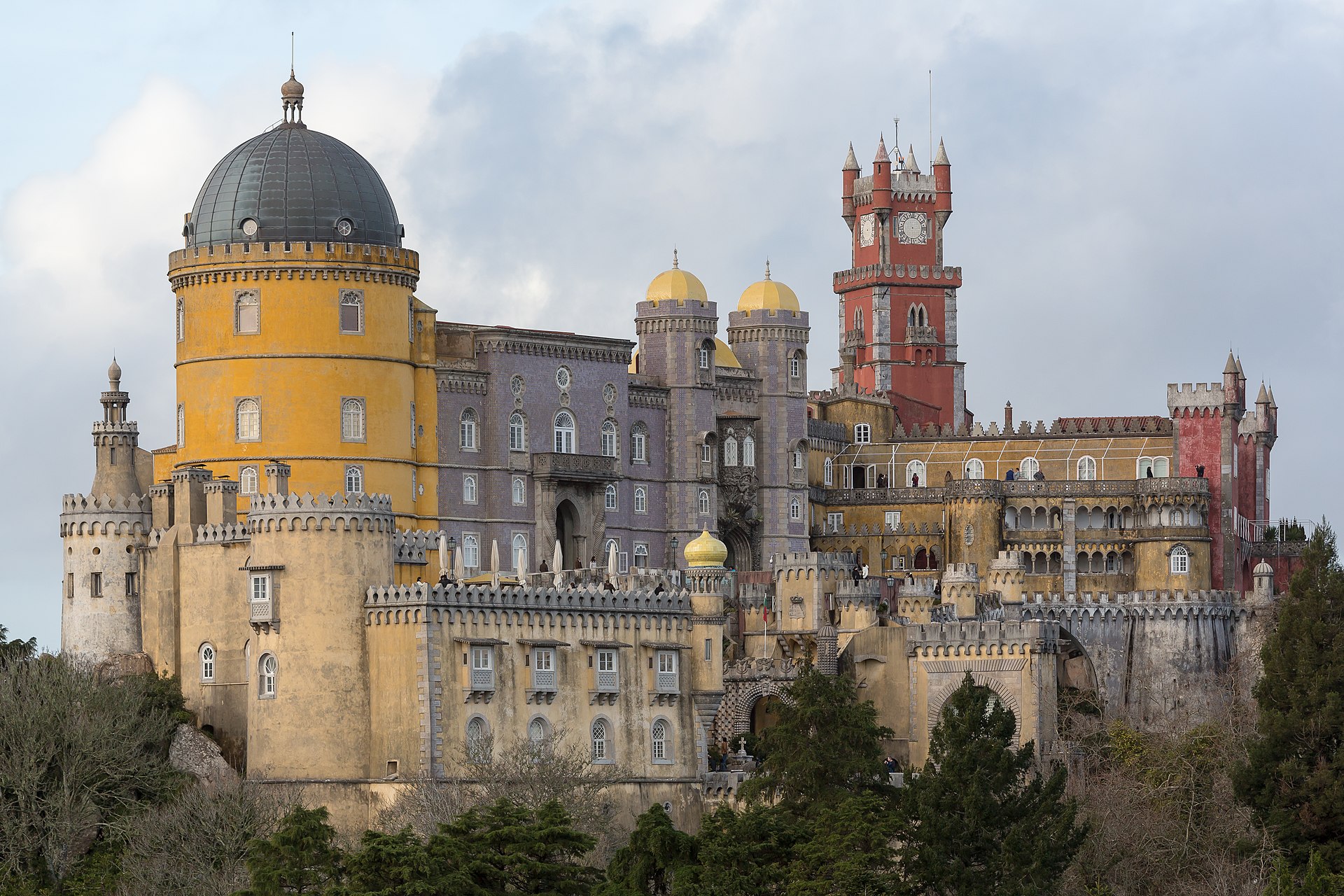
The Palácio da Pena is the architectural equivalent of a fever dream — and it was meant to be. King Ferdinand II, a German-born prince who married Portugal's Queen Maria II, commissioned the palace in 1842 on the ruins of a 16th-century monastery. Ferdinand was an artist, opera lover, and Romantic idealist who wanted a building that blended every historical style he admired: Moorish arches, Gothic turrets, Manueline twisted stonework, Renaissance domes, and whimsical Bavarian fantasy, all painted in blazing yellows, reds, and blues. The result, perched at 529 meters on the second-highest peak of the Serra de Sintra, is unlike anything else in Europe — a place where serious architecture and theatrical imagination merge into something genuinely arresting. UNESCO inscribed it as part of the Sintra Cultural Landscape in 1995.
Notable Rooms
Style decoding: Moorish, Gothic, Manueline, Renaissance — a guide identifies what comes from where and why Ferdinand combined them. Ferdinand II: The king-consort who designed the palace was one of 19th-century Europe's most fascinating figures — a guide tells his story. Interior rooms: The furnished royal apartments (ballroom, chapel, kitchen) are compact and easy to rush through — a guide adds the context that makes each room memorable. Park navigation: The 200-hectare park hides grottoes, lakes, chapels, and exotic trees from five continents — most visitors miss 90% of it
Fortification History
Queen's Terrace — The highest viewpoint, with panoramas stretching across Sintra's forests to the Atlantic coast. Triton gateway — A carved stone archway with a half-human sea creature symbolizing the union of Earth and Water. Original monastery chapel — The 16th-century core that Ferdinand built around, with Renaissance altarpiece intact. Royal apartments — Ferdinand and Maria II's private rooms, preserved with original furniture and personal effects. Pena Park — Engineered forest with specimen trees from Japan, Australia, and North America, plus hidden lakes and grottos. Drawbridge and ramparts — The palace's defensive elements are theatrical rather than practical — but stunning for photographs
When to Visit
Palace interior: 9:30 AM-6:30 PM (last entry 6 PM). Park grounds: 9 AM-7 PM (closes later than the palace). Best time: Opening at 9:30 AM — the terraces are nearly empty and fog often still clings to the towers. Least crowded: Weekday mornings in shoulder season; weekday afternoons are surprisingly quiet too. Photography: Overcast days produce the moodiest images; clear mornings show the Atlantic from the Queen's Terrace
Admission and Costs
Palace + Park: €14. Park only: €8 (worth it for the 200-hectare engineered forest alone). Combined ticket (Pena + Moorish Castle): €19 — saves a few euros. Group guided tours: €35-55 per person (2 hours, includes entry + guide). Private guide: €120-200 for up to 6 people (Pena + Park + Moorish Castle, 3-4 hours)
Tips for Visitors
Start early: Arrive at 9 AM for the park, 9:30 for the palace — by 11 AM the terraces are packed with coach groups. Steep uphill walk: The palace sits at the top of a 20-minute forested climb from the gate — wear proper shoes and bring water. Shuttle bus: A shuttle runs from the park entrance to the palace terrace (included in ticket) — saves the climb if mobility is a concern. Combine with Moorish Castle: The castle is a 15-minute walk through the forest — buy the combined ticket. Fog adds magic: Sintra's mist often wraps the towers in cloud — don't be disappointed, it makes the palace more atmospheric. Bring layers: The summit is noticeably cooler than Sintra town — 5-8°C difference on breezy days