
Engineering Facts
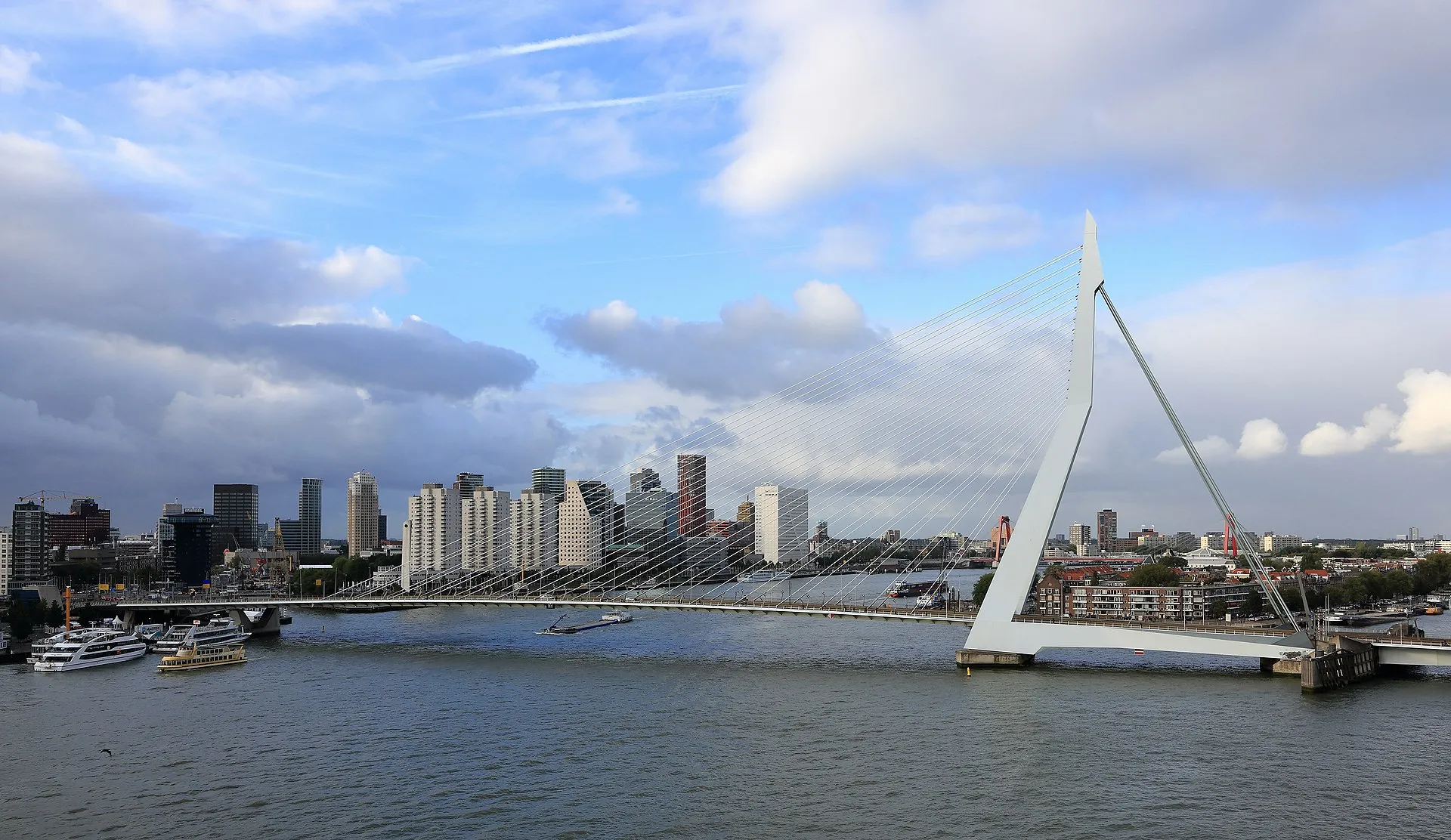
The Swan Pylon: The asymmetric 139-meter steel pylon leans backward at an angle, supported by 32 cables — its silhouette against the sky explains the "Swan" nickname at a glance. Night Illumination: Blue-white lighting transforms the bridge after dark, and its reflection creates a mirror image on the Nieuwe Maas that photographers travel specifically to capture. Kop van Zuid Views: From the bridge deck, look south to the De Rotterdam vertical city (Rem Koolhaas), the World Port Center, and the Montevideo tower — all part of the regeneration the bridge enabled. Hotel New York: The former headquarters of the Holland America Line sits at the bridge's southern end — the building where hundreds of thousands of European emigrants began their journey to America. Bascule Section: The southern portion of the bridge lifts hydraulically to let large ships pass — a dramatic mechanical event that stops traffic and reveals the engineering beneath the elegance.
When to Visit
Access: Open 24 hours — it's a public bridge carrying traffic, trams, cyclists, and pedestrians. Best: Dusk, when the setting sun lights the skyline from the west and the bridge illumination switches on; or dawn for empty walkways and morning light on the pylon. Bridge lifts: Occur occasionally for large vessels — unpredictable but worth watching if you're nearby.
Admission and Costs
Crossing: Free — pedestrian and cycle paths are always open. Architecture tours including bridge: €20-40 per person for guided city walks that cross the bridge. Hotel New York (south side): Coffee €3-5 in the former Holland America Line departure hall, a natural destination after crossing.
Tips for Visitors
Walk the full crossing: Budget 15-20 minutes each way. The pedestrian path is wide and protected from traffic, making it a pleasant walk rather than a highway crossing. End at Hotel New York: Cross to the south side and stop for coffee or lunch at Hotel New York — the Art Nouveau interior and maritime history make it a destination in its own right. Photography positions: The best shots of the bridge come from Willemsplein on the north bank, or from the water taxi dock on the south side. For the bridge at night, the riverside promenade west of the bridge offers unobstructed reflections. Wind exposure: The bridge is fully exposed to North Sea winds. On stormy days it can feel genuinely harsh — dress warmly and hold onto hats. Combine with water taxi: Take the yellow water taxi from the south side back to the north bank for a different perspective on the bridge and skyline. Combine with Cube Houses and Markthal for a full day of Rotterdam architecture.
Frequently Asked Questions
What season makes walking across Erasmus Bridge most enjoyable?
Late spring through early autumn (May to September) offers the most pleasant crossings, with longer evenings that let you time your walk for a spectacular sunset behind Rotterdam's skyline. Summer evenings provide the best conditions for photographing the bridge's night illumination reflected on the Nieuwe Maas river. The bridge is fully exposed to North Sea winds, so winter crossings from November through February can feel genuinely harsh, with cold gusts and driving rain making the 15-minute walk uncomfortable.
Is Erasmus Bridge accessible at all hours?
Access: Open 24 hours — it's a public bridge carrying traffic, trams, cyclists, and pedestrians.
What does a visit to Erasmus Bridge cost?
Crossing: Free — pedestrian and cycle paths are always open. Architecture tours including bridge: €20-40 per person for guided city walks that cross the bridge.
How long does it take to walk across Erasmus Bridge?
Walk the full crossing: Budget 15-20 minutes each way. The pedestrian path is wide and protected from traffic, making it a pleasant walk rather than a highway crossing.