
.jpg)
Overview
Since at least the 11th century, Jemaa el-Fnaa has served as the pulsing nerve center of Marrakech. UNESCO inscribed it in 2001 not as a building but as a living cultural space, recognizing the oral traditions, music, and performance arts that play out every single day. By morning it hosts orange juice vendors and henna artists; by afternoon, snake charmers and Berber herbalists claim their spots; by nightfall, over a hundred food stalls fill the air with smoke from grilled meats, snails, and sheep heads. No two visits to this square feel the same.
A guide decodes the performances — Berber storytelling (halqa), Gnawa trance music, and healing rituals — rather than letting you just watch. They steer you to food stalls with high turnover and proper food handling, navigate the pricing expectations with performers and henna artists, and know which surrounding cafes offer the best elevated sunset views. Combine with Bahia Palace (10 minutes southeast) and Majorelle Garden for a full Marrakech experience.
Photo Spots
A guide helps you decode the performances rather than just watching them — the Berber storytelling (halqa) circles where oral performers gather crowds with tales in Darija (Moroccan Arabic), the Gnawa trance music rooted in sub-Saharan spiritual traditions, and the herbal healing rituals all carry cultural depth invisible without explanation. Food safety navigation is critical: guides steer you to stalls with high turnover and proper food handling, dramatically reducing stomach trouble. Understanding why this space has survived 1,000 years and what UNESCO's Intangible Heritage designation actually protects gives the experience far more meaning. Hidden rooftop terraces above the square provide the best elevated sunset views — Cafe de France is the most famous, but guides know quieter alternatives.
Landmarks Along
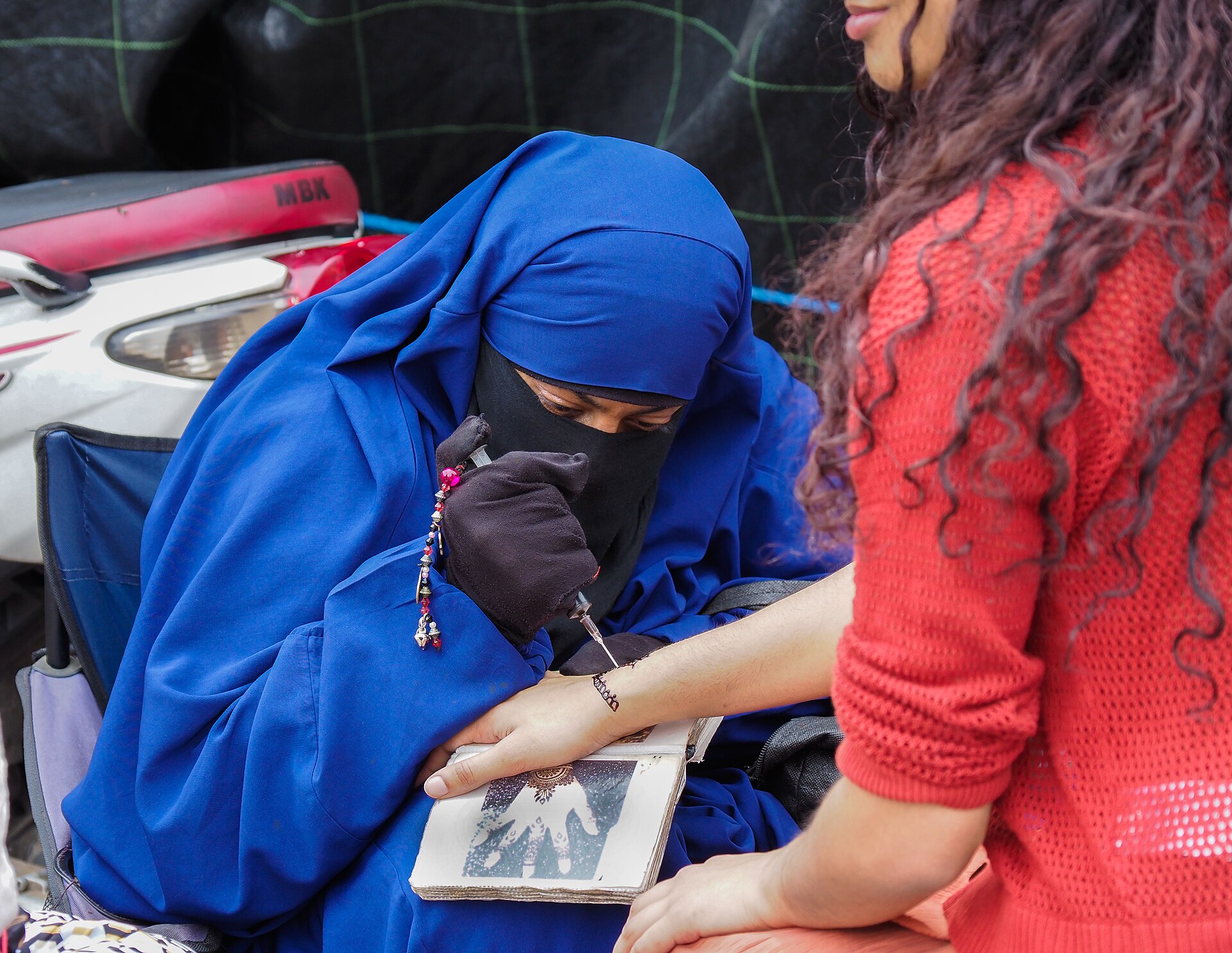
Dozens of fresh orange juice vendors compete along the north edge — prices should be 5-10 MAD. Gnawa musicians play iron castanets and chant in hypnotic rhythms rooted in sub-Saharan spiritual traditions. Halqa storytelling circles — oral performers gathering crowds with tales in Darija — preserve a tradition that UNESCO specifically protected with its 2001 Intangible Heritage designation. Each food stall has a number from 1 to 100+; locals debate favorites endlessly, and a guide settles the argument based on freshness and hygiene. Cafe de France's terrace offers an elevated vantage point over the entire square, ideal at sunset. Snake charmers are a controversial but iconic tradition; guides explain the cultural debate around animal welfare. Henna artists along the square's edges offer traditional designs — best negotiated with a guide present to avoid inflated tourist pricing.
When to Visit
Hours: Open 24 hours — the square never fully sleeps. Morning (8-11 AM): Fresh orange juice stalls, quieter browsing, henna artists setting up. Afternoon (2-5 PM): Snake charmers, monkey handlers, herbalists, halqa storytelling circles. Evening (6-11 PM): Peak energy with food stalls, Gnawa musicians, acrobats, and fortune tellers. Best time: Arrive around 5 PM to watch the transformation from daytime market to evening spectacle.
Admission and Costs
Entering the square: Free (it is a public space). Group walking tour including Jemaa el-Fnaa: 150-300 MAD (€14-28) per person (2-3 hours). Private evening food tour: 400-800 MAD (€37-74) per person including tastings. Private guide for the square: 300-600 MAD (€28-55) for 2 hours. Food stalls: 30-80 MAD (€3-7) per dish at the nightly food market.
Tips for Visitors
Watch your belongings: Pickpockets operate in the crowds, especially during peak evening hours. Photography rules: Performers demand payment for photos (10-20 MAD is fair); always ask first. Pricing transparency: Agree on food prices before sitting down at a stall. Stomach prep: Start with cooked-to-order dishes rather than pre-prepared options if you have a sensitive stomach. Comfortable shoes: You will walk extensively on uneven surfaces. Sunset arrival: The square's character shifts dramatically after dark, so plan to stay through the transition. Nearby attractions: The souks begin just north of the square; Bahia Palace is a 10-minute walk southeast.