

Overview
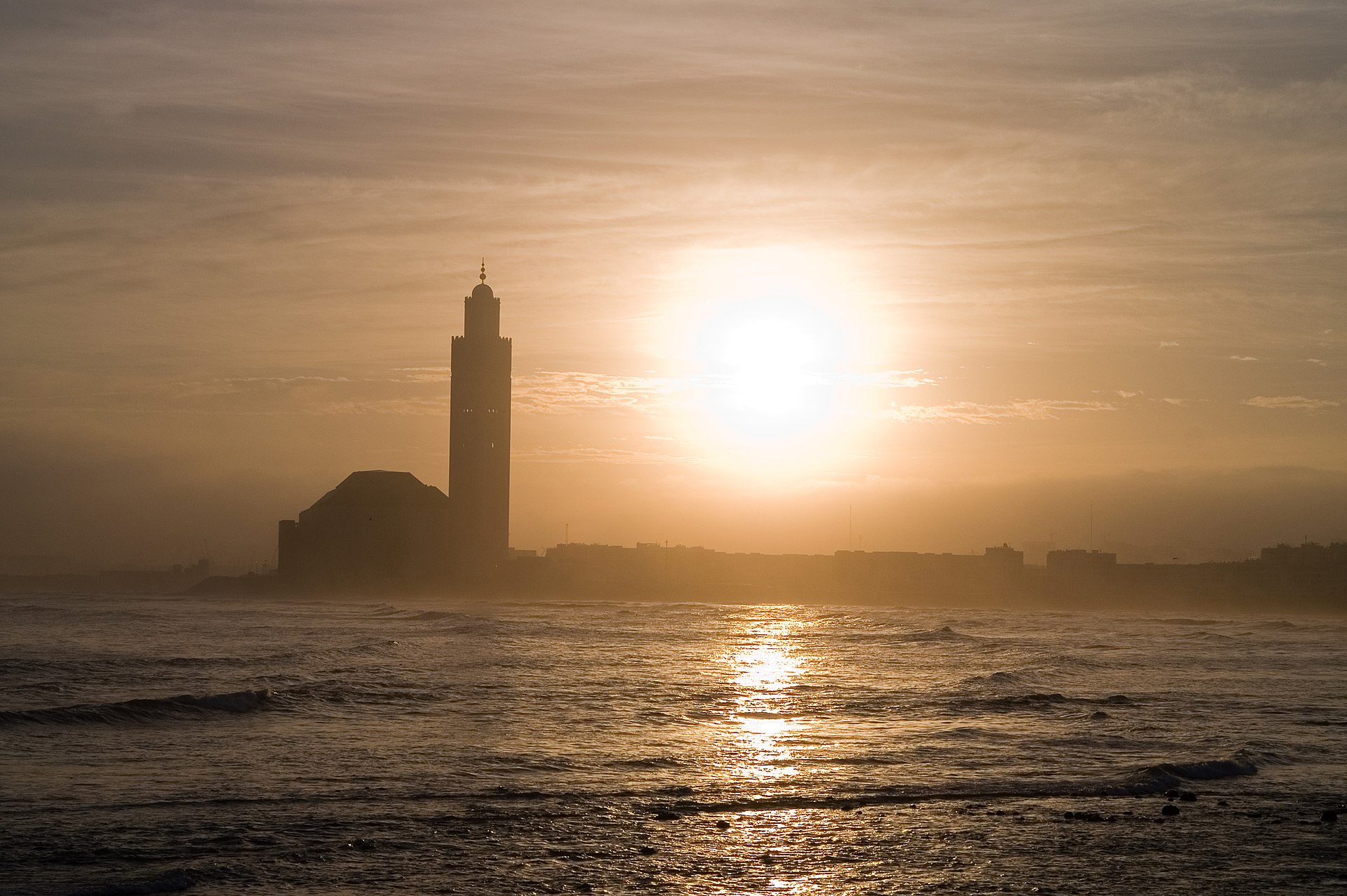
Completed in 1993 after seven years of construction, the Hassan II Mosque stands on a promontory jutting into the Atlantic Ocean, fulfilling King Hassan II's vision that God's throne should be built upon water. The statistics are staggering: a prayer hall accommodating 25,000 worshippers with a retractable roof that opens to the sky, an esplanade for 80,000 more, underfloor heating, a laser beam from the minaret pointing toward Mecca visible 30 kilometers away, and that 210-meter minaret — the tallest religious structure on Earth.
Over 6,000 Moroccan artisans spent 80 million work-hours creating the hand-carved marble, cedarwood ceilings, zellige tilework, and granite columns sourced from across the kingdom. It is one of the very few mosques worldwide that welcomes non-Muslim visitors through official guided tours. Combine with the Old Medina of Casablanca for traditional Morocco and the Corniche for the city's Atlantic seafront.
Visitor Etiquette
Interior access requires the official guided tour — non-Muslims cannot enter independently. The guides explain the engineering behind the retractable roof (which opens in three minutes), the heated marble floors, and the ocean platform foundation built to withstand Atlantic storms. They also help you distinguish the Fassi zellige tilework from Marrakchi carved gebs (plaster) and Casablanca granite column work — three distinct regional artisan traditions brought together in one building. The underground levels include hammam and ablution halls of extraordinary beauty, accessible only on the tour. The mosque's ocean location references a Quranic verse about God's throne being upon water, a symbolism that the guided commentary places within the broader context of King Hassan II's political and spiritual vision for modern Morocco.
Spiritual Significance
Sections of the prayer hall floor are transparent glass, revealing Atlantic waves crashing below — a visceral connection between worship and the ocean that inspired the mosque's construction. The massive retractable roof slides open in three minutes, turning the prayer hall into an open-air space beneath the sky. 78 granite columns and thousands of hand-cut marble panels sourced from quarries across Morocco support the interior. The cedarwood ceiling, carved from Atlas cedar in patterns that took artisans years to complete, still carries the faint scent of the forest. Over 10,000 square meters of hand-cut zellige geometric mosaics in traditional Fassi blue, green, and white cover the lower walls. The esplanade at sunset — with the Atlantic stretching to the horizon and the minaret lit from within — is one of the most striking scenes in all of Casablanca.
When to Visit
Non-Muslim guided tours: Saturday-Thursday at 9 AM, 10 AM, 11 AM, and 2 PM. Closed to tourists on Fridays: Friday is the main prayer day. Ramadan hours: Reduced schedule; check locally. Best time: The 9 AM tour for smaller groups and morning light flooding the prayer hall. Allow: 1 hour for the guided interior tour, plus 30 minutes for the exterior and esplanade.
Admission and Costs
Official guided tour: 130 MAD (€12) per person, includes interior access and guide. Students/children: 60 MAD (€5.50) with valid ID. Exterior and esplanade: Free (open to all, no ticket needed). Private guide for mosque + city context: 500-900 MAD (€46-83) for combined half-day tour. Photography inside: Permitted (no flash); no extra fee.
Tips for Visitors
Arrive early: Tour groups form quickly; 15 minutes before scheduled time ensures your spot. Dress modestly: Shoulders and knees covered; women should bring a headscarf (free scarves available at entrance). Remove shoes: Required inside the prayer hall; shoe bags are provided. Photography tip: The best exterior shot is from the coastal walkway south of the mosque at golden hour. Windy platform: The ocean-facing esplanade can be very windy; secure loose items. Tramway access: The closest tram stop is "Hassan II" on line T1.