
.jpg)
Overview
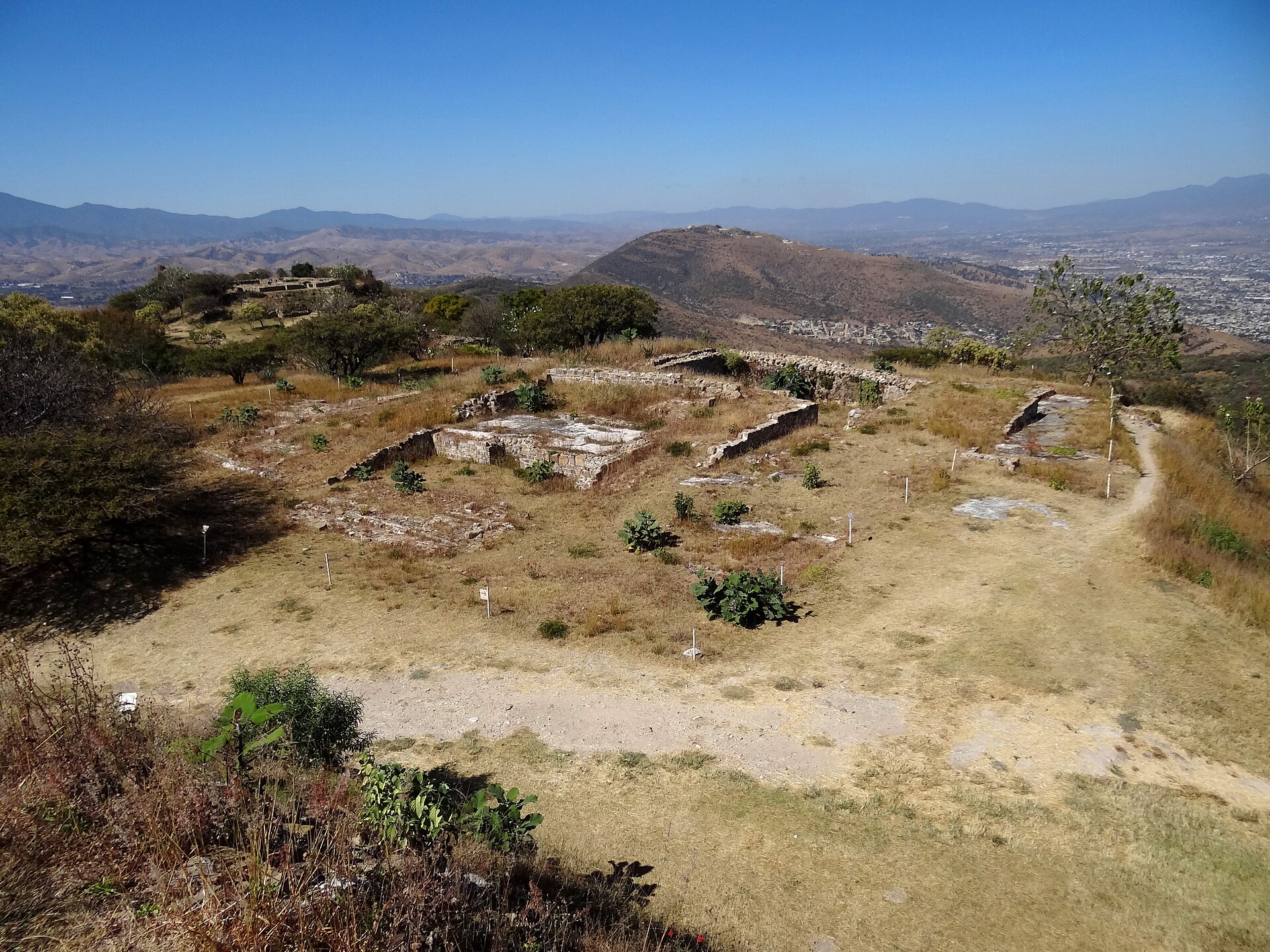
Monte Alban is one of Mesoamerica's great ancient cities, perched on a dramatically flattened mountaintop 400 meters above the Oaxaca Valley floor. The Zapotecs began building here around 500 BCE, leveling the mountain's peak to create the immense Grand Plaza — a feat of engineering that still impresses today. For over 1,300 years, this was the political, economic, and ceremonial heart of Zapotec civilization, at its height home to an estimated 25,000 people across terraced hillsides surrounding the central precinct.
The site preserves one of Mesoamerica's earliest known writing systems, visible in the carved Danzantes slabs — originally thought to depict dancers but now understood to show conquered rulers and captives. Building J, an arrow-shaped structure in the center of the plaza, functioned as an astronomical observatory aligned to specific stars and seasonal events. The Ball Court, sunken platforms, and elaborate tombs (including the treasure-filled Tomb 7, whose gold artifacts are now displayed at Santo Domingo Temple's museum in the city) speak to a sophisticated society. Declared a UNESCO World Heritage Site in 1987, Monte Alban offers panoramic 360-degree views across three converging valleys. Combine with Hierve el Agua for petrified waterfalls and natural infinity pools.
Excavation History
Major excavation of Monte Alban began under Mexican archaeologist Alfonso Caso in 1931, and his team's discovery of Tomb 7 in 1932 yielded one of the richest archaeological finds in the Americas — over 400 objects of gold, silver, turquoise, jade, and carved bone, crafted by Mixtec artisans who reused the Zapotec tomb centuries after its original construction. The Danzantes gallery preserves over 300 carved stone slabs representing some of the earliest writing in Mesoamerica — the contorted figures, once interpreted as dancers, are now understood to depict sacrificed captives with hieroglyphic name tags, evidence of military conquest as early as 500 BCE. Building J's unusual arrow shape and astronomical alignment to the star Capella and the zenith sun passage suggest it functioned as an observatory, making Monte Alban one of the earliest sites in the Americas with documented astronomical architecture. The Ball Court follows the standard Mesoamerican I-shape but lacks the stone rings found at Maya sites, indicating regional variation in the ritual ballgame.
Key Artifacts
The Grand Plaza measures 300 by 200 meters — one of the largest public ceremonial spaces in the ancient Americas, and the fact that it was artificially leveled from a natural mountain peak makes the engineering achievement even more impressive. Tomb 7's treasures, now displayed at the Museo de las Culturas de Oaxaca inside Santo Domingo's former monastery, include a gold pectoral depicting the death god Mictlantecuhtli, turquoise-encrusted skull masks, and a carved jaguar bone inscribed with a genealogical record of Mixtec rulers — one of the most important historical documents in pre-Columbian Mexico. The on-site museum displays ceramics, jade ornaments, and carved bones excavated from the site's elite tombs. The South Platform offers the most panoramic viewpoint, with unobstructed views across the Oaxaca, Etla, and Tlacolula valleys converging below.
When to Visit
Open: Daily 8:00 AM - 5:00 PM (last entry 4:30 PM). Best time: Arrive at 8:00 AM opening for cool temperatures, soft light, and smaller crowds. Duration: Plan 2-3 hours to explore the Grand Plaza, museum, and surrounding platforms. Season note: Rainy season (June-September) brings afternoon thunderstorms — morning visits are essential.
Admission and Costs
Site entry: MX$90 (~$5 USD). INAH guide at entrance: MX$600-800 ($34-45) for a 2-hour guided tour. On-site museum: Included with entry ticket. Parking: MX$40 ($2). Transport from Oaxaca city: Colectivos MX$60-80; taxis MX$200-300 one way.
Tips for Visitors
Hire an INAH guide: Licensed guides wait at the entrance and bring deep Zapotec history context — well worth the cost for understanding what you are seeing. Sun protection: There is almost no shade on the Grand Plaza; bring a hat, sunscreen, and at least a liter of water per person. Comfortable shoes: The terrain is uneven stone with steep stairways on several structures. Combine with Atzompa: The nearby Atzompa archaeological site (a Monte Alban satellite settlement) is 15 minutes away and rarely visited — ask your guide. Photography: Tripods require a permit; handheld cameras and phones are fine. The morning golden hour produces the best shots from the South Platform.