
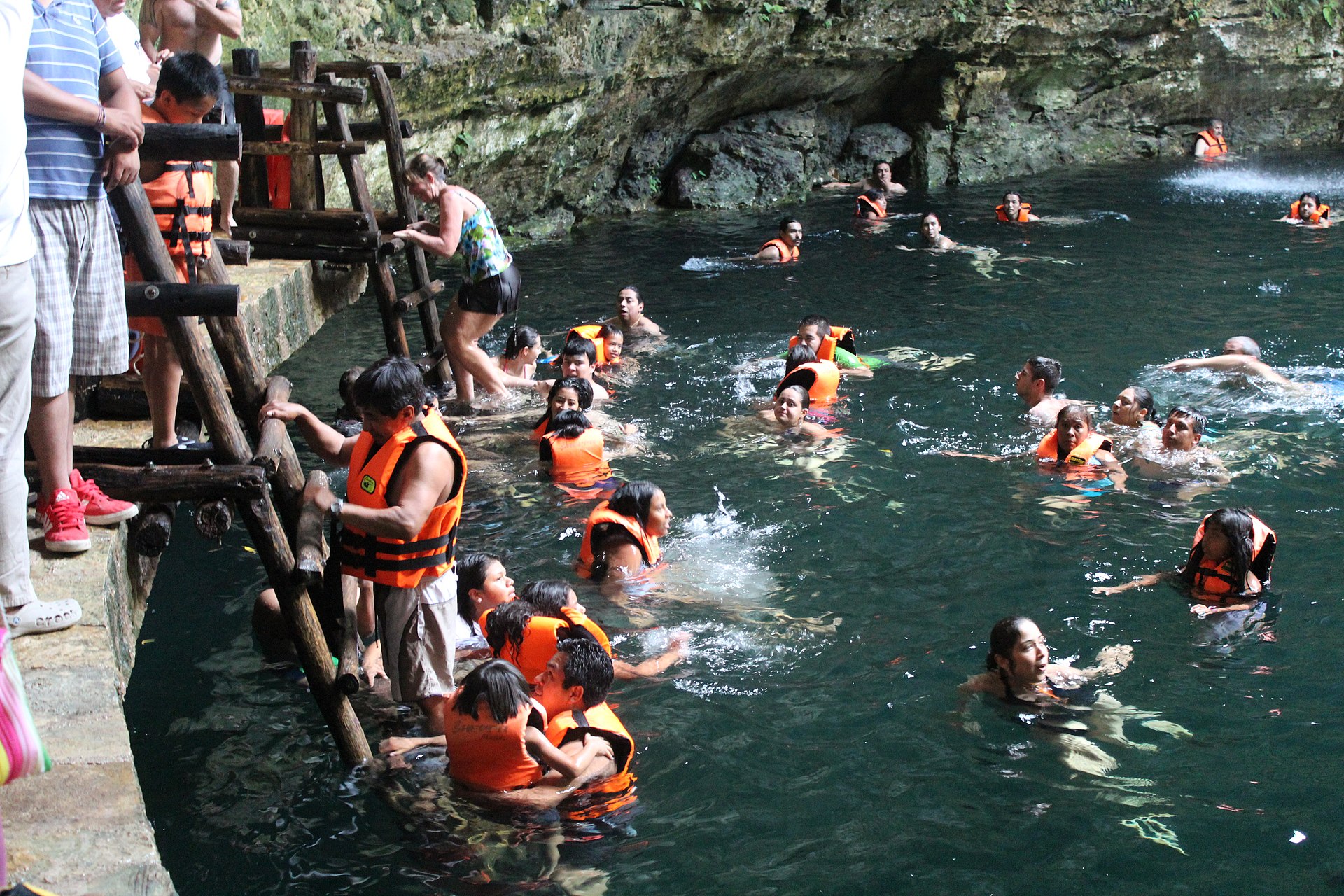

Overview
The Yucatán Peninsula sits on a vast platform of porous limestone riddled with thousands of cenotes — natural sinkholes formed when the cave roof collapses to expose underground rivers of astonishing clarity. The word derives from the Yucatec Maya "dz'onot," and these pools were far more than swimming holes to the ancient Maya. They were portals to Xibalba, the underworld, and served as vital water sources, ceremonial sites, and places of sacrifice. Archaeologists have recovered jade, gold, ceramics, and human remains from cenote depths across the peninsula.
Near Merida, the cenotes cluster thickly — the Homún area alone contains over 150 within a few square kilometers, many still unknown to tourists. Cuzamá offers a unique approach: a horse-drawn rail cart on old henequén plantation tracks delivers you to three cenotes hidden in the scrubby forest. The variety is extraordinary: some are open-air pools fringed with jungle vegetation, others are semi-open with root systems dangling from above, and the most dramatic are fully underground — cathedral-like caverns where shafts of light pierce through ceiling holes to illuminate water of impossible turquoise clarity. Combine with Uxmal for archaeology and swimming in the same day.
Trails
Homún cluster: Over 150 cenotes in one municipality — bike or mototaxi between half a dozen in a single day, from open pools to underground caverns. Cuzamá rail cart: A horse pulls your cart along abandoned henequén plantation rails through the bush to three hidden cenotes — an experience unique to the Yucatán. X'Canché: A short jungle path from Ek Balam ruins leads to this beautiful semi-open cenote with a rope swing and wooden platforms, perfect for combining archaeology and swimming. Light beam cenotes: Underground caverns where a shaft of sunlight pierces the ceiling hole and illuminates the water below like a spotlight — Suytun is the most photographed example. Cavern diving: Certified divers can explore the submerged cave systems connecting cenotes — the Yucatán holds some of the longest underwater cave systems on Earth. Maya sacred sites: Some cenotes retain ceremonial significance — offerings and rituals are still practiced at certain locations by local Maya communities.
Wildlife
The cenote ecosystems support remarkable life adapted to underground conditions. Blind cave fish (Astyanax mexicanus) navigate the submerged passages using lateral line sensors instead of eyes. Freshwater turtles and small crocodiles inhabit some open-air cenotes. The surrounding jungle attracts toh birds (turquoise-browed motmots) — the Yucatán's emblematic species — which nest in limestone burrows near cenote edges. Bats roost in the cave ceilings of underground cenotes, emerging at dusk in dramatic swirling columns. The root systems dangling into semi-open cenotes create microhabitats for orchids, bromeliads, and ferns.
When to Visit
Open: Monday-Sunday 8 AM - 5 PM (most cenotes). Best: Early morning (8-10 AM) for the most dramatic light beams in underground cenotes. Midday advantage: Open-air cenotes are warmest and brightest from 11 AM - 2 PM. Avoid: Weekends and Mexican holidays when popular cenotes fill with local families.
Admission and Costs
Small community cenotes: MX$100-150 per person. Popular cenotes (Suytun, Santa Barbara): MX$200-300 per person. Cuzamá horse-cart circuit (3 cenotes): MX$400 per cart (fits 4). Life jacket rental: MX$50 (required at most sites). Guided cenote circuit from Merida: MX$1,500-2,500 per person including transport.
Tips for Visitors
Reef-safe sunscreen only: Bring biodegradable, reef-safe sunscreen — chemical sunscreens damage the fragile cenote ecosystem. Most cenotes now require you to shower before entering and will prohibit standard commercial sunscreens. Some sell approved alternatives at the entrance. Shower before entry: This is required at virtually all cenotes, not optional. The underground water systems are interconnected and incredibly sensitive to contamination. Facilities are basic but functional at most sites.
Snorkeling and diving: Many cenotes offer excellent visibility for snorkeling — bring your own mask and snorkel for the best fit. Certified cave divers can arrange technical dives through specialized operators in Merida, but cenote diving requires specific training beyond open-water certification. Weekday visits: Popular cenotes near Cancun are overrun on weekends. The cenotes around Merida are generally quieter, but visiting Tuesday through Thursday guarantees the most peaceful experience. Local guides find hidden gems: Many of the best cenotes are on private ejidal (communal) land with small entrance fees and no signage. A local guide knows which ones are accessible, which have the best formations, and which communities welcome visitors — you'll see cenotes that don't appear on any tourist map. Bring water shoes: Many cenotes involve climbing down slippery limestone stairs or rocky paths. Water shoes with good grip make the descent safer and more comfortable than flip-flops.