

Overview
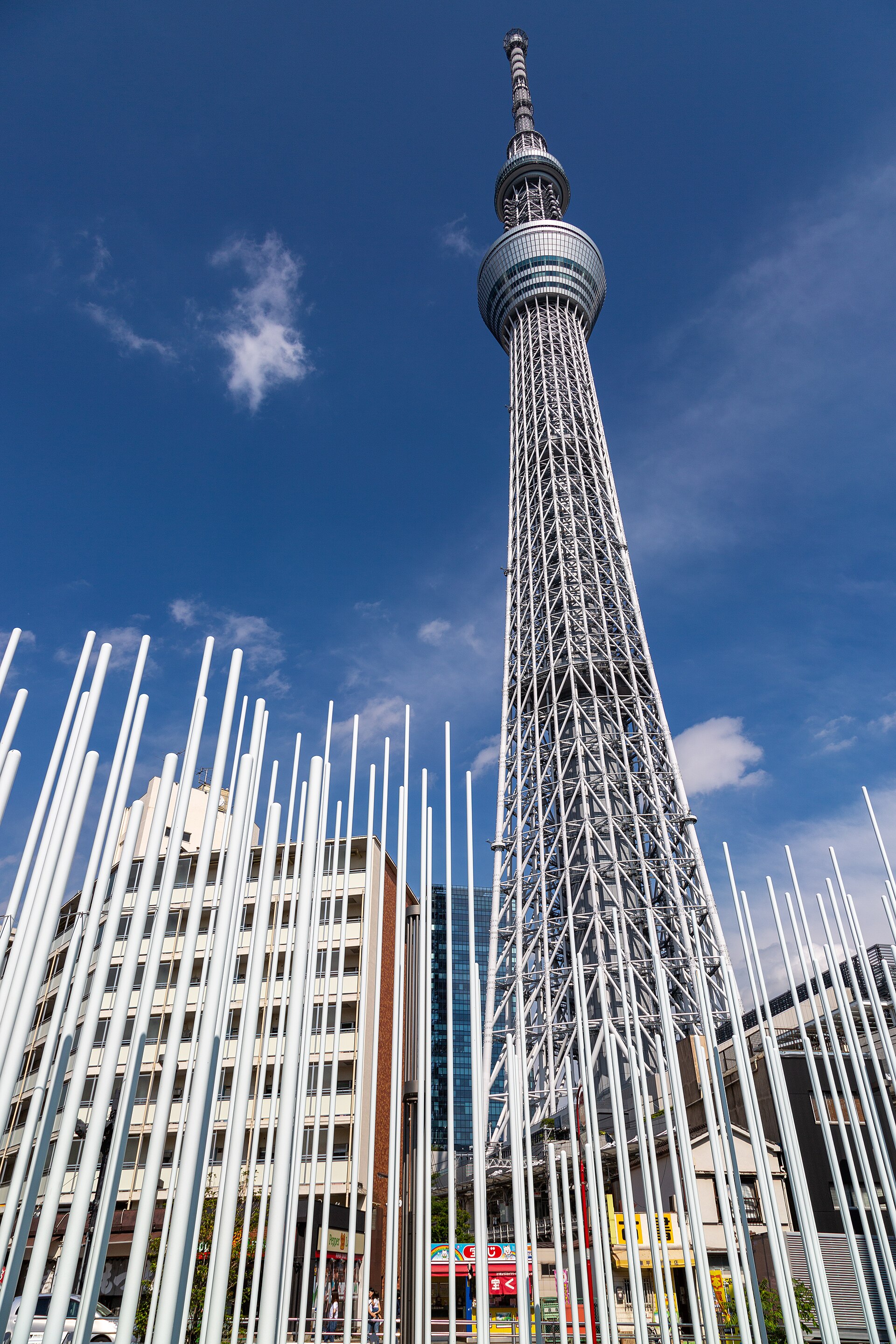
Standing 634 meters (2,080 feet) tall, Tokyo Skytree is the world's tallest tower and Japan's most recognizable modern landmark. Opened in 2012, this broadcasting and observation tower offers breathtaking 360-degree views from two observation decks. On clear days, you can see Mt. Fuji 100 km away. The tower combines cutting-edge engineering with traditional Japanese design elements inspired by temple pagodas.
With a guide, the panorama becomes a living map of Tokyo's sprawling geography: they can identify the Imperial Palace, Rainbow Bridge, and the distant ridgeline of Japan's Chichibu Mountains, while explaining how the tower's height of 634 meters is a wordplay on "Musashi," the ancient province name for this region. The tower is a 15-minute walk from Senso-ji Temple, making the two an ideal pairing.
Engineering Facts
The tower's 634-meter height makes it the tallest free-standing broadcasting structure on Earth. Its triangular base transitions to a circular cross-section at 350 meters, a design inspired by the curves of traditional Japanese katana swords. The central shinbashira (heart pillar) — a reinforced concrete column running through the core — uses the same damping principle found in five-story pagodas, which have survived earthquakes for over 1,000 years. The structure can withstand winds of 90 meters per second and is engineered for magnitude 7+ earthquakes. At night, the tower alternates between two illumination patterns: Iki (elegant blue) and Miyabi (regal purple), reflecting the aesthetics of Edo-era Tokyo.
Observation Points
Tembo Deck at 350m: The main observation floor with 360-degree glass walls, a glass floor section where you can look straight down, and a cafe serving drinks with a view. On clear days, Mt. Fuji appears on the western horizon 100 km away. Tembo Galleria at 450m: A sloping glass spiral ramp leading to Japan's highest accessible point, offering a unique walking-in-the-sky experience. Night illumination: The tower lights up in different colors visible across Tokyo. Solamachi mall: Over 300 shops and restaurants at the base, including a planetarium and aquarium. Combine with nearby Senso-ji Temple for a morning temple visit followed by afternoon tower views.
When to Visit
Observation decks: Daily 10 AM - 9 PM (last entry 8 PM). Best: Sunset to see day/night transition (book ahead). Clear weather: Check forecast — views depend on visibility. Avoid: Weekends and holidays — very crowded.
Admission and Costs
Tembo Deck (350m): ¥2,100 adult. Tembo Galleria (450m): Additional ¥1,000. Combo ticket: ¥3,400 for both decks. Fast Skip ticket: Extra ¥500-1,000 to skip lines.
Tips for Visitors
Book timed-entry tickets online to avoid the main queue, which can exceed an hour on weekends and holidays. The Tembo Deck at 350m is included in the base ticket, while the Tembo Galleria at 450m costs extra but offers a unique glass-corridor experience worth the upgrade. Time your visit for sunset to enjoy both daylight city views and the transition to illuminated nightscape — this is the most popular window, so reserve early. The attached Solamachi mall at the base has over 300 shops and restaurants, making it a worthwhile backup plan if weather obscures the view from the observation decks.