

Overview
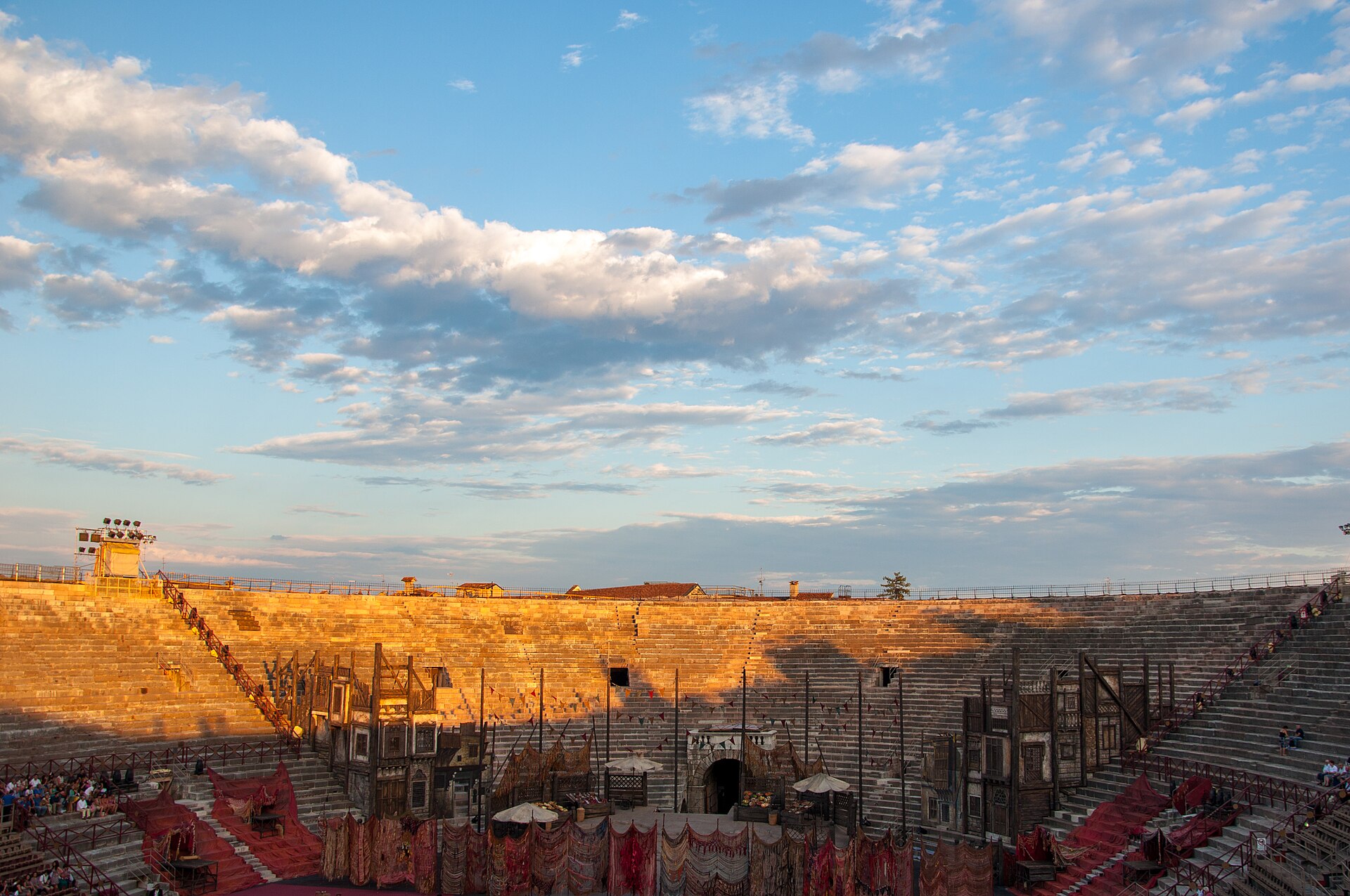
Built around 30 AD, the Arena di Verona is one of the best-preserved Roman amphitheaters in the world. Originally seating 30,000 spectators for gladiator contests and public spectacles, it survived an earthquake in 1117 that collapsed the outer ring. What remains can still hold 22,000 people, making it the world's largest open-air opera house. Since 1913, the Arena has hosted the legendary Opera Festival every summer. Productions of Aida, Carmen, and Nabucco unfold on enormous stages with casts of hundreds, while the audience holds candles at dusk, creating a sea of flickering light. Experiencing opera here, under the stars in a Roman ruin, ranks among Italy's most magical cultural experiences. Juliet's House and Castelvecchio are both walkable in Verona's compact center.
Seating Guide
45 rows of original Roman marble terraces rise steeply from the arena floor, providing remarkable sightlines from every position. The gradoni (stone steps) in the upper tiers are the most affordable opera seats but are also the most atmospheric -- this is where the audience holds candles at dusk. The poltronissime (premium stalls) on the arena floor offer the best sound but lose the panoramic sweep of the Roman architecture above. The surviving outer arcade "wing" -- a fragment of the original two-story exterior -- hints at the amphitheater's lost grandeur. Stand at the center of the arena floor and whisper: the acoustics carry sound perfectly to every seat.
Events Schedule
The Opera Festival runs June through September, with major productions including Aida (the most frequently staged, with enormous Egyptian sets), Carmen, Nabucco, La Traviata, and Turandot. Performances begin at 9 PM as daylight fades, and the traditional candle-lighting ceremony at dusk transforms the amphitheater into a sea of flickering light. The season opens with a gala performance. Popular productions sell out months ahead. Piazza Bra -- the square embracing the Arena -- fills with pre-show diners and becomes Verona's living room on opera nights.
When to Visit
Daytime visits: Tuesday-Sunday, 9 AM - 7 PM. Opera season: June-September (performances start at 9 PM). Monday: 1:30 PM - 7:30 PM. Closed during daytime on opera performance days (opens for show only).
Admission and Costs
Daytime entry: €10. VeronaCard: includes entry with 24/48-hour museum pass. Opera tickets: €30-300+ depending on seat. Guided day tour: €30-50 per person (1-1.5 hours). Private guide: €100-180 for up to 6 people.
Tips for Visitors
Book opera tickets early: popular productions sell out months ahead. A cushion is essential: stone seats are beautiful but brutal after 3 hours. Arrive 1.5 hours before opera for candle distribution and pre-show atmosphere. Rain policy: opera continues in light rain; major storms pause or cancel. Visit during the day first to explore the architecture before experiencing it filled with music. Combine with Juliet's House and Castelvecchio for a full Verona day.