
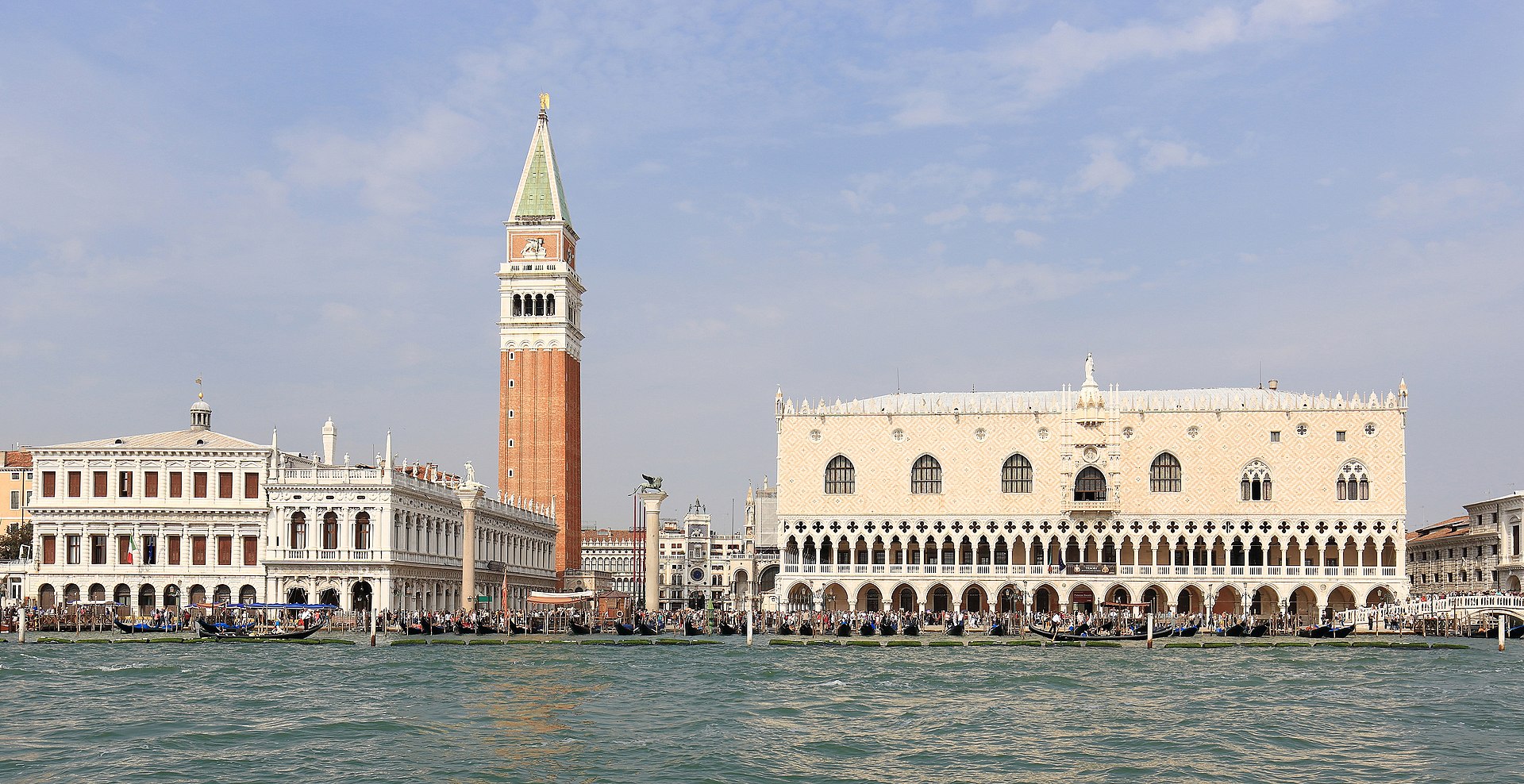

Overview
Venice's cathedral, built in 1092, is a Byzantine marvel covered in 8,000 square meters of golden mosaics. Originally the doge's private chapel, it houses the relics of St. Mark, looted from Alexandria in 828 AD. The ornate facade features marble pillars, bronze horses, and intricate spires reflecting Venice's maritime power and Eastern trade connections. Inside, the sheer density of golden mosaic surfaces can overwhelm the eye without expert interpretation. A guide directs your gaze upward through the sequence of Old and New Testament narratives unfolding across the domes, explaining how Byzantine craftsmen set individual tesserae at slightly varied angles so the gold ground shimmers as natural light shifts throughout the day. The Pala d'Oro altarpiece contains thousands of enameled plaques and precious stones assembled over four centuries. The Doge's Palace is adjacent, and the Grand Canal is steps away.
Spiritual Significance
The basilica houses the relics of St. Mark the Evangelist, stolen from Alexandria in 828 AD by Venetian merchants who smuggled the body past Muslim guards by hiding it under layers of pork. This audacious theft gave Venice its patron saint and its symbol -- the winged lion. The 8,000 square meters of Byzantine mosaics depict scenes from Genesis through Revelation, with the gold ground representing divine light. The Pala d'Oro altarpiece behind the high altar is one of the finest works of Byzantine goldsmithing: a panel of gold, enamel, and over 2,000 precious gems -- rubies, sapphires, emeralds, and pearls -- assembled between the 10th and 14th centuries. The four bronze horses on the facade (originals now inside the museum) were looted from Constantinople during the Fourth Crusade in 1204.
Visitor Etiquette
Dress code: shoulders and knees must be covered -- strictly enforced at the entrance with no option to cover up at the door, so plan your outfit before arriving. Free lockers across the piazza at Ateneo San Basso let you store large bags that are not allowed inside. No photography with flash inside the basilica. Maintain respectful silence during services. The museum level (€7) offers rooftop views directly over Piazza San Marco and a chance to see the bronze horses up close.
When to Visit
Monday-Saturday: 9:30 AM - 5 PM (Sunday 2-5 PM for worship). Best: early morning or late afternoon. Lines: 1-2 hours without guide access.
Admission and Costs
Entry: €3 (main basilica). Pala d'Oro: €5 (golden altarpiece). Guided: €30-50 with skip-the-line. Private: €200-350 for up to 6.
Tips for Visitors
The Pala d'Oro golden altarpiece costs an extra €2 but is absolutely worth it for the close-up view of intricate Byzantine goldwork. Visit the museum level for rooftop views directly over Piazza San Marco. Combine with the adjacent Doge's Palace -- both are in the same square. The Grand Canal begins just around the corner. Early morning or late afternoon visits avoid the worst crowds.