
Spiritual Significance
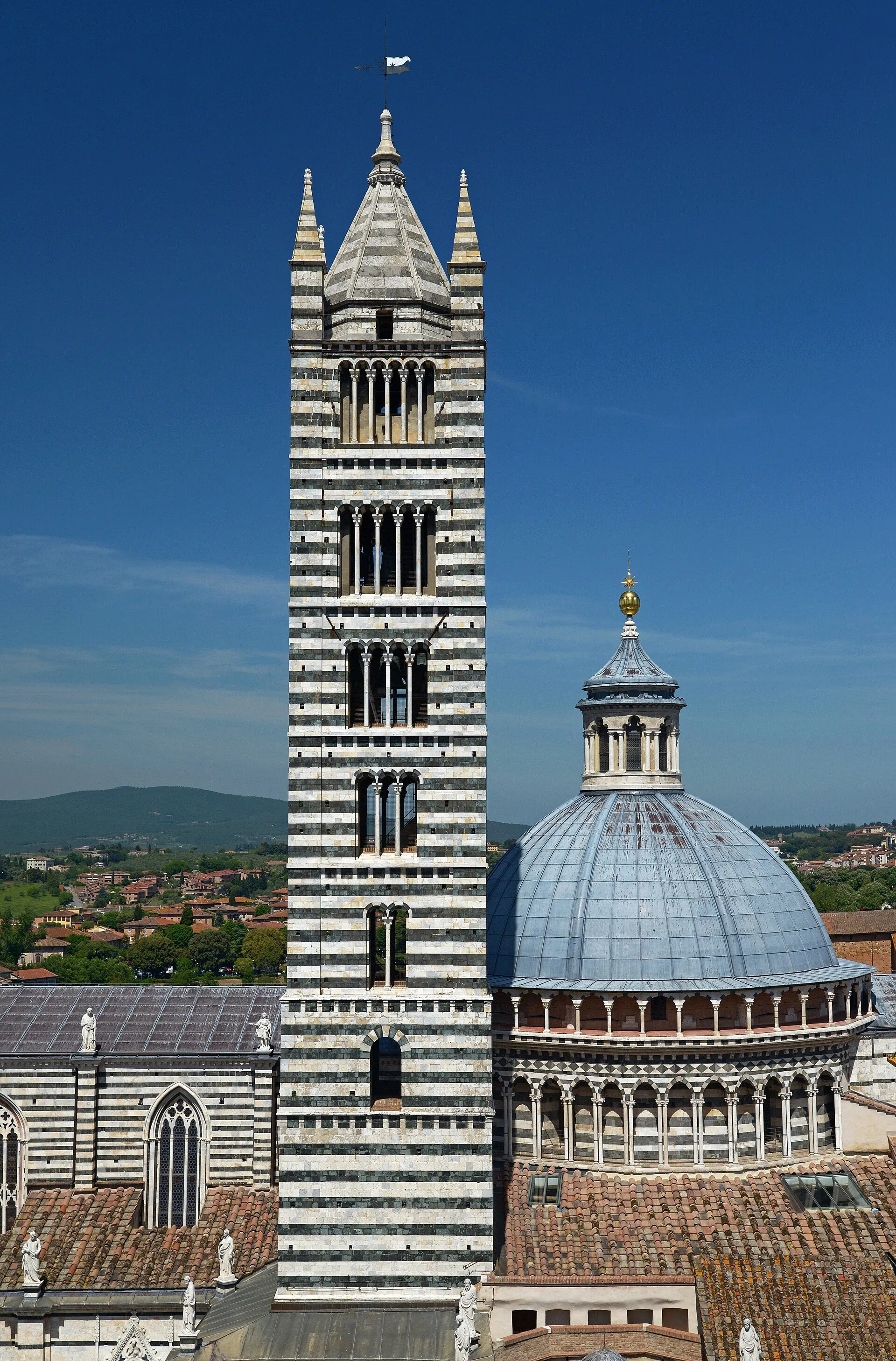
Siena Cathedral is dedicated to the Assumption of the Virgin Mary, and the Sienese people developed an unusually intimate relationship with the Virgin as their city's protector. Before the 1260 Battle of Montaperti against Florence — a battle Siena had no rational expectation of winning — the city's leaders formally surrendered Siena to the Virgin's protection in the cathedral, offering her the keys to the city gates. The Sienese military victory that followed was understood as miraculous intercession, cementing the Virgin's status as Patrona of Siena in a way that went far beyond civic symbolism. The black and white marble stripes covering the cathedral are Siena's own heraldic colors, making the cathedral a visual embodiment of Sienese identity in which civic pride and religious devotion were indistinguishable from each other. The 56 marble floor panels, created over 200 years by dozens of Sienese artists, served as both a devotional program and a theological argument: the sequence moves from Old Testament sibyls (pagan prophets who foretold Christ) through biblical history toward Christian salvation, making the cathedral floor a walk through the full arc of divine history. The unfinished Facciatone wall — the remnant of an abandoned medieval plan to expand the Duomo into the largest cathedral in Christendom, halted by the Black Death in 1348 — stands as a permanent reminder of human ambition encountering divine limits, a spiritual lesson the Sienese preserved by leaving the fragment standing rather than demolishing it.
Visitor Etiquette
Dress code: shoulders and knees covered -- enforced strictly at the entrance. Arrive early as crowds build quickly, especially during floor season (August-October). Photography without flash is generally permitted. Maintain silence during any active services. The OPA SI Pass offers significant savings if visiting multiple parts of the complex.
When to Visit
Cathedral: 10:30 AM - 6:00 PM (varies seasonally). Piccolomini Library: same hours as cathedral. Floor uncovered: mid-August through late October only. Closed during religious services.
Admission and Costs
Cathedral only: €5. OPA SI Pass: €15 (cathedral, library, museum, crypt, baptistery). OPA SI Pass plus floor: €20 (when floor is uncovered). Guided tour: €40-60 per person (1.5-2 hours). Private guide: €150-250 for up to 6 people.
Tips for Visitors
The 56 marble floor panels are the cathedral's greatest treasure -- plan your visit for August-October if possible. Allow 1.5-2 hours for the full complex. The Facciatone climb offers views rivaling any tower in Tuscany. Walk downhill to Piazza del Campo and the Palazzo Pubblico for a full Siena day.
Frequently Asked Questions
When is the best time to see Siena Cathedral?
Mid-August through late October is the singular window when the cathedral's extraordinary marble floor panels are uncovered for public viewing -- an event that transforms the visit from impressive to unforgettable. April through October is broadly excellent for combining the Duomo with Siena's medieval streets, while the shoulder months of March and November are cooler but less crowded. The cathedral's interior is a rewarding experience in any season, but the floor reveal makes late summer and early autumn the standout period.
What are the sightseeing hours at Siena Cathedral (Duomo di Siena)?
Cathedral: 10:30 AM - 6:00 PM (varies seasonally). Piccolomini Library: Same hours as cathedral. Floor uncovered: Mid-August through late October only. Closed: During religious services
What are the artworks and floor of Siena Cathedral (Duomo di Siena)?
Floor interpretation: 56 panels need expert explanation to understand. Art context: Works by Donatello, Michelangelo, and Bernini deserve proper introduction.
Is a guided tour of Siena Cathedral (Duomo di Siena) worth booking?
Guides provide expert interpretation of the 56 marble floor panels and give proper context for works by Donatello, Michelangelo, and Bernini. They also decode Pinturicchio's elaborate narrative frescoes in the Piccolomini Library.