
.jpg)
Overview
The Forum was ancient Rome's beating heart -- a sprawling complex of temples, government buildings, and public spaces where senators debated, emperors were deified, and triumphal processions marched. Without a guide, the Forum can appear as a confusing scatter of broken marble and brick foundations, but an archaeologist walking beside you reconstructs the streetscape layer by layer, showing where Julius Caesar's funeral pyre blazed, where Cicero delivered his orations from the Rostra, and how the Via Sacra served as the processional route for returning generals. The Temple of Vesta maintained its sacred flame tended by priestesses who faced burial alive if they broke their vows. The Colosseum rises at the eastern end, and the Vatican Museums are across the city.
Architecture
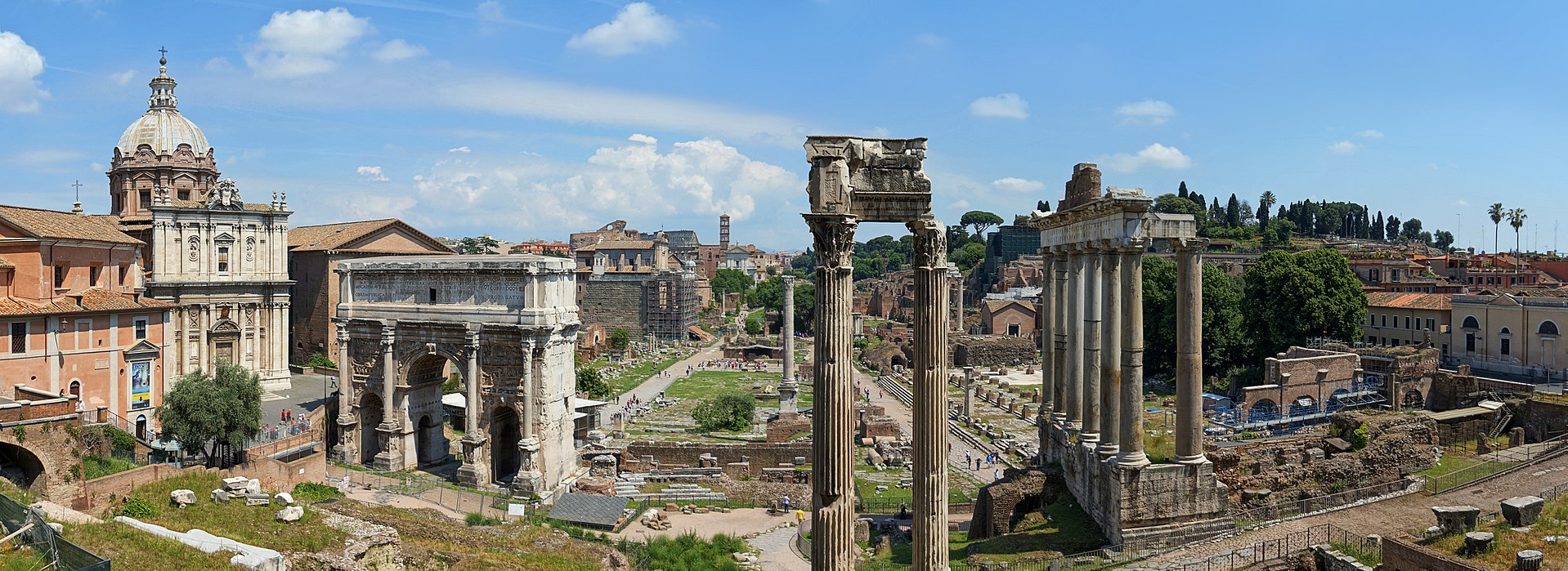
The Forum spans over 900 years of Roman construction, from the earliest Republican temples to late Imperial monuments. The Temple of Saturn retains eight massive Ionic columns from its 4th-century reconstruction -- it once housed Rome's state treasury. The Arch of Septimius Severus (203 AD) is a triple triumphal arch celebrating victories in Parthia, with detailed relief panels depicting siege scenes. The Basilica of Maxentius features three colossal coffered vaults that demonstrate the engineering ambition of late Roman architecture -- each vault spans 25 meters without intermediate support. Palatine Hill above the Forum preserves the imperial palaces (Domus Augustana, Domus Flavia) where emperors lived and governed.
Historical Significance
For over a millennium, the Forum was the center of Roman public life. The Rostra (speaking platform) is where Mark Antony delivered his eulogy for Julius Caesar in 44 BC and where Cicero's severed hands were displayed after his assassination. The Temple of Vesta housed Rome's sacred flame, tended by Vestal Virgins who served 30-year terms. The Curia Julia (Senate House), begun by Julius Caesar, is where senators debated the fate of the Republic and then the Empire. After the fall of Rome, the Forum was gradually buried under centuries of debris and was used as a cattle pasture -- the Campo Vaccino -- until systematic excavations began in the 18th century.
When to Visit
Daily: 9 AM - one hour before sunset. Ticket valid 24 hours: includes Colosseum and Palatine Hill. Best time: late afternoon for golden light on the ruins.
Admission and Costs
Entry: €18 (combined with Colosseum and Palatine). Guided tours: €40-60 per person. Private archaeologist: €200-350 for up to 6.
Tips for Visitors
Combine with the Colosseum: same ticket, plan 3-4 hours total for both. A guide is essential here -- ruins are indecipherable without context. Wear sturdy shoes on uneven ancient stones. Bring water and sun protection as there is limited shade. Late afternoon golden light makes the best photographs. Enter from the Via dei Fori Imperiali side for the most dramatic first impression.