
.jpg)
Overview
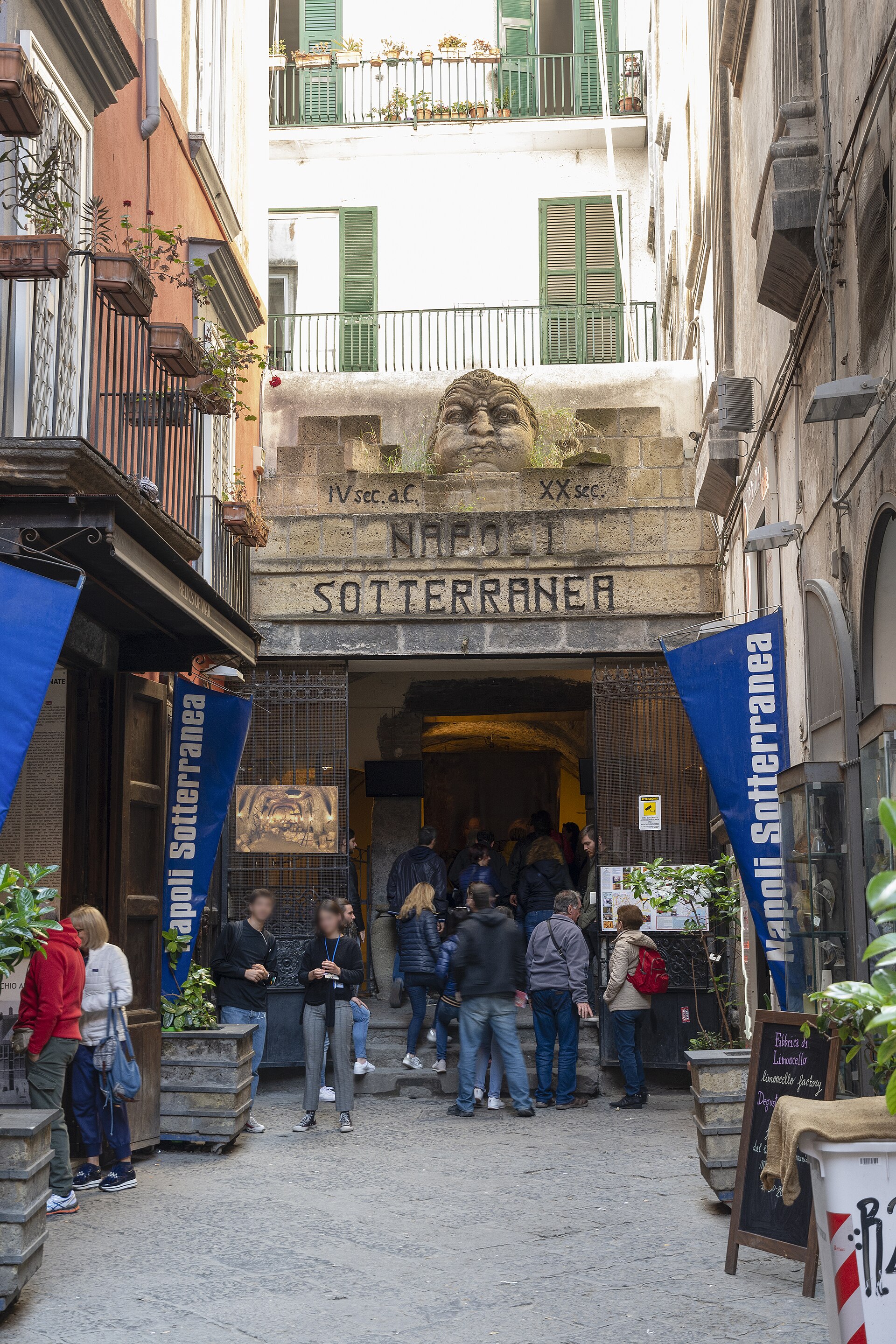
Beneath the chaotic streets of Naples lies another city entirely. Greeks began quarrying the soft tuff rock 2,400 years ago, Romans expanded the tunnels into an aqueduct system serving 400,000 people, and during World War II, these caverns sheltered thousands during Allied bombing raids. Napoli Sotterranea offers a fascinating journey through these subterranean passages, revealing how generations have used the space beneath their feet. The main tour descends 40 meters below Piazza San Gaetano, passing through narrow passages (some just 50 centimeters wide), ancient cisterns, and WWII-era graffiti. Some routes emerge into a Roman theater where apartment buildings now stand in the ancient seating areas. Pompeii and the Archaeological Museum complete a full Naples historical experience.
Architecture
The underground passages reveal 2,400 years of layered construction. Greek cisterns from the 4th century BC form the oldest chambers, carved from the soft tuff volcanic rock. The Roman aqueduct system expanded these quarries into an engineering marvel that supplied water to 400,000 residents through a network of channels and cisterns. WWII bomb shelters added another layer: beds, latrines, and graffiti from Neapolitan families who sheltered underground during over 100 Allied bombing raids. Some passages are genuinely narrow -- as tight as 50 centimeters -- navigated by candlelight. The most remarkable discovery is a Roman theater buried beneath modern apartments, with residents living directly above the ancient seating tiers.
Historical Significance
The underground tells the story of Naples in reverse chronological order as you descend. WWII shelters retain the graffiti, beds, and latrines of families who lived underground during bombing campaigns. Below that, the Roman aqueduct system demonstrates the engineering that sustained one of the ancient world's largest cities. Deeper still, Greek quarries from the 4th century BC reveal the origins of Neapolis -- the "New City" founded by Greek colonists. The underground garden, where plants grow 40 meters below street level using reflected sunlight, demonstrates the remarkable adaptability of life in these spaces.
When to Visit
Daily: 10 AM - 6 PM (tours depart hourly). English tours: typically at 10 AM, 12 PM, 2 PM, 4 PM, 6 PM. Duration: approximately 2 hours. Closed: December 25.
Admission and Costs
Standard tour: €12 per person. Adventure route: €15 (includes wading through ancient aqueduct). Combined tickets: often available with other Naples attractions.
Tips for Visitors
Not for claustrophobics: some passages are genuinely tight -- consider carefully. Wear comfortable shoes: stairs and uneven surfaces throughout. Bring a light jacket: underground temperature stays around 18 degrees C year-round. Book ahead: English tours can fill up, especially in high season. Several companies offer underground tours -- Napoli Sotterranea at Piazza San Gaetano is the original. Combine with Pompeii for ancient history and the Archaeological Museum for artifacts.