
Spiritual Significance
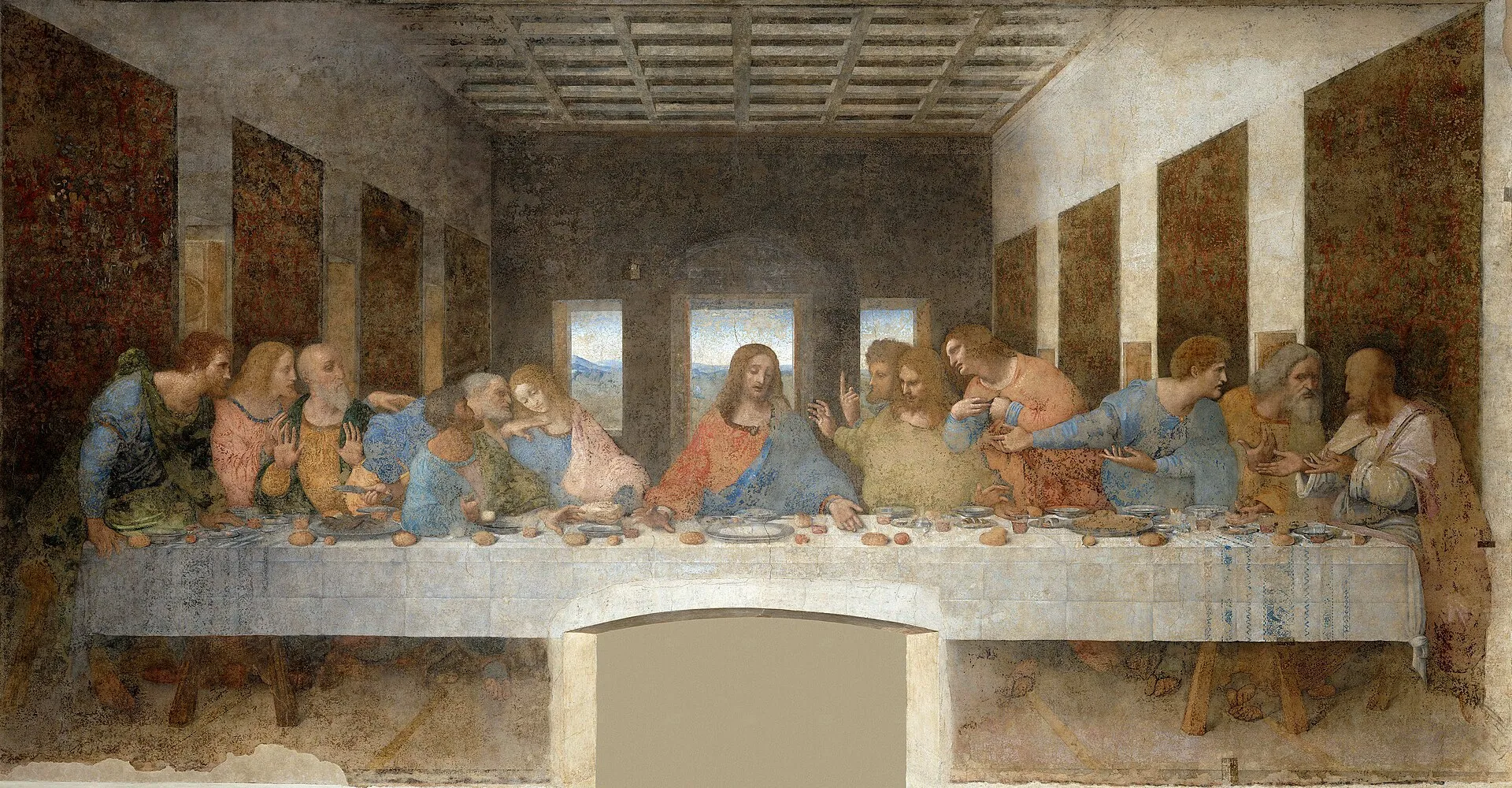
Leonardo calculated the painting's viewpoint to extend the refectory space, creating the illusion that the room continues into biblical Jerusalem. Each of the twelve apostles responds uniquely to Christ's announcement of betrayal -- Peter reaches for a knife, Judas recoils clutching a money bag, Thomas raises a finger. Hidden geometry pervades the composition: triangular groupings and mathematical precision create visual harmony within the dramatic chaos. Subtle details distinguish Judas from the other apostles: he is the only figure reaching toward the same dish as Christ and the only one whose face falls in shadow. On the opposite wall, Donato Montorfano's Crucifixion fresco, painted in traditional technique, provides a useful comparison to Leonardo's experimental method.
Visitor Etiquette
The 15-minute viewing session is strictly enforced — when the time is up, the group exits immediately, regardless of where you are in the painting. Silence is expected from the moment you enter the airlock; this is a designated heritage space, not a gallery where conversation is usual. No flash photography, no tripods, no selfie sticks. Smartphones are permitted without flash. Do not point at the painting wall, lean forward toward it, or attempt to touch any surface — the humidity and temperature controls exist to slow deterioration, and body heat from large groups already stresses the microclimate. Large bags must be checked before entry. The airlock sequence involves two pressure-equalization chambers; move through promptly when directed by staff and do not hold the doors.
When to Visit
Tuesday-Sunday: 8:15 AM - 7:00 PM. Closed: Mondays, January 1, May 1, December 25. Viewing sessions: every 15 minutes, maximum 30 visitors. Time inside: strictly 15 minutes per group.
Admission and Costs
Standard ticket: €15 (must book months ahead). Guided tour with ticket: €80-120 per person. Private guide with tickets: €400-600 for up to 6 people.
The Case for a Guide
Licensed tour operators hold ticket allocations even when the official booking site shows sold out — this is sometimes the only way to secure access during peak months, and is a legitimate reason to book a guided visit rather than attempting independent entry.
With only 15 minutes in front of Leonardo's masterpiece, every second requires preparation — a guide ensures you arrive already knowing what to look for, so none of those precious minutes are spent orienting yourself.
- Experimental technique and deterioration: Leonardo used oil and tempera on dry plaster rather than true fresco — a guide explains this deliberate choice (it allowed him to layer and revise like a painter, not a plasterer), and why it meant the painting began flaking within his own lifetime
- Apostle identifications: The guide identifies all 13 figures using documentary evidence from Leonardo's notebooks and contemporary accounts, explaining why Judas is the only one whose face falls in shadow and why Thomas raises a skeptical finger
- The door cut through Christ's feet: In 1652 a door was cut through the lower center of the painting, destroying the feet of Christ — a guide shows where it was and why the monks who ordered it apparently didn't consider the consequence
- Five centuries of restoration: The painting has been retouched, repainted, washed, and most recently cleaned by a 21-year scientific restoration finished in 1999 — a guide explains which layers are Leonardo's and which are later additions now removed
- Viewing room strategy: The guide prepares you before entering so you spend all 15 minutes looking rather than reading — they position your group optimally relative to Leonardo's precisely calculated vanishing point at Christ's right temple
Tips for Visitors
Book 3 months ahead: tickets release at midnight CET -- set an alarm or use a tour company. Arrive 30 minutes early: security screening and climate-controlled airlocks take time. Photography allowed: no flash, no tripods -- smartphone photos permitted. The refectory maintains strict humidity and temperature controls. Combine thoughtfully: the emotional impact deserves reflection -- don't rush to the next attraction. The Duomo and La Scala are a short walk east.
Frequently Asked Questions
When is ticket availability easiest for viewing the Last Supper?
March through October is the most reliable period for securing the coveted timed tickets, which sell out months in advance regardless of season. Spring and autumn provide pleasant weather for combining the visit with a walk through the surrounding Magenta neighborhood. The viewing experience itself is climate-controlled and identical year-round, so the real seasonal consideration is ticket availability -- book as early as possible for any month.
What are the Last Supper's opening hours and viewing session times?
Tuesday - Sunday: 8:15 AM - 7:00 PM. Closed: Mondays, January 1, May 1, December 25. Viewing sessions: Every 15 minutes, maximum 30 visitors. Time inside: Strictly 15 minutes per group
What does admission to Leonardo da Vinci's Last Supper cost?
Standard ticket: €15 (must book months ahead). Guided tour with ticket: €80-120 per person. Private guide with tickets: €400-600 for up to 6 people
What should visitors know before seeing da Vinci's Last Supper?
Book 3 months ahead: Tickets release at midnight CET - set an alarm or use a tour company. Arrive 30 minutes early: Security screening and climate-controlled airlocks take time.