
Cinque Terre timeline
-
Villages take shape on the cliffs
Settlers moved down from inland hilltops to the coast, carving the first terraces and founding the harbours that became the five villages.
-
The coastal railway arrives
The Genoa–La Spezia line finally pierced the cliffs with tunnels, ending centuries of near-total isolation and opening the villages to the outside world.
-
UNESCO World Heritage inscription
Portovenere, the Cinque Terre and its islands were listed as a cultural landscape of terraced farming.
-
National park established
The Parco Nazionale delle Cinque Terre began managing trails, terraces and visitor access across the villages.
-
The great flood
An October cloudburst sent mud and debris tearing through Vernazza and Monterosso; both were rebuilt over the following years.
- 12th–13th c.
Under the Republic of Genoa
Genoa absorbed the coast, and defensive watchtowers such as Vernazza's Doria Castle went up against Saracen and pirate raids.
Cited city facts
Key facts for visiting Cinque Terre
Around 2.5 million visitors per year
The Cinque Terre draws an estimated 2.5 million visitors annually, straining five villages of only a few thousand permanent residents and prompting the national park to trial daily caps on the busiest paid trails
382 steps up to Corniglia
Corniglia is the only one of the five villages without direct sea access, perched about 100 metres above the water on a rocky promontory and reached from its station by the Lardarina, a switchback brick stairway of 382 steps (or a shuttle bus)
Roughly 7,000 km of dry-stone walls
The terraced vineyards are held up by an estimated 6,700–7,000 kilometres of hand-built dry-stone walls — a greater total length than the Great Wall of China — the defining feature of the UNESCO cultural landscape inscribed in 1997
A UNESCO World Heritage Site since 1997
Portovenere, the Cinque Terre and the three islands were inscribed together as a cultural landscape shaped by a thousand years of terrace farming on near-vertical slopes, one of Italy's rare examples of humans reworking an entire coastline by hand
A national park protecting all five villages since 1999
The Parco Nazionale delle Cinque Terre, established in 1999, is one of Italy's smallest yet most visited national parks; it maintains the coastal trail network, funds terrace restoration, and issues the Cinque Terre Card that regulates access
Sciacchetra, a rare dried-grape dessert wine
Sciacchetra is a DOC passito wine pressed from Bosco, Albarola and Vermentino grapes left to shrivel on cane racks after harvest; production is tiny because every basket is carried down the terraces by hand or on the villages' monorail tracks
Source: tour-guide.com — Free to cite with attribution
Things to see
What are the top attractions in Cinque Terre?
Each village rewards a different mood — here is how to spend your time across the five:
- Sentiero Azzurro (Blue Trail) — the classic cliff-edge path connecting the villages; always check which paid sections are open before you set out
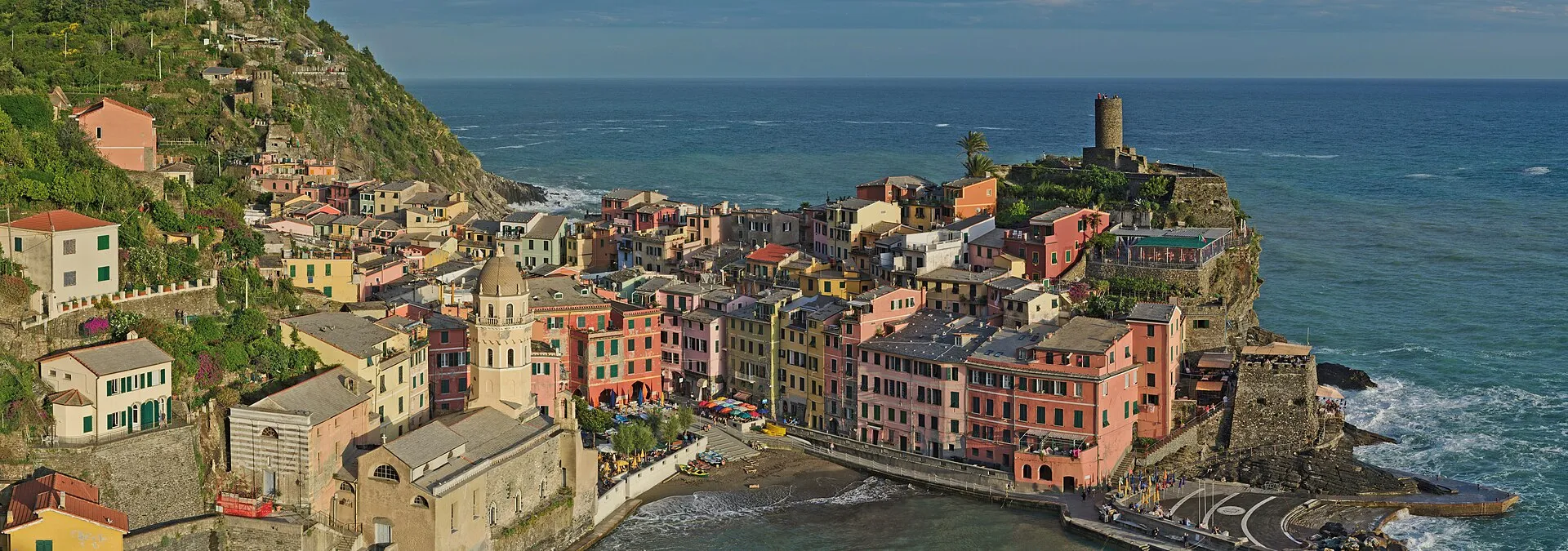
- Vernazza harbour and Doria Castle — the most photographed view in the Cinque Terre, best from the trail heading toward Monterosso
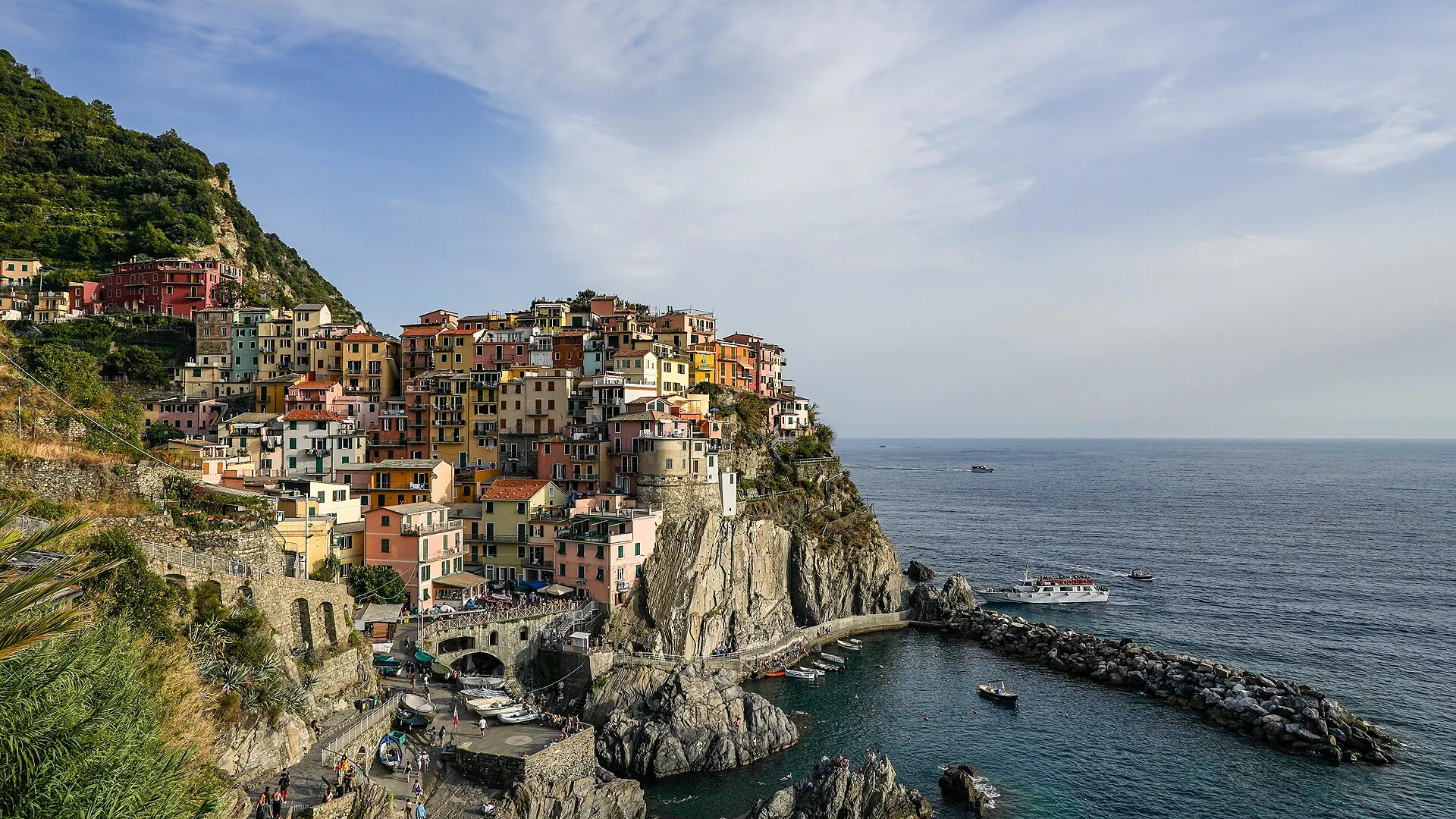
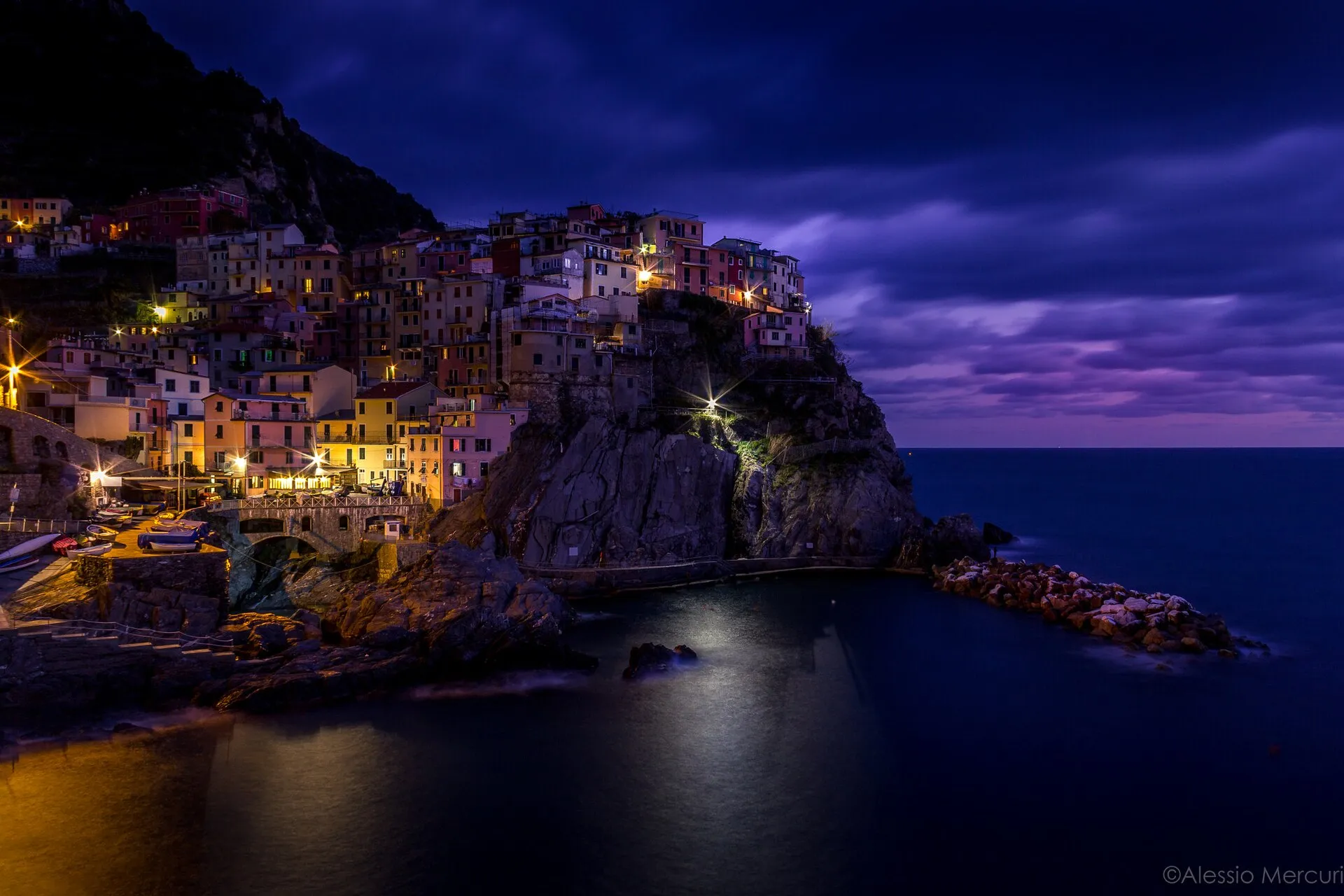
- Manarola at sunset — watch the cliffside houses turn gold from the Nessun Dorma viewpoint, then the December presepe light show on the hillside
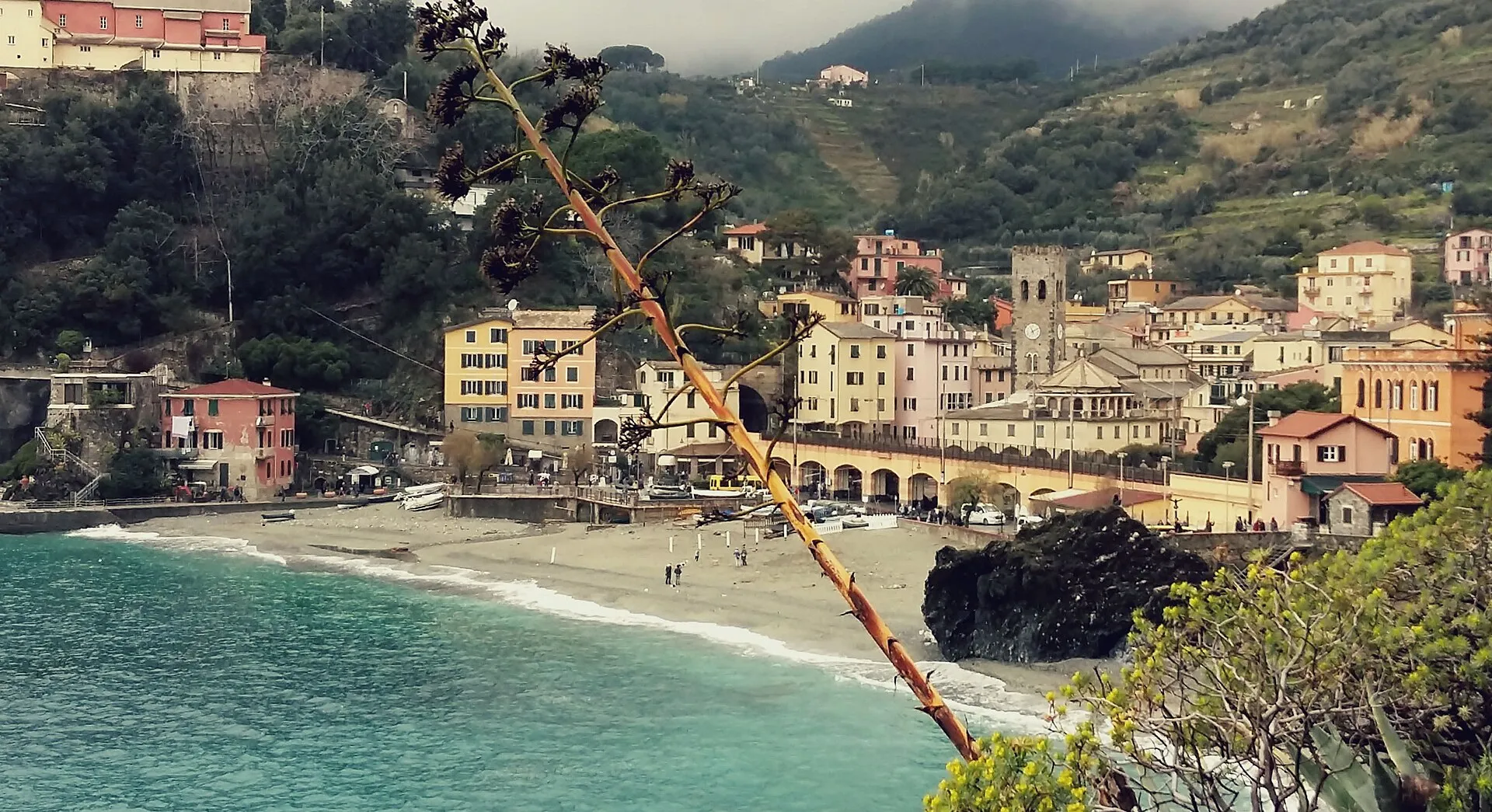
- Monterosso beach and old town — the only sandy beach in the five lands, plus Il Gigante and the striped San Giovanni Battista church
- Corniglia and the Lardarina — climb (or shuttle up) the 382 brick steps to the only hilltop village for terrace views without the harbour crowds
- Sciacchetrà and Cinque Terre DOC wine — taste the dried-grape dessert wine and the crisp coastal white at a village cantina
- A boat approach — see the harbours from the water, exactly as fishermen have for generations, on the seasonal ferry
Manarola
The wine village - where terraces defy gravity and sunsets stop time
Monterosso al Mare
The beach village - where Cinque Terre relaxes under lemon trees
Vernazza
The postcard village - a harbor so perfect it seems imagined
Guide planning
How much does a tour guide cost in Cinque Terre?
Five villages clinging to cliffs above the Ligurian Sea reward guides who read the trails, tides and terraces like their own back garden — the difference between a day of closed paths and missed ferries and one of hidden coves and wine tasted at source:
| Tour type | Typical price | Details |
|---|---|---|
| Group walking tour | €25–45 per person | 2–3 hours, one or two villages |
| Private half-day | €180–320 | up to 6 people, 3–4 hours |
| Private full day | €350–600 | up to 6 people, several villages |
| Guided hike, village to village | €60–110 per person | 4–6 hours on the Sentiero Azzurro |
| Sciacchetrà / terrace wine tasting | €20–40 per person | at a working cantina |
Certified hiking guides in Liguria hold the regional Guida Ambientale Escursionistica licence, distinct from a city art guide — ask which you are booking. For any trail-based tour, confirm the guide carries current maps and checks conditions, because paths close often after storms and landslides. A guide also earns their fee by timing the light and the crowds: reaching a viewpoint before the tour boats dock, or lining up a village for sunset.
Season planner
When is the best time to visit Cinque Terre?
Late April to early June and September to mid-October are ideal: warm days, swimmable sea by late spring, open trails and manageable numbers. July and August bring crushing crowds, fierce heat on the exposed paths and the highest prices — start hikes at dawn if you visit then. Time your trip around the villages' own calendar: Monterosso's Lemon Feast (Sagra del Limone) in mid-May, the grape harvest across the terraces in September, and Manarola's illuminated Nativity presepe that lights the hillside from early December through late January. Winter is quiet and atmospheric, but many kitchens and guesthouses shut, ferries pause, and autumn–winter storms can close trails and disrupt the coastal railway for days.
Spring
Mar-May
Summer
Jun-Aug
Autumn
Sep-Nov
Winter
Dec-Feb
Each score averages that season’s monthly ratings out of 5. The top-rated window is usually the peak season too, so read the guidance above for its trade-offs before you book.
On the ground
How do you get around Cinque Terre?
The villages are car-free, so plan around the train, the ferry and your own two feet:
- Buy the Cinque Terre Card — required for the paid coastal trails; the Treno version adds unlimited Cinque Terre Express trains, station toilets and Wi-Fi
- Ride the Cinque Terre Express — the regional train links all five villages and La Spezia in a few minutes per hop, running frequently in season
- Take the ferry — seasonal boats connect the four villages with sea access (all but hilltop Corniglia) and give the finest first view of each harbour
- Check trail status first — sections of the Sentiero Azzurro close frequently after storms and landslides; the higher sanctuary and ridge paths are free but steeper
- Come fit and shod for it — the coastal paths involve real elevation gain on rocky, uneven ground, so bring sturdy shoes, not sandals, and plenty of water
- Base wisely — stay in a village for the dawn-and-dusk magic, or in nearby La Spezia for cheaper rooms and easy rail; day trips work from Florence or Pisa but only reach two or three villages
Frequently Asked Questions
What is the best time to visit Cinque Terre?
Late April to early June and September to mid-October are the sweet spots: warm enough to swim and hike the Sentiero Azzurro comfortably, but without the shoulder-to-shoulder crowds and heat of July and August. September adds the grape harvest on the terraces; late April brings wildflowers and near-empty piazzas. Winter (December–February) is quiet and photogenic, but many restaurants and guesthouses close, ferry service pauses, and storms can shut trails for days.
How much does a tour guide in Cinque Terre cost?
Expect roughly €25–45 per person for a shared group walking tour, €180–320 for a private half-day, and €350–600 for a private full day covering several villages. Hiking-focused guides in Liguria hold the regional Guida Ambientale Escursionistica (environmental hiking guide) licence, distinct from a city art guide; ask which one you are booking, and confirm they check live trail status — sections of the Sentiero Azzurro close frequently after storms and landslides.
How do you get around Cinque Terre?
The five villages are car-free, so movement is by train, ferry, or on foot. The Cinque Terre Express regional train links all five plus La Spezia in a few minutes per hop, ferries connect the four harbours with sea access (all but Corniglia) from spring to autumn, and cliff paths join the villages for those who hike. Buy the Cinque Terre Card — it covers the trail network and, in the Treno version, unlimited regional trains and station restrooms.
Do I need a Cinque Terre Card, and what does it cover?
Yes, if you plan to walk the paid coastal footpaths. The Cinque Terre Trekking Card covers the maintained trail network for one to three days; the pricier Cinque Terre Treno Card adds unlimited Cinque Terre Express train travel between the villages and La Spezia, plus station toilets and Wi-Fi. Proceeds fund the trail repairs and terrace maintenance the national park depends on. Free walking is still possible on the higher, unpaid sanctuary and ridge trails.
Can you visit Cinque Terre as a day trip?
You can, but it is tight. Day-trippers from Florence, Pisa, or Genoa realistically manage two or three villages, and the middle of the day is the most crowded. Staying at least one night — in a village or in La Spezia — lets you catch the villages at dawn and dusk, when the light is best and the tour-boat crowds have gone. If you only have a day, ride the train to the far end and work back, saving Manarola or Vernazza for sunset.