

Overview
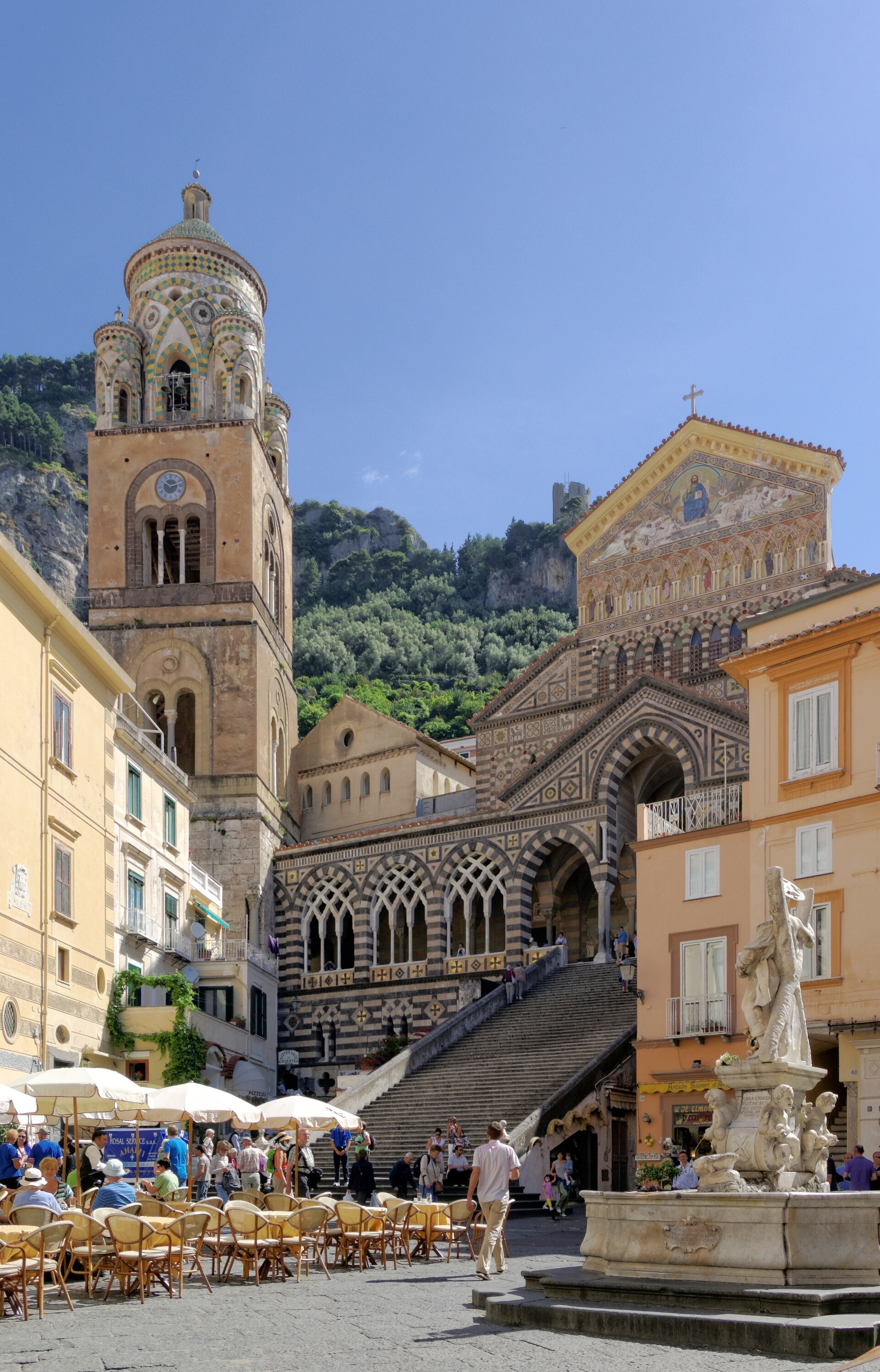
Before Venice and Genoa rose to power, Amalfi was one of the four great Maritime Republics that dominated Mediterranean trade. In the 11th century, this tiny coastal town boasted 70,000 residents and trading posts from Constantinople to Cairo. Its navigational codes, the Tavole Amalfitane, governed maritime law across the Mediterranean. Today, the grand Cathedral of St. Andrew hints at former glories, while narrow streets wind through what remains of medieval ambition. Amalfi serves as the Amalfi Coast's practical hub, with the best ferry connections, easier parking, and a more accessible layout than vertical Positano. The paper-making tradition imported from Arab traders continues in the Valle dei Mulini, where craftsmen still produce handmade carta di Amalfi. Ravello sits in the hills above.
Local Life
Ferry: main harbor for coast ferries to Positano, Salerno, and Capri. Bus: SITA buses from Sorrento, Positano, and Ravello. Private driver: the comfortable option from Naples or airports. Parking: limited but better than Positano -- large lot near the harbor. The town quiets during riposo (2-4 PM) as shops close.
Walking Routes
Cathedral of St. Andrew: climb the monumental stairs to the striped Arab-Norman facade, housing the relics of the apostle Andrew. Chiostro del Paradiso (Cloister of Paradise): interlocking Arab-Norman arches surrounding a palm-filled garden -- a unique blend of Islamic and Christian architecture. Paper Museum: a working museum in a historic mill with hands-on demonstrations of traditional papermaking. Piazza del Duomo: central square with fountain and cafe culture. Valle dei Mulini: the Valley of Mills with atmospheric ruined paper factories reclaimed by vegetation. Grotta dello Smeraldo (Emerald Grotto): a sea cave with emerald-green light accessible by boat.
When to Visit
Town: accessible year-round. Cathedral complex: daily 9 AM - 7 PM (seasonal variations). Paper Museum: 10 AM - 6:30 PM. Best time: morning, before cruise ship crowds arrive (typically 10 AM - 3 PM).
Admission and Costs
Town entry: free. Cathedral complex: €5 (cathedral, cloister, museum). Paper Museum: €5. Beach: free sections and private clubs. Guided tour: €30-50 per person (2 hours).
Tips for Visitors
Visit the cathedral early before cruise ship crowds arrive. Amalfi is the ferry hub -- best connections on the coast, so plan routes from here. Frequent buses climb to hilltop Ravello in 20 minutes. More accessible than Positano for those with mobility issues. Authentic handmade carta di Amalfi makes a unique souvenir -- look for paper shops away from the main square.