
What To Buy
The signature buys are Cork's own: spiced beef cured with a secret blend of spices and best sliced thin, sheep's-blood drisheen for the truly curious, and fish landed along the southern coast and dressed to order. Beyond those, the market excels at Irish farmhouse cheeses, cured and smoked meats, olives and preserves, freshly baked soda bread, and seasonal fruit and vegetables from Munster growers.
Edible souvenirs travel well if you choose vacuum-packed cheese, jars of relish or honey, or boxes of handmade chocolate and fudge. For a picnic to eat the same day, combine a wedge of cheese, a loaf from a bakery stall, and something from a charcuterie counter, and you have assembled a very Cork lunch in three short stops.
Food Stalls
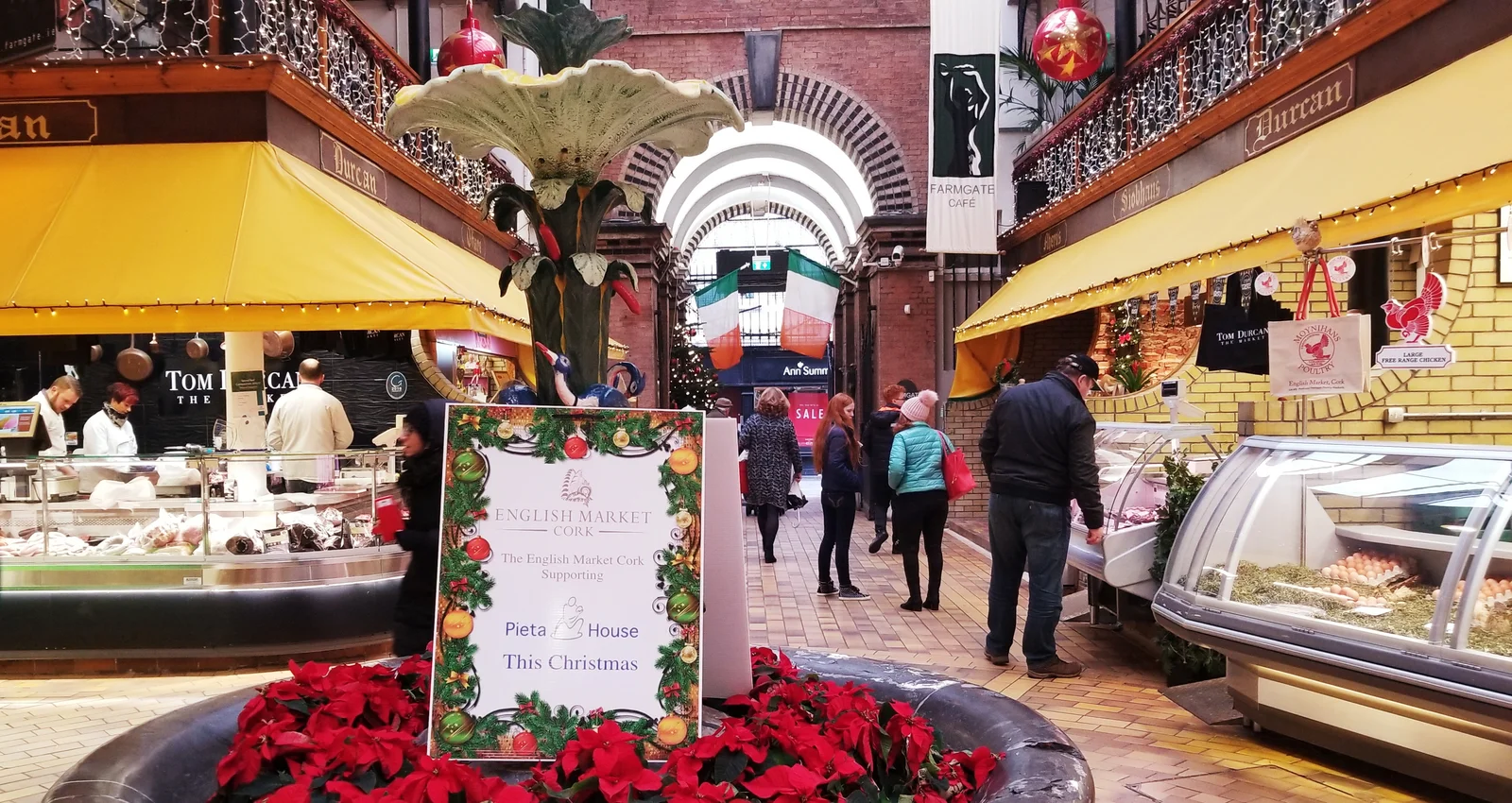
On the balcony, the Farmgate Café is the market's culinary showpiece, cooking market produce into dishes such as tripe and drisheen, lamb, and fresh fish while diners look down on the trading floor. At ground level, oyster and seafood bars shuck to order, delis build sandwiches to take away, and specialist counters sell everything from Spanish charcuterie to Middle Eastern mezze, a reminder of how the hall has broadened its palate.
Because so many stalls both sell ingredients and serve ready-to-eat portions, it is easy to eat your way around in small bites: a few oysters here, a slice of quiche there, a coffee and a pastry to finish. Sharing a table on the balcony over a plate of something local is, for many visitors, the highlight of a morning in Cork.
When to Visit
The market keeps to a Monday-to-Saturday rhythm and closes entirely on Sundays, so plan around that: a weekday late morning is calm and easy to browse, while Saturday brings the fullest range of traders and the busiest, most sociable atmosphere. Fish and meat counters are freshest and best stocked early, and a few stalls start to pack up in the last hour before the 6 PM close.
Half an hour is enough for a quick loop, but an hour or more lets you queue at a counter, carry a plate up to the balcony café, and double back for anything you spotted first time round. Because the whole market is roofed, it is an ideal choice on one of Cork's frequent showery days when outdoor sightseeing loses its appeal.
Admission and Costs
Entry to the English Market is free, and there is no charge to wander, photograph the stalls, or watch the fishmongers work. Your spending is entirely up to you: a wedge of local cheese or a few slices of spiced beef costs only a few euro, while a sit-down lunch on the balcony at the Farmgate Café typically runs around €15–22 ($16–24) per person for a main and a drink.
Takeaway options keep things cheaper still — a filled sandwich, a cup of chowder, or a half-dozen oysters can be had for well under €12 ($13). Most stalls take cards, but carrying a little cash speeds up small purchases at the busier counters and is welcome at the handful of traditional traders.
The Case for a Guide
A local food guide turns a browse into an education, decoding which stalls have supplied the same families for generations, why spiced beef matters to a Cork Christmas, and how tripe and drisheen earned their place on the city's tables. Guided tasting walks usually thread the market into a wider circuit of the city centre, adding context about the 1788 founding, the fire that rebuilt the hall in 1980, and the traders whose names recur across the stalls. For visitors short on time or shy about asking, a guide's introductions open doors to samples and stories that are easy to walk straight past alone.
Tips for Visitors
Come hungry and come with a plan to graze rather than shop for a single dish: the pleasure here is assembling a picnic from several stalls, then eating it by the fountain or taking it out to nearby Bishop Lucey Park. Strike up a conversation with the traders, who are generous with cooking advice and happy to point first-time visitors toward Cork specialities such as spiced beef or a properly aged farmhouse cheese.
The Princes Street entrance leads most directly to the fountain and the café stairs, while the Grand Parade doorway is the grandest arrival. Bring a tote bag for anything you buy, and if drisheen or tripe is on your list, ask early in the day, as the stalls that still carry them can sell through by afternoon.
Frequently Asked Questions
When is the English Market open?
Trading runs Monday to Saturday, with most stalls open from roughly 8 AM until 6 PM and the market closed all day Sunday. Individual traders set their own hours within that window, so the fish and butcher counters tend to be liveliest in the morning while some stalls begin winding down mid-afternoon. Arrive before lunchtime on a Saturday if you want the fullest picture of what the market can be.
Is there anywhere to eat inside the market?
Yes. The Farmgate Café occupies the balcony overlooking the central fountain, serving Cork dishes built from produce bought at the stalls below, and several ground-floor traders sell sandwiches, oysters, and hot food to take away. Eating here is one of the simplest ways to taste local specialities without leaving the hall.
What is tripe and drisheen?
They are two of Cork's most traditional foods: tripe is the lining of a cow's stomach, and drisheen is a soft blood pudding made largely from sheep's blood, historically simmered together and served with a buttery white sauce. Only a handful of stalls still stock drisheen, which makes the market one of the last reliable places to find it. Adventurous visitors can ask a butcher where to try it prepared.
Did Queen Elizabeth II really visit the English Market?
She did, during the first state visit by a reigning British monarch to the Republic of Ireland in 2011, and her walkabout among the stalls became one of the enduring images of that trip. The moment a fishmonger shared a joke with her is still recalled fondly by traders. The visit cemented the market's reputation well beyond Cork.