
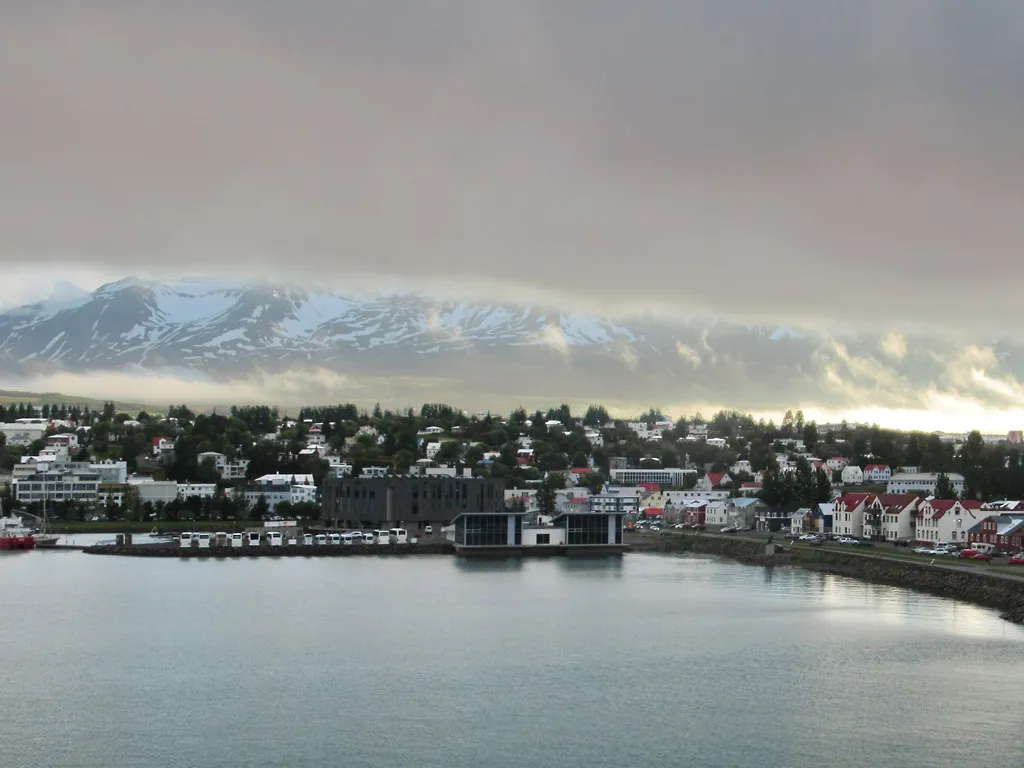
Akureyri timeline
-
Trading post begins
Danish trade activity helped establish Akureyri as a northern commercial center.
-
Municipal status
Town privileges formalized Akureyri's role as North Iceland's urban hub.
-
Wartime northern base
Allied activity during World War II added a modern strategic layer to the town.
Cited city facts
Key facts for visiting Akureyri
Akureyri's Botanical Garden is the world's northernmost public botanical garden
Operating at 65°30'N, the Lystigarðurinn has cultivated over 7,000 plant species since its founding in 1912, including species that survive subarctic conditions through careful microclimate management; it remains free to enter and is maintained by the municipality as a community resource
Eyjafjörður at 60 km is Iceland's longest fjord
The fjord's sheltered inner waters create a microclimate warmer than the surrounding coast, which is partly why Akureyri developed as Iceland's northern urban centre rather than more exposed coastal settlements; the fjord also supports a substantial cod and haddock fishery that has been worked continuously since the Norse settlement
Hlíðarfjall ski resort sits at 1,100 metres directly above Akureyri
Iceland's largest and most popular ski resort operates from December through April with 23 runs, a vertical drop of 500 metres, and the extraordinary combination of potential Northern Lights visibility from the slopes after dark and midnight sun skiing in late April when days run past midnight
Goðafoss waterfall 50 km east of Akureyri was where Iceland formally adopted Christianity in 999 CE
According to the Sagas, lawspeaker Þorgeir Ljósvetningagoði threw his Norse god idols into this waterfall after the Althing voted to adopt Christianity, in a symbolic act of transition that gave the waterfall its name — 'Waterfall of the Gods' — and ended Iceland's pagan era
Source: tour-guide.com — Free to cite with attribution
Things to see
What are the top attractions in Akureyri?
- Akureyrarkirkja — The twin-towered church designed by Guðjón Samúelsson, approached up a monumental hillside staircase from the town centre
- Lystigarðurinn Botanical Garden — World's northernmost public botanical garden, free entry, open May–September, over 7,000 species
- Eyjafjörður fjord — Iceland's longest fjord, with whale watching, kayaking, and fishing from the city harbour
- Goðafoss waterfall — 50 km east; 'Waterfall of the Gods', where Iceland's pagan era ended in 999 CE
- Mývatn geothermal area — 100 km east; pseudocraters, lava formations, birdlife, and the Mývatn Nature Baths for outdoor geothermal bathing
- Hlíðarfjall ski resort — Just above the city; 23 runs, 500-metre vertical drop, operating December through April
- Diamond Circle day tour — Húsavík, Goðafoss, Dettifoss, Ásbyrgi canyon, fully accessible as a guided circuit from Akureyri
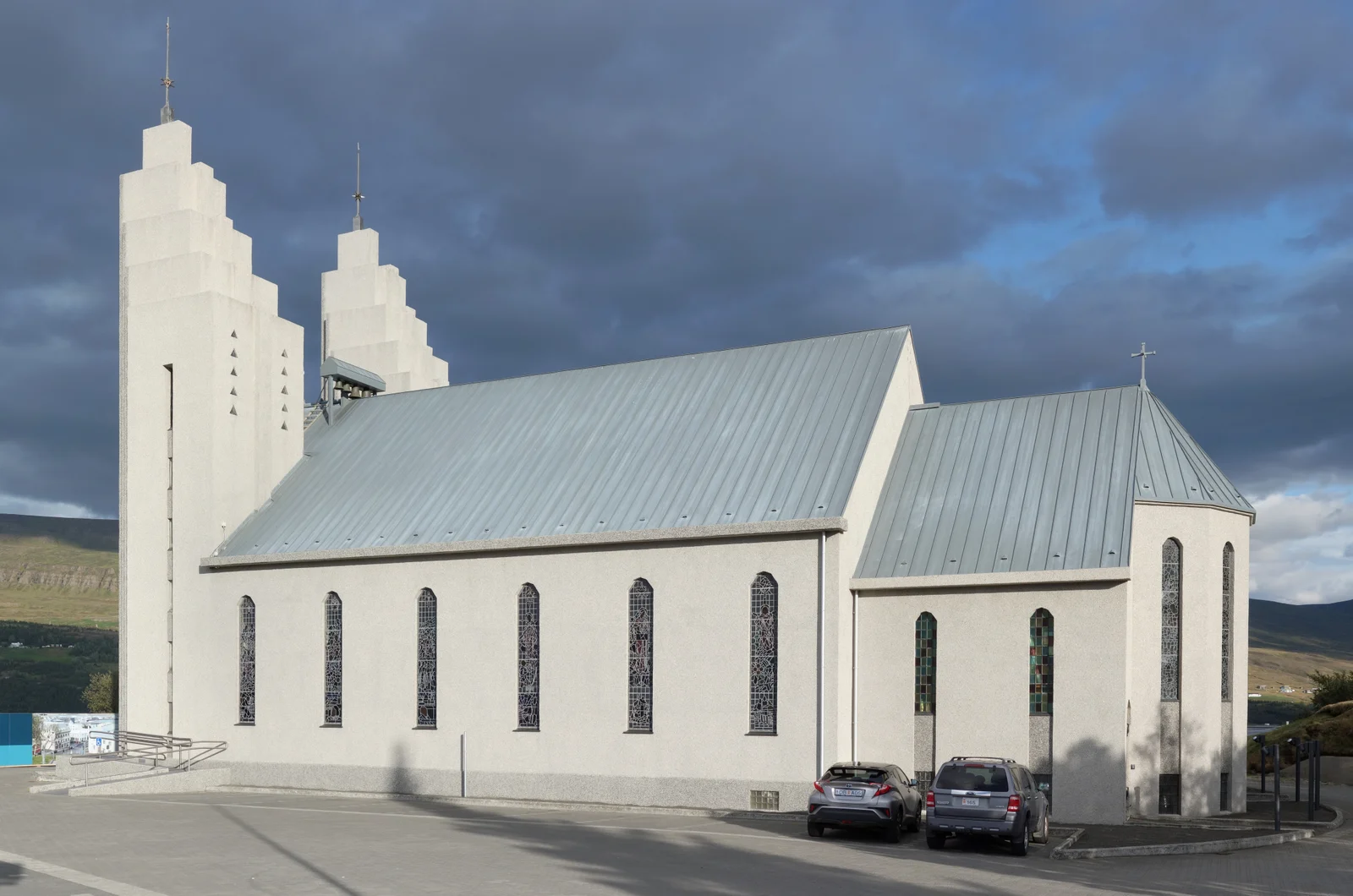
Akureyri Church
A basalt-inspired hilltop church watching over Akureyri from its long stone stairway
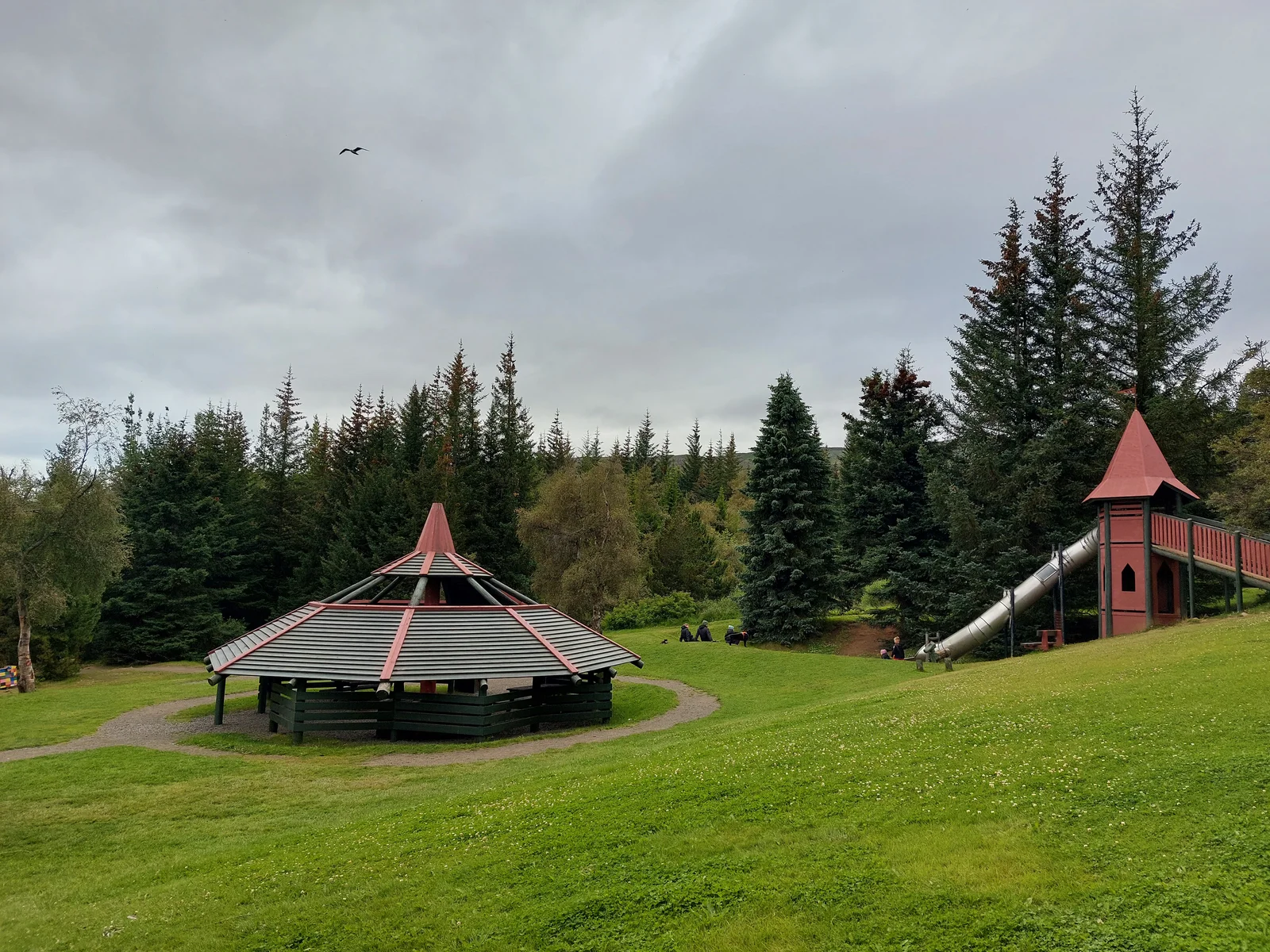
Kjarnaskógur Forest
Iceland's most-visited woodland — a rare true forest of birch, spruce, and larch on the edge of the Arctic town
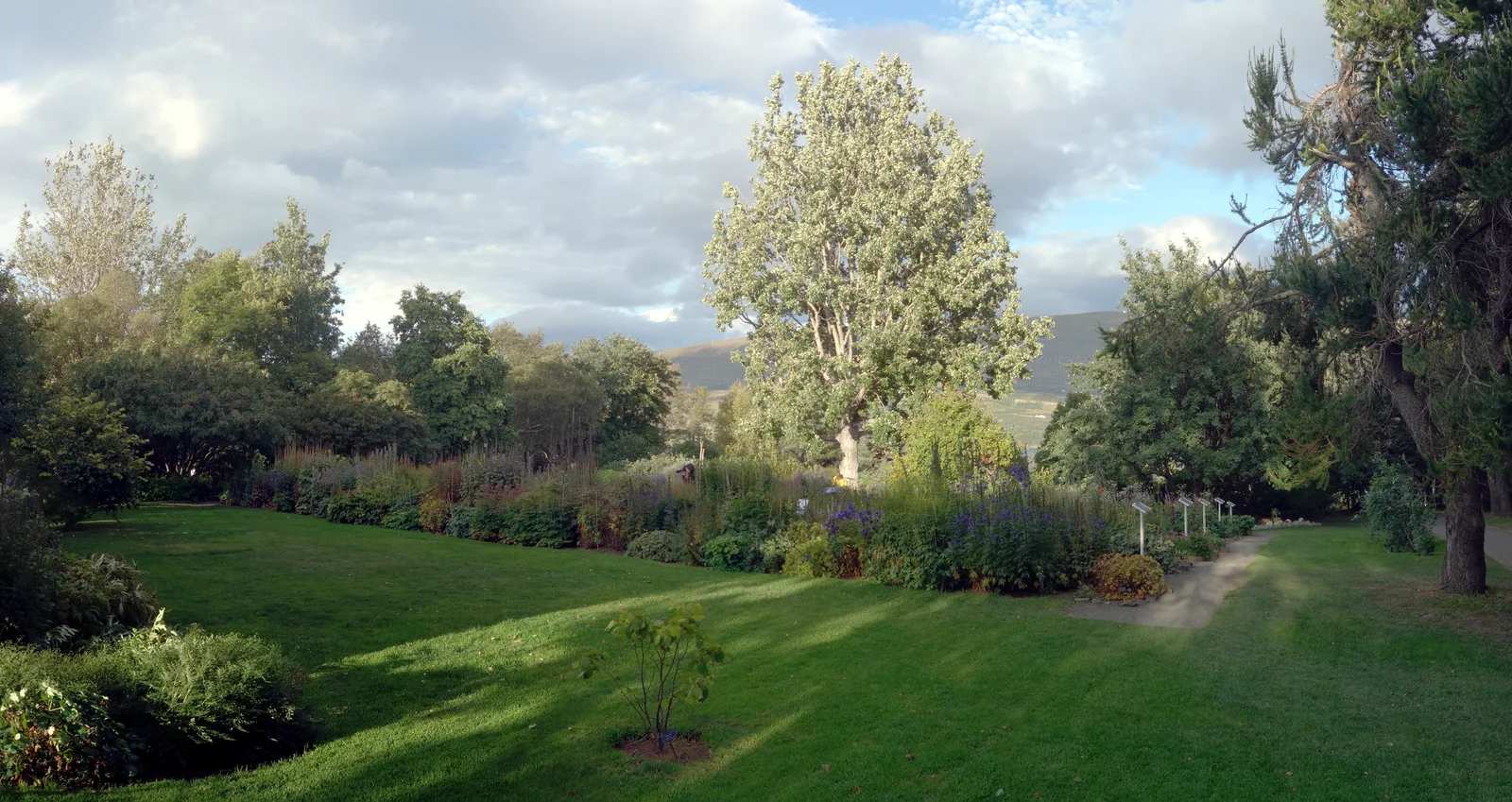
Akureyri Botanical Garden
Thousands of plant species flourishing near the Arctic Circle in one of the world's northernmost gardens
Guide planning
How much does a tour guide cost in Akureyri?
Akureyri guides offer city walks and Diamond Circle excursions at rates somewhat below Reykjavik prices:
| Tour Type | Price Range |
|---|---|
| City walking tour (group) | ISK 6,000–9,000 per person |
| Diamond Circle day trip (group) | ISK 16,000–24,000 per person |
| Whale watching from Akureyri harbour | ISK 12,000–16,000 per person |
| Mývatn day tour from Akureyri | ISK 10,000–15,000 per person |
| Private guide (half-day, up to 6) | ISK 50,000–75,000 |
Season planner
When is the best time to visit Akureyri?
- June–July — Midnight sun; the midnight golf tournament runs in full daylight, the Botanical Garden blooms, Eyjafjörður whale watching peaks
- January–February — Best Northern Lights probability; the surrounding mountains frame aurora displays dramatically
- March–April — Ski season at Hlíðarfjall combines with lengthening daylight and possible Northern Lights
- August–September — Comfortable temperatures, manageable visitor numbers, autumn colour beginning in the valleys
- December — Christmas atmosphere in a town that takes the festive season seriously; shorter days but cosy café culture
Spring
Mar-May
Summer
Jun-Aug
Autumn
Sep-Nov
Winter
Dec-Feb
Each score averages that season’s monthly ratings out of 5. The top-rated window is usually the peak season too, so read the guidance above for its trade-offs before you book.
On the ground
How do you get around Akureyri?
- Compact centre — Akureyri's town centre is entirely walkable; the church, botanical garden, harbour, and main shopping street are within 15–20 minutes of each other on foot
- Strætó city buses — Cover the wider urban area including the ski resort approach road; ISK 560 per ride
- Rental car — Essential for Diamond Circle and Mývatn day trips; available from the airport and city centre
- Airport — Akureyri Airport is 3 km from the city centre; Air Iceland Connect flies multiple times daily from Reykjavik domestic airport
- Guided excursions — Multiple operators run Diamond Circle, Mývatn, and whale watching tours from the harbour area, avoiding the need for a rental car
Frequently Asked Questions
What is there to do in Akureyri?
Akureyri punches well above its weight for a city of 20,000 people. The Akureyrarkirkja church dominates the hillside above the town centre with a silhouette reminiscent of Reykjavik's Hallgrímskirkja, designed by the same architect. The Botanical Garden (Lystigarðurinn) operates at 65°N latitude — further north than any other public botanical garden in the world — and blooms from May through September with species that survive the subarctic climate. Eyjafjörður is Iceland's longest fjord at 60 km and the city's position at its innermost point makes whale watching, fishing, and kayaking all straightforward. From Akureyri, the Diamond Circle — Húsavík, Goðafoss waterfall, Dettifoss (Europe's most powerful waterfall), and Ásbyrgi canyon — is fully accessible as a long day circuit or comfortable overnight.
How do I get to Akureyri from Reykjavik?
Akureyri is connected to Reykjavik by Air Iceland Connect flights from Reykjavik's domestic airport at Reykjavíkurflugvöllur — the flight takes under an hour and costs ISK 9,000–20,000 one-way depending on advance booking. Driving via the Ring Road (Route 1) covers 390 km and takes roughly 5.5–6 hours depending on stops, making it ideal for travellers who want to take in the Hvalfjörður tunnel, the waterfall-laden Skagafjörður district, and the dramatic switchbacks above the Öxnadalur valley en route. Long-distance coaches run by Strætó connect the two cities in 6–7 hours for significantly less than the flight.
When is the best time to visit Akureyri?
June and July bring the midnight sun to the north — at this latitude the sun barely sets at all during solstice, making the Akureyri golf course one of the few in the world where the annual midnight sun tournament plays through the night in full daylight. The Botanical Garden peaks in July. January and February bring the best Northern Lights conditions from Akureyri, with the surrounding mountains and dark fjord providing a dramatic backdrop for aurora displays. March and April offer the possibility of Northern Lights combined with daylight ski touring at Hlíðarfjall ski resort just above the city — one of Iceland's largest.