
Ho Chi Minh City in 2 Days: A Complete Itinerary
A two-day Ho Chi Minh City itinerary covering the War Remnants Museum, Reunification Palace, the colonial quarter, and the Bitexco skyline view.
Updated · 9 min read
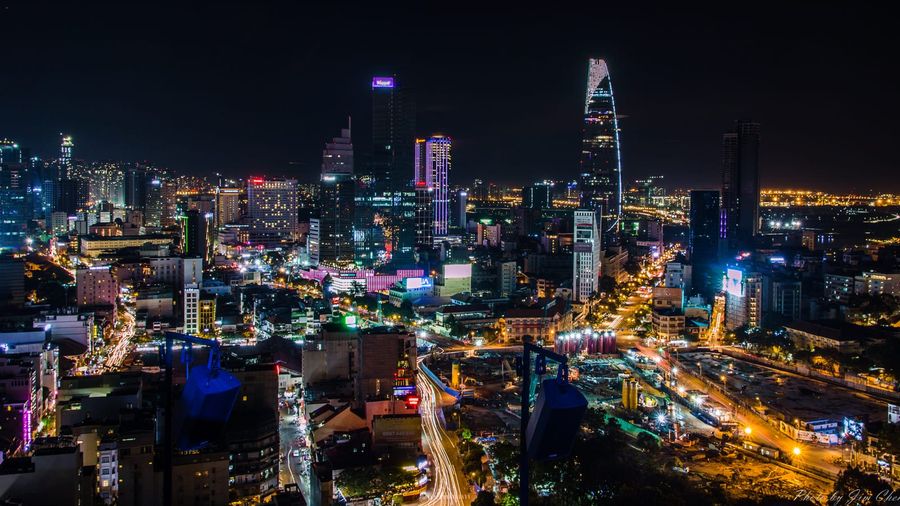
Two days in Ho Chi Minh City split cleanly: day one for the hard history of the Vietnam War and the French-colonial quarter around it, day two for markets, a smoke-filled temple, and the skyline from the Bitexco tower. Grab motorbikes and a walkable District 1 tie it together, and a third day — if you have one — belongs to the Cu Chi Tunnels or the Mekong Delta.
Saigon, as almost everyone who lives here still calls it, is not a city of must-see monuments so much as a city of atmosphere — motorbike rivers, pavement kitchens, and a recent history it carries lightly. Two days is enough to understand its shape: the war that ended here, the colonial boom that built the centre, and the restless commercial energy that has made Ho Chi Minh City the economic engine of modern Vietnam. This itinerary keeps both days in the walkable core and shows where a third day should go.
How should you split two days in Ho Chi Minh City?
Give day one to Saigon's war history and the colonial quarter that surrounds it, and day two to its living culture — a Taoist temple, a colonial market, Chinatown, and a skyline view at dusk. Both days stay inside central District 1 and 3, close enough to walk or take short Grab hops between stops.
The logic is geographic as much as thematic. The heavy war sites and the French-colonial landmarks sit within a 1.5-kilometre radius of each other in District 1, so day one is mostly on foot. Day two ranges a little wider — into District 3 and the edge of Chinatown — but nothing is more than a short ride away.
| Day | Morning | Afternoon | Evening |
|---|---|---|---|
| Day 1 | War Remnants Museum | Reunification Palace, colonial quarter | Ben Thanh night market |
| Day 2 | Jade Emperor Pagoda, District 3 | Binh Tay Market, Cholon | Bitexco Skydeck at sunset |
| Day 3 (optional) | Cu Chi Tunnels or Mekong Delta day trip | River dinner cruise |
What should you see on day one morning?
Start with the War Remnants Museum first thing, while you are fresh and the galleries are quiet. It is the most visited museum in Vietnam and the most emotionally demanding stop on this itinerary, telling the story of the American War from the Vietnamese civilian side through unflinching photography.
Arrive close to opening. The museum is compact but intense, and an hour and a half to two hours is enough; going early means you beat both the heat and the tour groups. The outdoor yard of captured American aircraft and armour makes sense of the scale; the upper-floor photojournalism galleries are what stay with you.
Walk it off afterwards. The museum sits in the same leafy pocket of District 1 as the next stop, so you can stroll between them in ten minutes rather than reaching for a Grab.
How do you spend day one afternoon?
Cross to the Reunification Palace, the South Vietnamese presidential compound frozen at the moment the war ended, then walk the French-colonial quarter — the Notre-Dame Cathedral and the Central Post Office — before winding down at Ben Thanh Market.
The Reunification Palace is best with an audio guide: the 1966 interiors, the basement war room, and the rooftop helipad read as a single preserved moment, and the T-54 tank that crashed the gates on 30 April 1975 sits in the garden. Give it an hour.
From there it is a short walk north to Paris Commune Square, where the red-brick cathedral faces the vaulted hall of the post office across a single plaza. The cathedral has been under restoration since 2017, so you will likely see it from the outside only — but the post office interior, a working colonial hall with hand-painted 1892 maps and a portrait of Ho Chi Minh, more than makes up for it, and you can post a card home from the original wooden booths.
End the day at Ben Thanh Market as the main hall closes and the night market spills into the surrounding streets — the easiest, most atmospheric place in the city to eat cơm tấm and grilled seafood on a plastic stool.
What fills day two?
Day two trades war history for living culture: begin at the incense-filled Jade Emperor Pagoda, browse the Cholon Chinatown and its sprawling Binh Tay Market, then finish with sunset from the Bitexco Financial Tower.
Open with the Jade Emperor Pagoda, the most atmospheric temple in the city — a small 1909 Taoist sanctuary thick with incense smoke, its carved Hall of the Ten Hells the detail everyone remembers. It sits on the District 1–District 3 border, so pair it with a slow wander through leafy District 3, where café culture and some of Saigon's best street food replace the landmarks of downtown.
In the afternoon, head west to Chợ Lớn (Cholon), the largest Chinatown in Vietnam, where Chinese temples such as Thiên Hậu and the enormous Bình Tây Market show a different, older trading Saigon. It is dense, un-touristy, and a reminder that the city was a layered port long before the French boulevards went up.
Close the day where the modern city shows off: the Bitexco tower's lotus-bud silhouette and cantilevered helipad are the signature of the skyline, and the Saigon Skydeck on the 49th floor — or a cocktail in the sky bar just above — turns the river's horseshoe bend and the lights of Thủ Thiêm into the trip's final image.
Should you add the Cu Chi Tunnels or the Mekong Delta?
If you can stretch to a third day, spend it out of town — either crawling the Cu Chi Tunnels northwest of the city or taking a boat through the Mekong Delta to the south. Each is a half- to full-day excursion, which is why they do not fit neatly into a tight two-day plan.
The Cu Chi Tunnels are the natural extension of day one's war history: 250 kilometres of hand-dug Viet Cong passages, widened for visitors, about 1.5 to 2 hours' drive each way. The Mekong Delta offers the opposite mood — canals, floating markets, and rice paddies on a day trip to Ben Tre or My Tho. Pick one; doing both needs a fourth day.
With only two days, resist the temptation to squeeze a tunnel trip in. You will lose most of a day to the road and arrive back too drained to enjoy the city.
How do you get around during these two days?
Use the Grab app for everything motorised — GrabCar for air-conditioned comfort, GrabBike to cut through traffic — and walk the compact colonial core. The new Metro Line 1 from Ben Thanh is handy for longer eastward hops, and licensed Mai Linh and Vinasun taxis are a reliable backup.
Grab fares are fixed and shown before you confirm, which removes the haggling and the meter games that catch out first-time visitors. For the day-one colonial circuit you will barely need it — the museum, palace, cathedral, post office, and market are all within walking distance. Day two's wider loop into Cholon is where a few short rides save time and sweat.
The city's first metro line, opened in December 2024, runs from the Bến Thành terminus beside the market out to the eastern suburbs, with cheap single-ride tickets — more useful for a longer hop than for the central sights, but a pleasant, traffic-free novelty. For the fuller picture, the city's own getting-around guidance covers airport transfers and where to base yourself.
What practical tips make the two days smoother?
Carry small đồng notes for street food and cyclos, cross the roads slowly and steadily rather than darting, keep bags on your inside shoulder against motorbike snatch-theft, and plan the heavy sights for the cooler morning hours. Budget roughly what the table below suggests for the two days.
| Expense | Typical cost | Notes |
|---|---|---|
| War Remnants Museum entry | 40,000 VND (US$2) | Self-guided |
| Reunification Palace entry | 40,000 VND (US$2) | Audio guide extra |
| Saigon Skydeck ticket | 200,000–240,000 VND (US$8–10) | Or buy a sky-bar drink instead |
| Half-day private city guide | US$40–80 | Per group, covers several sites |
| Street-food meal | 40,000–100,000 VND (US$2–4) | Per person |
| Grab ride across District 1 | 30,000–60,000 VND (US$1–2.50) | Fixed in app |
Tap water is not for drinking; bottled water is cheap and everywhere. The dry season from December to March is the most comfortable time to walk the city, while the wet-season afternoon downpours from May to October arrive punctually and clear fast. Above all, slow down — Saigon reveals itself on the pavement, over a glass of cà phê sữa đá, not from the back of a rushed taxi.
Save Ho Chi Minh City in 2 Days: A Complete Itinerary
Save Ho Chi Minh City in 2 Days: A Complete Itinerary to your free account
Sign in or create a free account to keep this place in Saved places and add it to your trips.
Frequently Asked Questions
Is two days enough for Ho Chi Minh City?
Two days is enough to cover the city itself — the war-history sites, the colonial quarter, a temple, a market, and a skyline view — at a comfortable pace. If you also want the Cu Chi Tunnels or a Mekong Delta trip, add a third day, because each is a half- to full-day excursion out of town.
Should I do the Cu Chi Tunnels on a two-day trip?
Only if you are willing to give up most of a day to it. The tunnels are 1.5 to 2 hours' drive each way, so fitting them into two days means dropping something in the city. With exactly two days, most visitors keep both days downtown and save Cu Chi or the Mekong Delta for a third day.
What is the best way to get around Ho Chi Minh City?
The Grab app (for both cars and motorbike taxis) is the easiest and safest option, with fares fixed in advance. Central District 1 is walkable for the colonial sights, and the new Metro Line 1 from Ben Thanh is useful for longer hops east. Avoid unmetered taxis that tout outside hotels.
Is it better to call the city Saigon or Ho Chi Minh City?
Both are correct and both are used daily. Ho Chi Minh City is the official name given after reunification in 1976; Saigon remains in everyday speech, on the SGN airport code, and for the historic central districts. You will hear locals use whichever suits the moment, and no one will mind which you choose.