
Observation Spots
Activities
The park is really several attractions folded into one, and each rewards a dedicated stop:
- Free zoo (Parc zoologique) — home to around 300 animals, its centrepiece is the Plaine Africaine, an open savanna enclosure where giraffes, zebras and antelopes share the view; admission is free every day, one of the last major city zoos in Europe to remain so (details via the Ville de Lyon).
- Jardin botanique de Lyon — the largest municipal botanical garden in France, cultivating roughly 15,000 plant species across open beds, an alpine garden, and a botanical school; the official botanical garden site lists its collections and seasonal openings.
- Grandes serres — a range of Victorian-era iron-and-glass greenhouses sheltering tropical palms, orchids, camellias and a heated pond of giant Amazonian water lilies.
- Roseraie Internationale — some 30,000 rosebushes in around 350 varieties, laid out in a five-hectare showcase created in 1964, alongside a competition garden where new cultivars are trialled each year.
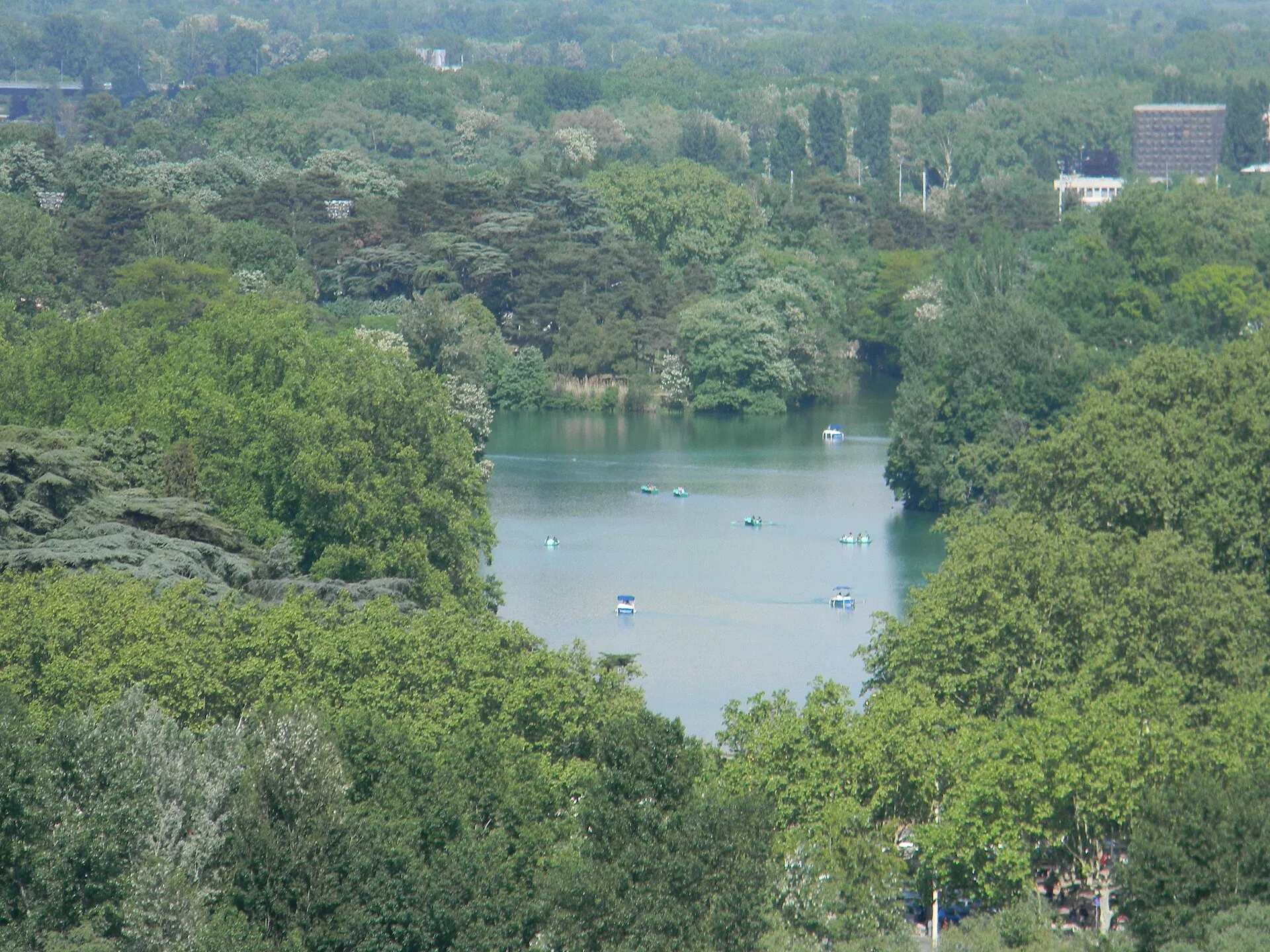
- Lake and boating — rowboats and pedal-boats for hire from spring to autumn, plus swans, ducks and shaded banks perfect for a picnic.
- Miniature train and pony rides — a gentle circuit of the grounds that has delighted Lyonnais children for generations.
Seasonal Highlights
Each season stages a different park. In spring, magnolias and cherry blossom open the show before the beds fill in; late May and June are the crescendo, when the Roseraie Internationale reaches peak bloom and the greenhouses overflow. Summer turns the lawns into an open-air lido of picnics, boating and shade-seeking under the plane trees, though weekends grow busy. Autumn is quietly spectacular: the park's maples, planes and liquidambars glow amber and crimson through October, mirrored in the lake at golden hour. Even winter has its rewards — bare branches over misty water, the warm humidity of the tropical grandes serres, and a free zoo that never closes. Look out too for open-air concerts and plant fairs through the warmer months; the ONLYLYON tourist office publishes the seasonal calendar.
When to Visit
Park gates open daily at 6:30 AM. Closing shifts with the season: around 10:30 PM in summer (roughly mid-April to mid-October) and 8:30 PM in winter. The zoo runs daily, 9:00 AM - 6:30 PM in summer and closing 5:00 PM in winter, while the botanical greenhouses keep shorter hours (about 9:00 AM - 5:00 PM, with some winter closures). Confirm current times with the Ville de Lyon before a special trip, as they shift around public holidays.
- Best light — early morning for birdsong and empty paths, or the golden hour before closing when the lake turns to copper
- Peak bloom — mid-May to late June for the Roseraie Internationale
- Quietest — weekday mornings; sunny summer weekends are the busiest by far
- Allow half a day — the zoo, botanical garden and a lake circuit together fill three to four unhurried hours
Admission and Costs
Parc de la Tête d'Or is one of the great free days out in France — the park, the zoo, the botanical garden and the greenhouses all cost nothing to enter (confirmed on the Ville de Lyon pages). You only pay for the extras:
- Rowboat / pedal-boat hire — roughly €6-8 (about $7-9) per person for 30 minutes on the lake, spring to autumn
- Miniature train — around €3 (about $3) a ride, a little less for children
- Pony rides and carousel — a few euros each, cash handy
- Private guided walk — a botanist- or historian-led tour typically runs €15-25 (about $16-27) per person, or €120-200 (about $130-215) for a private group of up to six
- Refreshments — kiosks and a couple of cafés dot the park, but many locals bring a picnic to spread on the lawns
The Case for a Guide
Parc de la Tête d'Or looks like a place you simply wander, and you can — but a guide reveals the design and science hidden in plain sight, exactly as the Bühler brothers intended when they engineered its "natural" vistas in the 1850s.
- Reading the landscape — a guide explains how the lake, sightlines and tree clumps were deliberately composed to feel spontaneous, and where the original nineteenth-century plan still shows through
- Botanical depth — with roughly 15,000 species in the collection, a botanist-guide picks out the genuinely rare specimens in the Jardin botanique de Lyon and the grandes serres that a casual visitor would never notice
- Timing the zoo — guides know when the Plaine Africaine animals are most active and how to loop the enclosures without backtracking
- Hidden corners — the alpine garden, the botanical school beds, and the quieter rose terraces reward those who know where to turn off the main alleys
- Efficient routing — 117 hectares is a lot of ground; a guide keeps a half-day visit focused on the highlights and the best light
Tips for Visitors
- Come by public transport — the TCL network puts the park minutes away: Metro line A to Masséna, trams T1 and T4 to Université Lyon 1 or Condorcet, or bus C1, C4 and 41
- Cycle in — Vélo'v bike-share docks sit at most gates and bikes are welcome on the inner roads, an easy way to cover the distance from the Presqu'île
- Bring a picnic — the vast lawns are made for it, and supplies from Les Halles de Lyon - Paul Bocuse turn lunch into an event
- Accessibility — the main alleys are flat, paved and stroller- and wheelchair-friendly, though some botanical paths are gravel
- Time the roses — plan a June visit around the Roseraie Internationale for the park at its most spectacular
- Mind the gates — the park locks at night, so check the seasonal closing time on the Ville de Lyon site before an evening stroll
Frequently Asked Questions
What months showcase the Parc de la Tête d'Or at its finest?
May and June are the undisputed highlight, when the Roseraie Internationale erupts with more than 30,000 rosebushes across some 350 varieties and the lake reflects the lush greenery of 117 hectares at their peak. July and August are warmest for boating and picnics, though the park can feel crowded on sunny weekends. Autumn sets the plane trees and maples ablaze in October, while winter strips the deciduous trees bare and shortens greenhouse hours — but the free zoo operates year-round and the misty lake takes on a serene, painterly character.
What are the opening hours of Parc de la Tête d'Or and its zoo?
Park gates: Daily from 6:30 AM, closing at 10:30 PM in summer (mid-April to mid-October) and 8:30 PM in winter. Zoo: Daily 9:00 AM - 6:30 PM in summer, closing 5:00 PM in winter. Botanical greenhouses: 9:00 AM - 5:00 PM (reduced hours and some closures in winter). Best time: May-June for the roses in full bloom.
Is Parc de la Tête d'Or free to enter?
Park access: Free. Zoo: Free, every day of the year. Botanical garden and greenhouses: Free. Rowboat and pedal-boat hire on the lake: roughly €6-8 (about $7-9) per person for 30 minutes. Miniature train: around €3 (about $3). Private guided nature or history walk: €15-25 (about $16-27) per person.
What are the most photogenic corners of the park?
The Roseraie Internationale in June, the reflections off the 16-hectare lake at golden hour, the Île du Souvenir war memorial reached by footbridge, the century-old iron-and-glass grandes serres of the botanical garden, and the gilded Porte des Enfants du Rhône gate on Boulevard des Belges are the five shots most visitors come away with.
How do you reach Parc de la Tête d'Or by public transport?
The park sits in Lyon's 6th arrondissement, a short walk from several lines on the TCL network. Metro line A stops at Masséna, five minutes from the southern gates, while trams T1 and T4 serve Université Lyon 1 and Condorcet along the eastern edge; bus C1, C4 and 41 run past the main entrances. Vélo'v bike-share docks sit at most gates, and cycling is allowed on the park's inner roads.
Why is a guide worth hiring at Parc de la Tête d'Or?
A guide turns a pleasant stroll into a reading of the landscape: how the Bühler brothers engineered the lake and vistas in the 1850s, which of the 15,000 species in the botanical collection are botanically rare, where the zoo's African plain animals gather at feeding times, and the quiet corners — the alpine garden, the botanical school, the hidden rose terraces — that most visitors walk straight past.