
Collection Highlights
The Munich Tunnel and Memorial Clock
The tour's most solemn stop honours the twenty-three people, including eight Busby Babes, who died in the 1958 Munich air disaster. The Munich Tunnel display lines the walk with images of the lost team, while outside the ground the Munich Clock stands as a permanent memorial marking the date of the crash on 6 February 1958.
Sir Alex Ferguson Stand and the Museum
The North Stand was renamed for Sir Alex Ferguson in 2011 and houses the Manchester United Museum, which opened in 1986 as the first purpose-built museum at a British football ground. Its galleries trace the club from its 1878 origins as Newton Heath to the treble-winning side of 1999, with a trophy room displaying decades of silverware.
The Home Dressing Room and Players' Tunnel
Visitors step into the home dressing room where the squad prepares on match day, then follow the players' tunnel out towards the pitch — the same walk the team makes into a wall of noise. Guides point out the small rituals and superstitions that shape the pre-match routine.
The Stretford End
The West Stand, universally known as the Stretford End, has been the traditional home of United's most vocal supporters since the terracing days. Once vast standing room, it remains the ground's spiritual heart, and guides explain how its songs and sightlines helped forge Old Trafford's reputation as the Theatre of Dreams.
The United Trinity Statue
Unveiled in 2008 to mark fifty years since Munich, the United Trinity statue depicts George Best, Denis Law and Sir Bobby Charlton — three Ballon d'Or winners from the same team. It stands on Sir Matt Busby Way facing the statue of Busby himself, so the manager and his greatest players look permanently across at one another.
The Pitch and the Dugouts
The tour finishes at pitch level, where visitors sit in the dugouts that Sir Matt Busby and Sir Alex Ferguson once occupied and take in the arena from the touchline. The playing surface measures the international standard of roughly 105 by 68 metres and is one of the most recognisable in world football.
Seating Guide
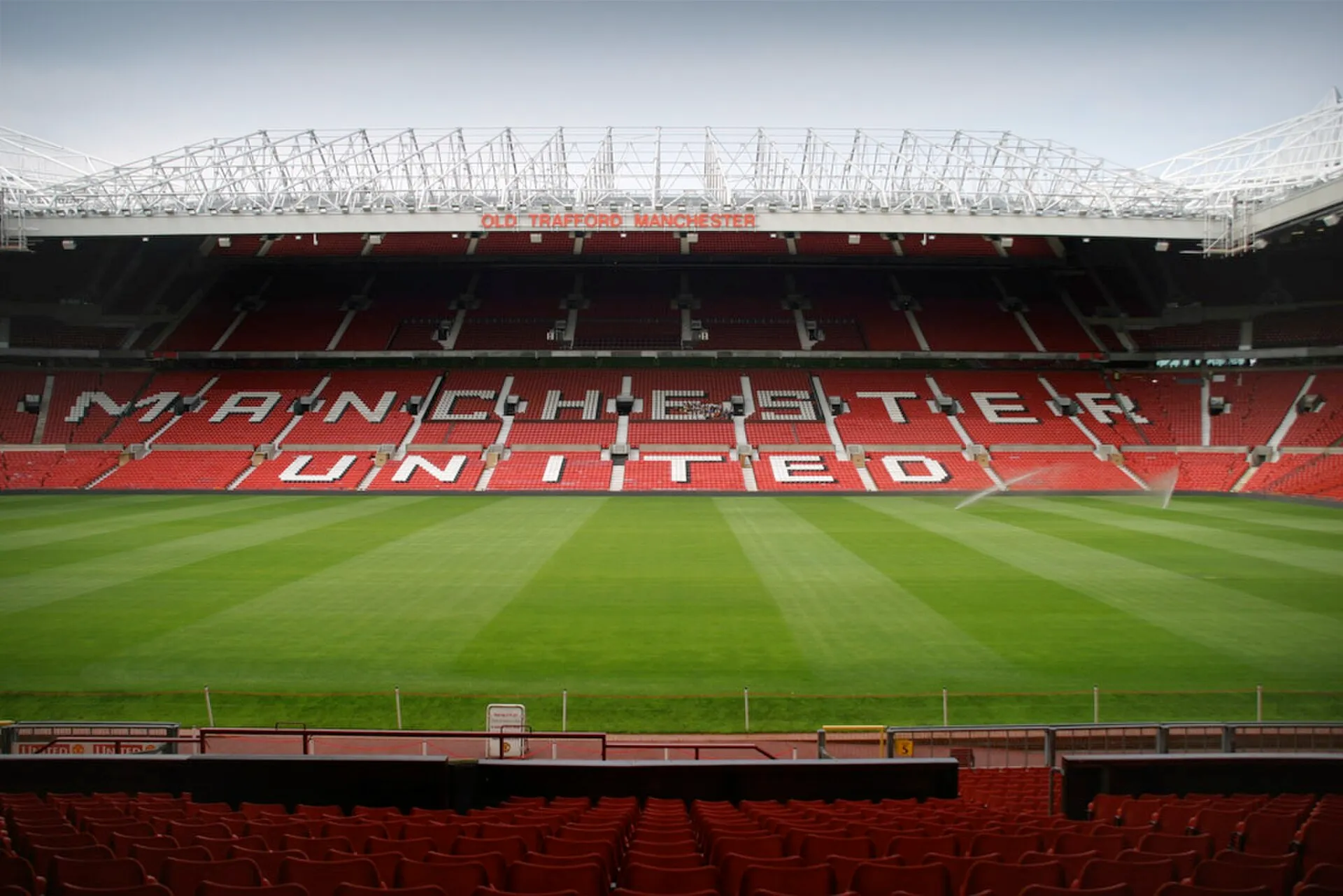
Old Trafford is built from four stands. The North Stand — renamed the Sir Alex Ferguson Stand in 2011 — is the tallest, a three-tiered wall that houses the museum and tour centre. Opposite it, the single-tier South Stand (the Sir Bobby Charlton Stand) stays low because the railway line runs directly behind it — the same constraint that has long capped the ground's expansion on that side.
The West Stand is the famous Stretford End, home to United's most vocal support, and the East Stand faces Sir Matt Busby Way, carrying the club crest above the megastore with the United Trinity and Busby statues outside. The ground's record attendance of 76,962 was set at an FA Cup semi-final in 1939, before terracing gave way to today's all-seater bowl. The tour lets you read the pitch from several vantage points, including pitchside and the executive seats along the halfway line.
Events Schedule
Beyond Manchester United's Premier League and European fixtures from August to May, Old Trafford has a long record as a neutral host. It staged matches at Euro 96 and the 2012 Olympic football tournament, hosted the 2003 UEFA Champions League final, and has been the traditional home of rugby league's Super League Grand Final since 1998.
The ground also stages occasional stadium concerts during the summer off-season. One useful point of confusion to clear up: the football stadium shares its district's name with the nearby Old Trafford Cricket Ground, home of Lancashire and a short tram ride away, so check which venue an event actually uses. Reviewing the fixture and events calendar before you travel helps you choose between the quiet, full-access museum experience and the electricity of a live crowd.
When to Visit
Stadium tours and the museum run almost every day, typically opening around 9:30 AM with the latest hours on Fridays and Saturdays and a final admission in the late afternoon. The guided tour lasts about 70 minutes; allow two and a half to three hours to take in the museum as well. On home match days the tour is cancelled and the museum keeps shorter hours, so a non-match day gives the fullest access to the dressing rooms, players' tunnel and pitchside.
Book ahead through Manchester United's official tour pages, as slots sell out during school holidays, and buy only from the club to avoid reseller mark-ups. The ground sits southwest of the city centre and is quickest reached by Manchester Metrolink tram: the Old Trafford and Wharfside stops on the Transport for Greater Manchester network are both a short walk from the turnstiles.
Admission and Costs
A standard stadium tour with museum entry costs around £29 (about $37) for adults, with reduced rates near £22 (about $28) for seniors and £19 (about $24) for children; under- threes go free. A museum-only visit is roughly £18 (about $23) adult and £12 (about $15) child, and the premium Legends Tour, guided by a former player, runs near £40 (about $51).
Match tickets, when released to non-members, generally start from £45 to £80 (about $57–$102) and climb steeply for marquee fixtures. Prices change each season, and United members can qualify for tour discounts, so confirm the current rates when you book directly with the club rather than through a reseller.
The Case for a Guide
Every stadium tour includes an official audio guide, but a knowledgeable guide — the club's own tour host, or a private Manchester guide who builds Old Trafford into a wider city itinerary — gives the concrete tiers and quiet tunnels a voice the audio handset never quite manages. The moments that reward context most include:
- The Busby Babes and Munich — how the 1958 disaster reshaped the club and why the Munich Tunnel and memorial clock are treated as sacred ground.
- Ferguson's era — the decisions made from the home dugout across a trophy-laden reign that redefined English football.
- Reading the stands — why the Stretford End generates the noise it does, and how the ground grew from its 1910 opening into today's four-stand arena.
A guide also smooths the practicalities: timing your visit around fixtures, working through the vast megastore, and linking the stadium to the rest of the city.
Tips for Visitors
A little planning turns a good visit into a smooth one:
- Book online ahead — tours sell out, especially during school holidays, and the club's own price beats the reseller platforms.
- Visit on a non-match day — match days cancel the tour and shorten museum hours, while a live game offers the atmosphere a tour cannot.
- Allow two to three hours — the guided route runs about 70 minutes; the museum easily adds another hour.
- Browse the Red Devils megastore — the vast official shop sits beside the East Stand on Sir Matt Busby Way.
- Getting there — take the Metrolink tram to the Old Trafford or Wharfside stop, or the match-day shuttle from Manchester Piccadilly.
Frequently Asked Questions
What is the best time of year to experience Old Trafford?
The Premier League season from August through May is when the Theatre of Dreams is at its electric best, with match-day atmospheres unmatched by stadium tours alone. April and September combine active football fixtures with milder weather for walking around the exterior grounds. Summer months of June and July are quietest with no competitive matches, but stadium tours run daily without match-day interruptions and school holiday crowds keep the museum lively.
When can visitors attend events at Old Trafford Stadium?
Stadium tours run every day, usually from mid-morning until a final tour in the late afternoon (around 4:30 PM), and include entry to the club museum. On match days tours are heavily restricted or cancelled and the museum keeps shorter hours, so a non-match day gives the fullest access to the dressing rooms, players' tunnel and pitchside.
What do tickets cost at Old Trafford Stadium?
Stadium Tour: £29 adult, £22 senior, £19 child. Museum only: £18 adult, £12 child. Legends Tour: £40 with a former player as guide. Match tickets: £45-80+ (book well ahead).
How should visitors prepare for Old Trafford Stadium?
Book online ahead as tours sell out, especially during school holidays. The guided route runs about 70 minutes, so allow two and a half to three hours to add the museum. Buy directly from the club rather than resellers to avoid mark-ups. Getting there: Metrolink tram to the Old Trafford or Wharfside stop, or the match-day shuttle from Manchester Piccadilly.
Is Old Trafford accessible for visitors with reduced mobility?
The stadium tour and Manchester United Museum are largely step-free, with lifts to the upper levels and accessible toilets along the concourse. Visitors who use a wheelchair or need assistance should note their requirements when booking directly with the club, as a limited number of accessible spaces are allocated per tour. The Metrolink trams serving the Old Trafford and Wharfside stops are low-floor and level-access, so the final approach from the city centre is straightforward.