

Overview
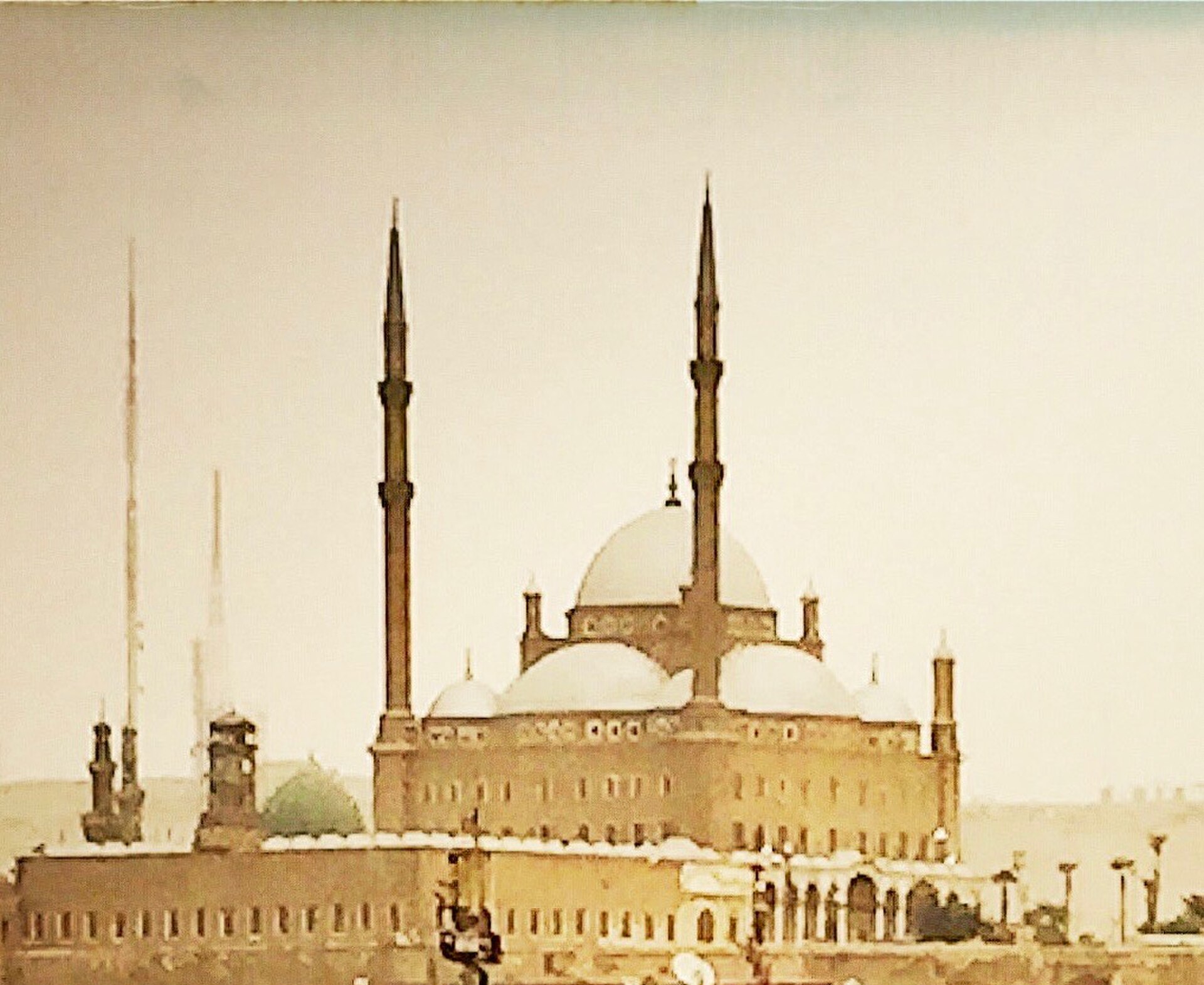
In 1176, the Kurdish commander Salah ad-Din (Saladin) ordered the construction of a massive fortification on a limestone spur of the Mokattam hills, choosing a site where breezes cooled the air and the elevation offered an unobstructed view of any approaching army. For nearly seven hundred years, from the Ayyubid dynasty through the Mamluk sultans and Ottoman pashas, the Citadel served as Egypt's seat of government. Rulers expanded it with palaces, mosques, barracks, and cisterns until the complex grew into a walled city within Cairo itself. Muhammad Ali Pasha, who seized power in 1805 and founded modern Egypt's ruling dynasty, demolished most of the medieval Mamluk palaces to build his own monumental mosque, the enormous domed structure that now defines the Citadel's silhouette.
Notable Rooms
The Citadel's walls and towers represent a palimpsest of military engineering spanning eight centuries. Saladin's original fortifications employed techniques learned from Crusader castles in the Levant: massive curtain walls punctuated by rounded towers that eliminated blind spots where attackers could shelter. These Ayyubid-era sections, built from the distinctive yellow limestone quarried on site, remain visible along the northeastern perimeter where rough-hewn blocks contrast with later additions. Mamluk sultans who ruled Egypt from 1250 to 1517 transformed the fortress into a palatial complex. Sultan al-Nasir Muhammad ibn Qalawun erected a congregational mosque whose columns—pillaged from pharaonic temples and Roman ruins—create a forest of mismatched architectural fragments. The Mamluks also constructed elaborate reception halls, harems, and administrative buildings, though Muhammad Ali later razed most of these structures. Ottoman governors after 1517 added their own layers: barracks for Janissary troops, powder magazines, and the distinctive Bab al-Azab gate where, in 1811, Muhammad Ali famously massacred the remaining Mamluk leaders to consolidate his power. Walking the complex with a historian guide who can identify which walls date to which dynasty transforms an apparent jumble of fortifications into a readable timeline of Egyptian political history. They point out mason's marks invisible to casual visitors, explain how the angled approach to certain gates slowed cavalry charges, and describe the ingenious water systems that made the hilltop fortress self-sufficient during siege.
Fortification History
The Citadel's northern terrace delivers what many consider the finest panorama in all of Cairo. On clear mornings before the haze builds, the view encompasses an astonishing sweep: the Nile curving through the city center, the medieval minarets of Islamic Cairo clustering in the foreground, the modern towers of downtown rising beyond, and—on exceptionally clear days—the Giza Pyramids floating on the western horizon fifteen kilometers distant. Directly below the terrace walls stand the massive twin mosques of Sultan Hassan and al-Rifa'i, their domes and minarets forming one of Islamic architecture's most impressive ensembles. Sultan Hassan, built between 1356 and 1363, ranks among the largest mosques ever constructed; its portal rises to thirty-seven meters, taller than any medieval European cathedral entrance. The neighboring al-Rifa'i Mosque, though built in neo-Mamluk style between 1869 and 1912, houses the tombs of Egypt's modern royal family including King Farouk and, unexpectedly, the exiled Shah of Iran. Photographers should arrive before 10 AM for the clearest conditions and softest light. Late afternoon provides warmer golden tones but often encounters afternoon haze. The terrace becomes crowded by mid-morning as tour buses arrive, so early visitors enjoy the panorama in relative peace. A good guide points out specific landmarks—the thousand minarets that gave Cairo its epithet, the distinctive green dome marking a particular Sufi shrine, the modern Cairo Tower on Gezira Island—transforming the view from impressive but anonymous cityscape into a readable map of the capital's history and geography.
When to Visit
No structure dominates Cairo's skyline more completely than the Muhammad Ali Mosque, whose twin pencil-thin minarets and cascading domes rise above the Citadel walls like an Ottoman imperial statement transplanted to the Nile. Completed in 1848 after eighteen years of construction, the mosque deliberately echoes the great imperial mosques of Istanbul—particularly the Sultan Ahmed (Blue Mosque) and Yeni Camii. Muhammad Ali, who declared Egypt effectively independent from Ottoman suzerainty while technically remaining a vassal, built his mosque as an assertion of dynastic legitimacy that rivaled anything in the imperial capital. The interior astonishes with scale and luminosity. Hundreds of glass lamps hang from the central dome on brass chains, their light multiplied by mirrors and gilded surfaces until the vast prayer hall glows with golden warmth. The walls are clad in alabaster to a height of eleven meters, giving the mosque its local nickname—the Alabaster Mosque—though the stone is actually a form of Egyptian calcite. A ornate clock in the courtyard, gifted by French King Louis-Philippe in exchange for the obelisk now standing in Paris's Place de la Concorde, has never worked—a detail guides love to mention as emblematic of various historical ironies. Visitors must remove shoes before entering; disposable shoe covers are provided, though socks make the cool marble floor more comfortable. Women should bring a headscarf or borrow one at the entrance. Prayer times briefly close the interior to non-worshippers, but the courtyard with its ablution fountain remains accessible and offers excellent views of the surrounding minarets.
Admission and Costs
Beyond the famous mosque, the Citadel complex contains several museums and monuments that most visitors overlook. The National Military Museum occupies the former Harim Palace where Muhammad Ali's family resided. Its galleries trace Egyptian military history from pharaonic chariot warfare through the medieval Islamic conquests, Napoleon's 1798 expedition, and the 1973 October War against Israel. Dioramas depict famous battles, while display cases hold uniforms, weapons, and decorations spanning three millennia. Military history enthusiasts can spend an hour here; others may prefer a quick circuit. The Mosque of al-Nasir Muhammad, built in 1318, rewards those who seek it out despite its location away from the main tourist flow. Its columns, pillaged from ancient sites across Egypt, create an architectural encyclopedia: here a pharaonic lotus capital, there a Roman Corinthian column, nearby a Byzantine marble shaft. The original tilework that once covered the minarets was stripped by Ottoman conquerors and shipped to Istanbul, but enough traces remain to suggest the original splendor. The Police Museum occupies a former prison with displays of criminal investigation techniques and notorious crime cases, an offbeat counterpoint to the military themes elsewhere. Its rooftop terrace offers views equal to those from the main tourist vantage point but with far fewer crowds. The Gawhara Palace museum, when open, displays Muhammad Ali's throne room and reception halls furnished in nineteenth-century Ottoman style. These corners reward visitors who allocate sufficient time and arrive with a guide who knows their locations and can unlock their stories.
Tips for Visitors
The Citadel opens daily from 8 AM to 5 PM, with last entry at 4 PM. Ramadan may bring shortened hours; confirm locally. General admission costs EGP 300 (approximately $6) for foreign visitors, covering the entire complex including the Military Museum. Photography is free for personal cameras; tripods require a permit. Most guided visits last two to three hours, though architecture enthusiasts may want longer. Group tours run $30-50 per person, while private guides for up to five people cost $60-120. The grounds are largely unshaded, making hats and sunscreen essential during summer. Comfortable shoes help on the uneven stone surfaces. The mosque interior requires removing shoes—socks make the marble more comfortable—and women should bring headscarves. Visitors with mobility concerns should discuss routes with their guide in advance, as the ramparts and museum staircases involve steep steps. Many visitors combine the Citadel with a walk downhill through the Darb al-Ahmar neighborhood to Al-Azhar and the Khan El-Khalili bazaar, making a rich half-day itinerary without driving between stops. The Egyptian Museum is better saved for a separate morning when legs are fresh. Taxis and ride-hailing apps (Uber and Careem both operate in Cairo) provide the easiest transport to the hilltop entrance.