

Overview
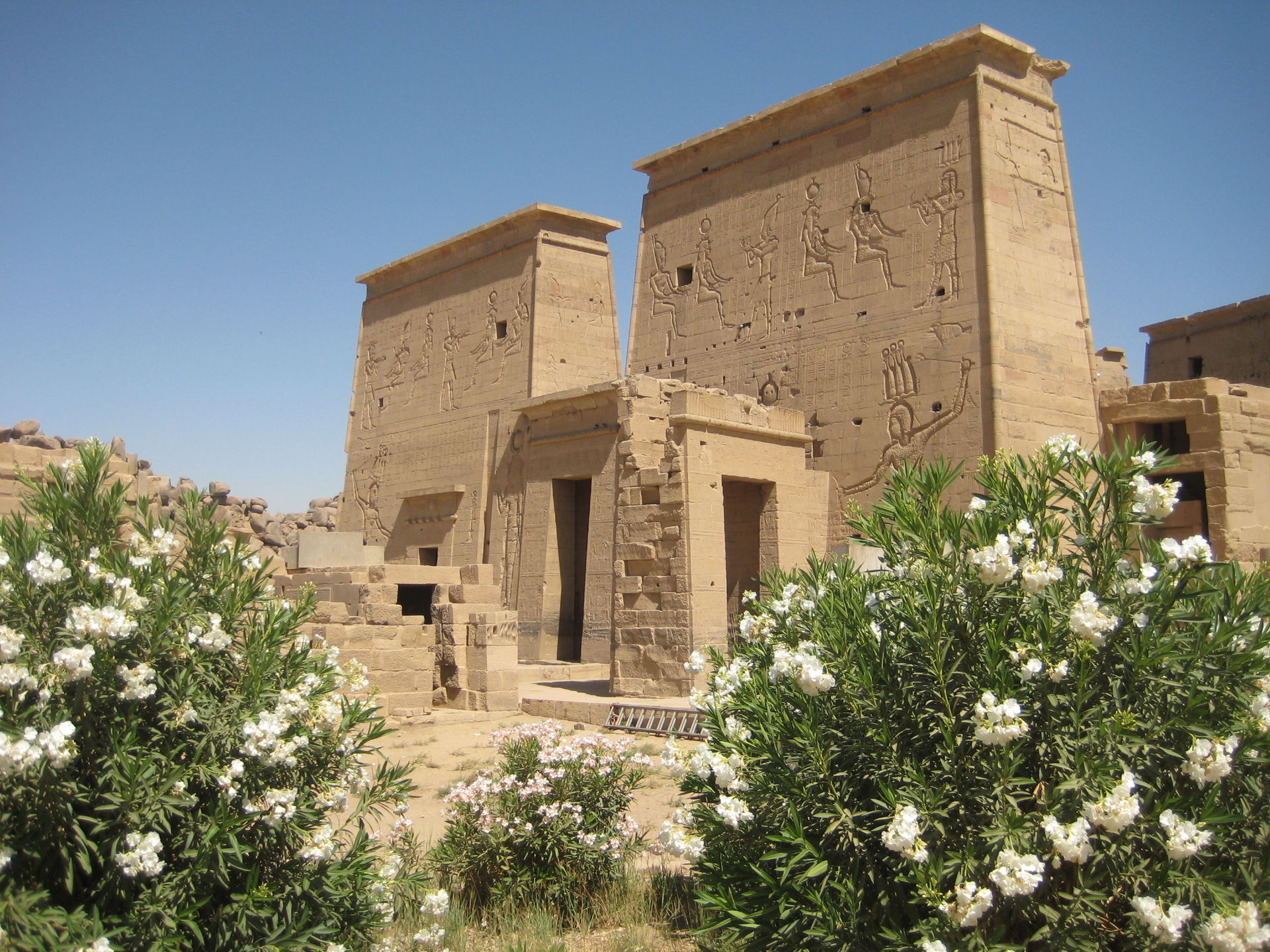
Philae Temple rises from Agilkia Island in the reservoir behind Aswan's Low Dam, its colonnades and pylons reflected in waters that once threatened to destroy it. The complex is dedicated primarily to Isis, the mother goddess whose cult was among the last active pagan religions in Egypt. While most Egyptian temples fell silent centuries before the common era, priests at Philae continued performing rituals until 537 AD, when Emperor Justinian ordered the sanctuary closed. Walking through the temple today, you encounter not only pharaonic grandeur but also the final chapter of a religious tradition that shaped civilizations from the Nile to Rome. For official information, see UNESCO Nubian Monuments.
Key Artifacts
The Isis mythology carved into Philae's walls tells one of antiquity's most influential stories. When the god Set murdered his brother Osiris and scattered his body across Egypt, Isis gathered the pieces and through her magic restored Osiris to life long enough to conceive their son Horus. This narrative of death, resurrection, and divine motherhood resonated so powerfully that the cult of Isis eventually spread throughout the Mediterranean world, with temples in Rome, Pompeii, and as far as Britain. Some scholars trace elements of early Christian iconography—particularly images of the Virgin Mary nursing the infant Jesus—to Ptolemaic depictions of Isis suckling young Horus. For ancient pilgrims, reaching Philae required a journey up the Nile to Aswan's first cataract, then a boat crossing to the sacred island. The approach by water was itself part of the ritual experience, with the temple gradually revealing itself above the river. Priests in white linen would greet arrivals at the western quay, beginning ceremonies that might include oracular consultations, healing rituals, and initiation into the goddess's mysteries. Inscriptions record pilgrims from across the ancient world coming to petition Isis for fertility, protection, and guidance through the afterlife.
Excavation History
Philae's current home is not its original one. The temple stood on Philae Island for over two thousand years, but the construction of Aswan's Low Dam in 1902 began a decades-long crisis. Each year after the dam's completion, the rising reservoir submerged the temple for most of the season. Visitors would row boats between half-drowned columns, gazing down through green water at relief carvings never meant to be seen this way. By the 1960s, plans for the much larger High Dam threatened permanent submersion. UNESCO's response, carried out between 1972 and 1980, dismantled every block -- some 40,000 tonnes of stone -- numbered them, and reconstructed the entire complex on nearby Agilkia Island. Engineers had to landscape Agilkia to match Philae's original topography before reassembly could begin. The operation, funded by contributions from fifty countries, succeeded so completely that today's visitors experience the temple exactly as Ptolemaic pilgrims did, with the crucial difference that it now sits safely above any possible flood level. Looking across the water toward the original Philae Island, visible as a low mound in the distance, you witness both the threat and the rescue simultaneously. Unlike many Egyptian temples with origins in the distant pharaonic past, Philae's surviving structures date primarily from the Ptolemaic dynasty (305-30 BC) and the subsequent Roman period. Roman emperors including Augustus, Tiberius, and Trajan added their own contributions, and Trajan's Kiosk -- an elegant open pavilion with fourteen columns -- remains clearly Roman in its proportions.
When to Visit
Every visit to Philae begins at the Shellal marina, where motorboats wait to ferry visitors across the reservoir. The crossing takes ten to fifteen minutes each way, passing between granite outcrops and the submerged foundations of ancient quarries. Shared boats, which depart when full, cost EGP 200-300 per vessel; private boats cost more but allow you to control your timing and avoid the constraint of scheduled returns. The boat ride itself is part of the experience. As you approach, the temple emerges from the horizon much as it did for ancient pilgrims, its colonnade and pylons growing larger against the sky. Early morning arrivals, on the first boat after the 7 AM opening, enjoy the island nearly empty before group tours begin flooding in around 9 AM. The last boat back departs around 3:30 PM during winter months, so plan accordingly. Tipping the boat captain EGP 20-50 is customary. After dark, Philae transforms into a theatrical stage. The Sound and Light Show guides visitors through the temple complex as colored floodlights illuminate successive structures and a narrated soundtrack recounts the mythology of Isis and Osiris. The experience begins at the ancient quay, where you first approach the island much as pilgrims did two thousand years ago. As you walk through colonnades bathed in shifting reds, blues, and golds, recorded voices speak the parts of gods and pharaohs, telling of betrayal, murder, resurrection, and eternal love. The climax takes place at the edge of the island, where the final scenes project onto the temple facade and its reflection in the surrounding water, doubling the visual impact. Two performances run most evenings, with schedules rotating between languages -- check locally for English showtimes.
Admission and Costs
Entry to the temple costs EGP 450 (approximately $9). Shared boats from the Shellal marina, which depart when full, cost EGP 200-300 per vessel; private boats cost more but allow you to control your timing. Tipping the boat captain EGP 20-50 is customary. Group guided tours running two to three hours, including boat transfer, cost $25-45 per person. Private guides charge $80-150 for up to six people, exclusive of boat and entry fees. Many visitors combine Philae with the nearby Unfinished Obelisk and the High Dam in a single morning itinerary -- an efficient way to see three of Aswan's major attractions before lunch. Wear sturdy shoes for the uneven stone pathways, bring water and sun protection, and resist the urge to touch the ancient reliefs -- oils from skin accelerate erosion of the soft sandstone. The Sound and Light Show costs EGP 400-500 per person and includes boat transfer from the Shellal marina. Tickets are available at the marina ticket office. The show runs regardless of weather, though wind can affect the clarity of the water reflections. Photography during the performance produces some of Philae's most dramatic images, with long exposures capturing the interplay of ancient stone and modern illumination.
Tips for Visitors
Unlike many Egyptian temples with origins in the distant pharaonic past, Philae's surviving structures date primarily from the Ptolemaic dynasty (305-30 BC) and the subsequent Roman period. This relatively late construction means the carvings blend traditional Egyptian religious imagery with Hellenistic artistic influences. Pharaohs wear the double crown of Upper and Lower Egypt, but their facial features often show the softer, more naturalistic style favored by Greek sculptors. Roman emperors including Augustus, Tiberius, and Trajan added their own contributions, commissioning reliefs and structures that proclaimed their legitimacy as inheritors of pharaonic tradition. The main Temple of Isis follows traditional Egyptian plans: a massive first pylon leads to a colonnaded forecourt, then a second pylon, hypostyle hall, and finally the sacred sanctuary where the cult statue once resided. Yet beside it stands Trajan's Kiosk, an elegant open pavilion with fourteen columns supporting a now-vanished roof, clearly Roman in its proportions and decorative flourishes. Other structures on the island include temples to Hathor, Horus, and the Nubian gods, plus a nilometer for measuring flood levels -- all accumulated over centuries as successive rulers sought to honor the mother goddess. Wear sturdy shoes for the uneven stone pathways, bring water and sun protection, and resist the urge to touch the ancient reliefs -- oils from skin accelerate erosion of the soft sandstone that has survived twenty-three centuries of Nile humidity.