
Engineering Facts
Colonel John By's original engineering achievement remains remarkably intact nearly 200 years after completion. The canal's 47 locks use a slack-water system that raises and lowers water levels through a series of dammed sections rather than cutting a continuous channel through rock — an ingenious solution to the Canadian Shield's granite bedrock that would have required decades of blasting to penetrate conventionally. The Ottawa Locks, an eight-lock staircase descending 24 metres from the canal to the Ottawa River directly beside Parliament Hill, still operate with manually cranked mechanisms identical in principle to By's 1832 design — watching a modern pleasure boat descend through the chambers is a mesmerising demonstration of 19th-century hydraulic engineering functioning exactly as intended. The canal required the construction of 52 dams and the flooding of several river systems and lakes to create a navigable corridor through 202 kilometres of wilderness. The human cost was staggering: over 1,000 workers died during construction, many from malaria contracted in the swampy sections. UNESCO's 2007 World Heritage inscription recognized the Rideau as the best-preserved slack-water canal from the great canal-building era, with original stonework, lock mechanisms, and defensive blockhouses still standing along the route.
Observation Points
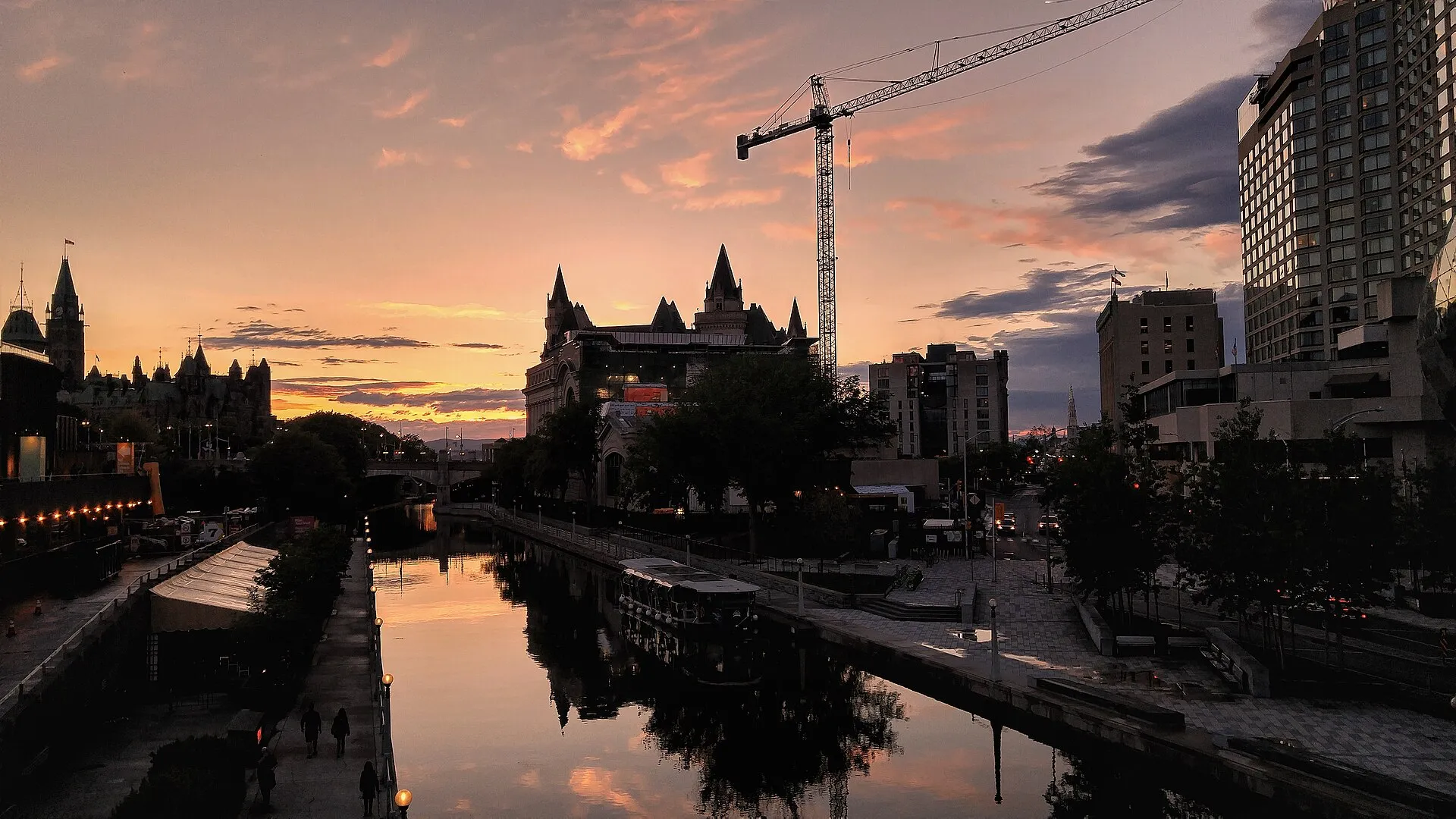
The Skateway experience in winter offers a unique ground-level perspective: gliding 7.8 kilometres through the heart of the capital, passing under bridges and alongside snow-dusted embassies — the Guinness-recognised longest naturally frozen skating rink in the world. The Ottawa Locks beside Parliament Hill provide the most dramatic viewpoint in any season: the eight-lock staircase frames the Gothic Parliament buildings above while boats or ice stretch below. Dows Lake pavilion at the canal's southern terminus offers a wider panorama with Ottawa's skyline reflected in the water — the best spot for photography during the Tulip Festival each May, when hundreds of thousands of blooms (a gift from the Dutch royal family in gratitude for wartime refuge) line the canal banks. The Laurier Avenue Bridge crossing provides an elevated mid-canal viewpoint where you can see both the downtown skyline to the north and the University of Ottawa campus stretching south. In summer, the paved cycling paths flanking the canal from the Ottawa Locks to Dows Lake and beyond create one of the capital's finest recreational corridors, linking parks, cafes, and public art installations.
When to Visit
Canal pathways: Accessible year-round at all hours; the multi-use paths along the banks are popular with joggers and cyclists from dawn to dusk. Skateway season: Typically mid-January through early March, weather and ice conditions permitting — check the NCC website daily, as sections open and close based on thickness measurements. Lock operations: Mid-May through mid-October; the Ottawa Locks beside Parliament Hill operate daily from 10 AM to 6 PM during peak season. Best time to skate: Early mornings on weekdays, when the freshly groomed ice is smooth and the crowds have not yet arrived. Winterlude festival: Three weekends in February, when the canal becomes the spine of Ottawa's signature winter celebration with ice sculptures, concerts, and food vendors lining the banks.
Admission and Costs
Skating on the Skateway: Free — the canal is a public amenity maintained by the National Capital Commission at no charge to skaters. Skate rentals: CA$20 at several kiosks along the canal, including near Dows Lake and the NAC; a refundable deposit may be required. Boat cruises: CA$25-40 per person for a guided summer cruise along the downtown stretch, departing from the Ottawa Locks or Dows Lake. BeaverTails: CA$6-9 per pastry — try the classic cinnamon-sugar or the Killaloe Sunrise topped with lemon and sugar, both served piping hot from canal-side stands.
Tips for Visitors
Ice condition updates: The NCC publishes daily Skateway conditions on its website and app — green, yellow, and red zones indicate which sections are open, so check before heading out. Dress in layers: Wind funnels along the canal corridor and wind chill can drop temperatures dramatically; a balaclava, insulated gloves, and thermal socks make the difference between a pleasant glide and a miserable shuffle. Changing facilities: Warming huts with benches are spaced along the Skateway for lacing up skates, resting cold feet, and buying snacks — the largest is at Dows Lake, which also has washrooms. Walk from ByWard Market: The canal's northern entrance at the Ottawa Locks is a short stroll from ByWard Market, making it easy to combine a canal visit with a meal or a browse through the market stalls. Sunset on the water: In summer, rent a kayak or paddleboat at Dows Lake and paddle north toward the locks as the sun drops behind Parliament Hill — the golden light on the Gothic spires is one of Ottawa's most photogenic moments.
Frequently Asked Questions
What season offers the most unique Rideau Canal experience?
The canal offers two completely different world-class experiences depending on season: May through September is perfect for cycling and walking the leafy towpaths or taking a boat cruise through the lock system, while January-February transforms 7.8 kilometers of frozen canal into the world's longest skating rink during Winterlude. Spring thaw (March-April) and late autumn are the least appealing periods, when the canal is neither frozen nor particularly scenic.
When is Rideau Canal open to visitors?
Canal pathways: Accessible year-round at all hours; the multi-use paths along the banks are popular with joggers and cyclists from dawn to dusk.
What does a visit to Rideau Canal cost?
Skating on the Skateway: Free — the canal is a public amenity maintained by the National Capital Commission at no charge to skaters.
What should visitors know before visiting the Rideau Canal Skateway?
Ice condition updates: The NCC publishes daily Skateway conditions on its website and app — green, yellow, and red zones indicate which sections are open, so check before heading out.