

Overview
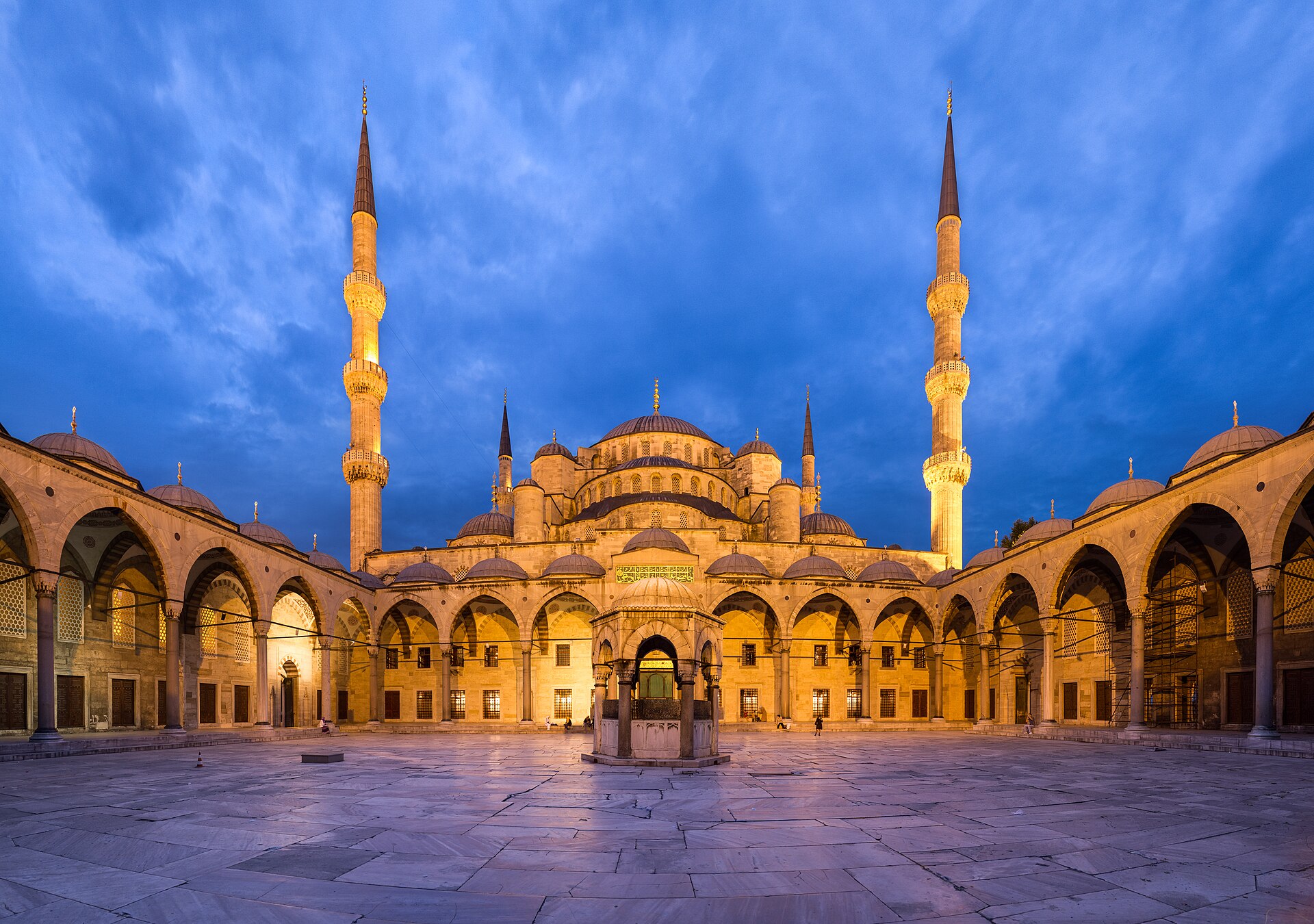
20,000 Iznik tiles: Hand-painted blue tiles give mosque its nickname, tulip motifs throughout. Central dome: 23.5 meters diameter, 43 meters high, with 260 windows creating divine light. Chandelier forest: Hundreds of oil lamps (now electric) hanging at multiple levels. Mihrab and minbar: Intricately carved marble prayer niche and pulpit. Courtyard: Same size as prayer hall - rare in mosque architecture, with ablution fountain. Painted decorations: Hand-painted floral and geometric patterns on upper walls and domes. Stained glass windows: Original 17th-century glass in intricate Ottoman patterns
Visitor Etiquette
Hours: Open daily 8:30 AM-6:45 PM, closed during 5 prayer times (30-90 minutes each). Prayer closures: Dawn, midday, afternoon, sunset, evening - check daily schedule. Best time: Early morning 8:30-9 AM or late afternoon 4-5 PM between prayers. Avoid: Friday mornings (main prayer day), midday in summer (largest tour groups). Sunset lighting: Late afternoon light makes the tiles glow beautifully
Spiritual Significance
Built 1609-1616 by Sultan Ahmed I, the Blue Mosque (Sultanahmet Camii) gets its nickname from the stunning blue Iznik tiles adorning its interior. With six minarets (controversial at the time - only Mecca's mosque had more), cascading domes, and a massive courtyard, it represents the pinnacle of Ottoman classical architecture. Unlike Hagia Sophia across the square, it was purpose-built as a mosque and remains an active place of worship.
When to Visit
Dress modestly: Shoulders, knees covered. Women must wear headscarf (free loaners at entrance). Remove shoes: Required - plastic bags provided, keep them with you inside. Main entrance queue: Tourist entrance on south side (opposite Hagia Sophia), locals use west. Free but expect crowds: 3.5 million visitors annually - early morning essential. Respectful behavior: Active worship space - quiet voices, no pointing at praying people. Photography allowed: No flash, avoid photographing people praying. Donation encouraged: Free entry but restoration costs are enormous. Allow 45-60 minutes: Time to appreciate details without guides, 1.5 hours with guide. Combine efficiently: 5-minute walk to Hagia Sophia, Topkapi Palace, or Basilica Cistern
Admission and Costs
Admission: FREE (functioning mosque, donations welcome). Group tours: ₺400-700 (€12-22) per person with guide (1 hour). Private guide: ₺3,500-6,500 (€100-200) for up to 6 people (1.5 hours). Combined tours: ₺1,000-1,800 (€30-55) with Hagia Sophia and Hippodrome. Photography tours: ₺5,000-8,000 (€150-250) with professional photographer-guide
Tips for Visitors
Ottoman architecture: Understand the innovative engineering of cascading domes and semi-domes. Iznik tile artistry: Learn about the 50+ tulip and flower patterns in handmade tiles. Historical context: Why Sultan Ahmed built it (after military defeats, to regain God's favor). Six minaret controversy: How this nearly caused diplomatic crisis with Mecca. Calligraphy secrets: Guides translate the Arabic inscriptions and explain symbolism. Prayer time planning: Navigate closures efficiently, combine with nearby sites