
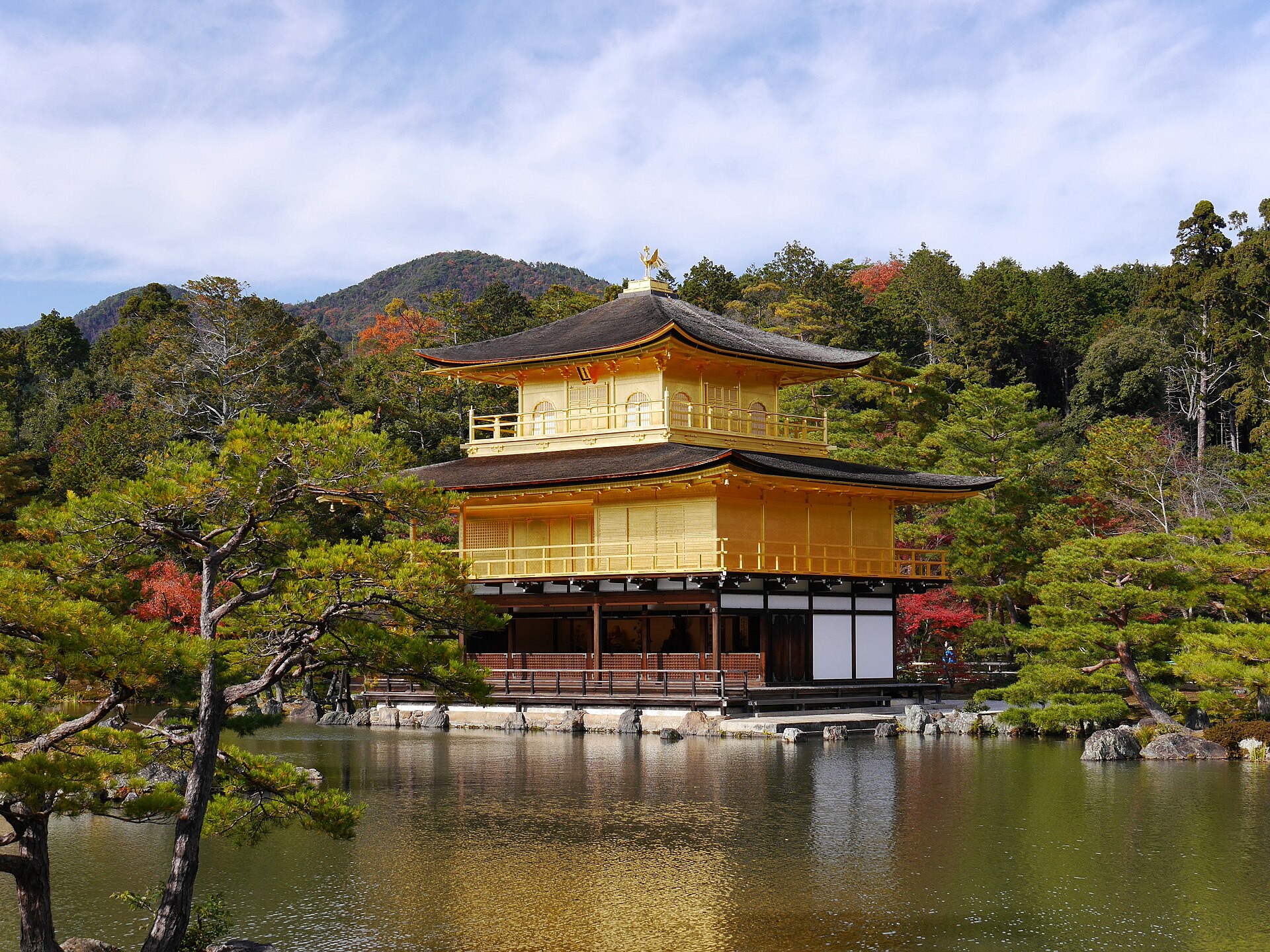

Overview
Kinkaku-ji (Golden Pavilion) is Kyoto's most photographed sight, a three-story zen temple covered in pure gold leaf that shimmers in the reflection of the surrounding Kyoko-chi (Mirror Pond). Originally built in 1397 as a retirement villa for Shogun Ashikaga Yoshimitsu, it was converted to a temple after his death. The current structure dates from 1955 after a monk burned down the original in 1950, inspired by obsession — a tragedy immortalized in Yukio Mishima's novel "The Temple of the Golden Pavilion."
A guide here can reveal how each of the pavilion's three floors represents a distinct architectural style — aristocratic shinden, samurai bukke, and Chinese zen — reflecting Yoshimitsu's vision of unifying Japan's cultural traditions under one gilded roof. Combine with Fushimi Inari Shrine and Arashiyama Bamboo Grove for a complete Kyoto experience.
Spiritual Significance
Kinkaku-ji holds deep spiritual meaning as a Rinzai Zen Buddhist temple within the Shokoku-ji school. The gold-leaf pavilion was designed to reflect the Pure Land of Buddha — a paradise made tangible through architecture. The golden phoenix (ho-o) statue atop the roof symbolizes protection against fire and rebirth. The surrounding karesansui (dry landscape) garden and Kyoko-chi pond embody Zen principles of harmony between nature and the built environment. Seasonal beauty transforms the temple through cherry blossoms, lush summer greenery, fiery autumn momiji maples, and rare winter snowfalls that turn the golden reflection into one of Japan's most iconic images.
Visitor Etiquette
Photography is freely allowed but flash is prohibited. Follow the one-way path respectfully — the route cannot be reversed. At the incense burner near the exit, visitors may wave smoke over themselves for purification following Buddhist tradition. Speak quietly throughout the grounds, as this remains an active place of worship. Dress modestly, though no strict code is enforced. The Mirror Pond viewing area is the most crowded spot; patience yields better photographs than pushing forward.
When to Visit
Daily: 9 AM - 5 PM (last entry 4:30 PM). Best: Opening at 9 AM or late afternoon for better light. Winter: Snow on gold is magical but rare. Avoid: 11 AM - 2 PM when tour buses arrive.
Admission and Costs
Entry: ¥500 adult, ¥300 child. Unique ticket: Your ticket is an ofuda (charm/prayer paper). Photos: Included, unlimited photography allowed. Guided tour: ¥5,000-8,000 for a private guide.
Tips for Visitors
One-way path: Follow the route — you cannot go back to photograph again. Best photo spot: Immediately upon entering, take your time at the Mirror Pond viewpoint. Keep your ticket: It is an ofuda (amulet) to bring home. Allow 45 minutes for the garden walk beyond the pavilion. Combine visits: Ryoan-ji zen garden is 10 minutes away by bus.