

Overview
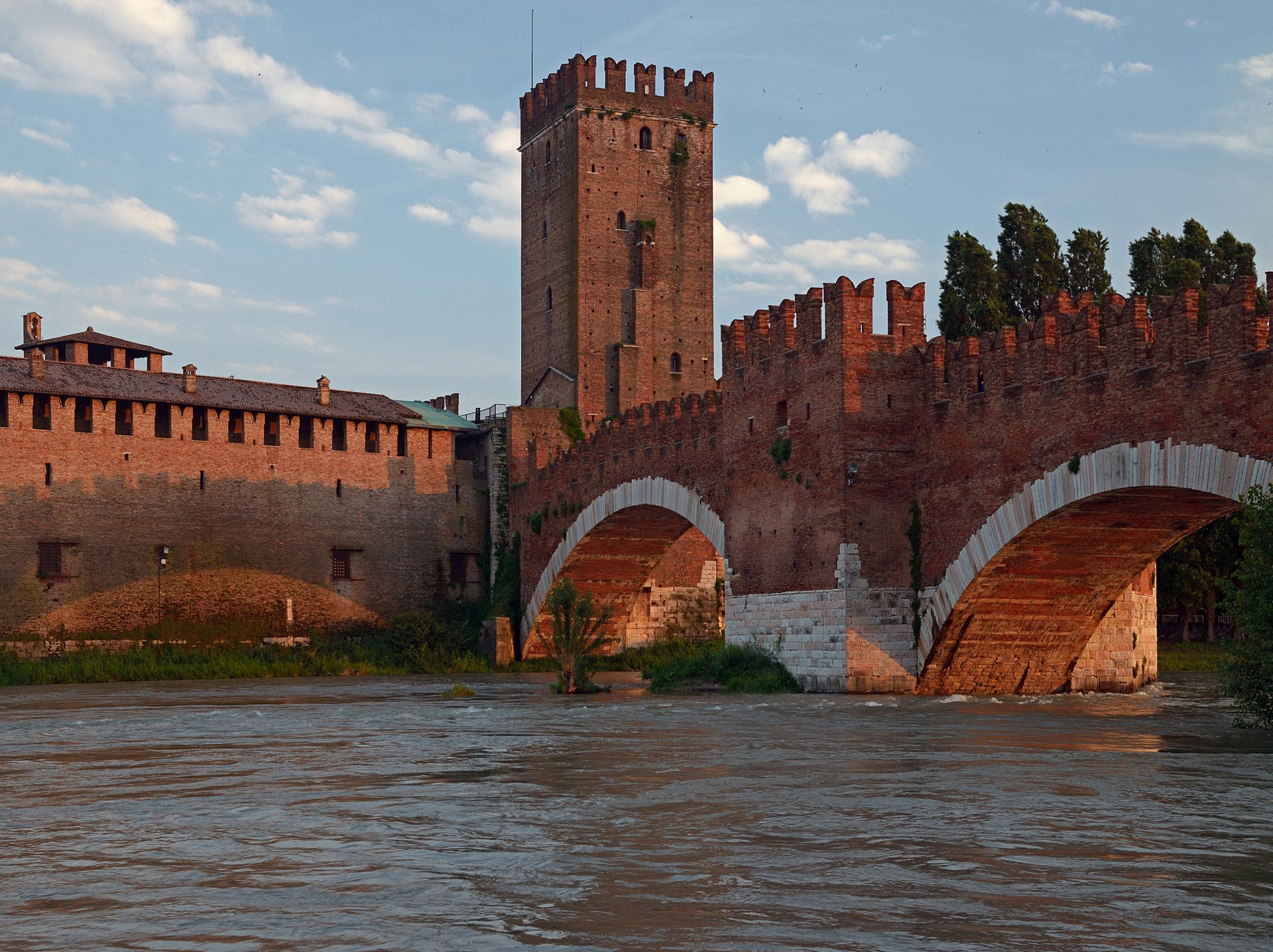
The Scaliger rulers of medieval Verona built this red-brick fortress in the 1350s, complete with a fortified bridge spanning the Adige River as an escape route. The castle served as a military barracks for centuries, but in the 1950s-70s, architect Carlo Scarpa transformed it into one of the world's most influential museum renovations. Scarpa's genius lies in how he celebrated both the medieval structure and the modern intervention. Concrete, steel, and glass insertions contrast dramatically with ancient brick and stone, while sculptures float on minimalist pedestals that seem to defy gravity. The result inspired a generation of architects and makes Castelvecchio as important for design students as for art lovers. The collection features Veronese paintings, medieval sculpture, and weapons from the fortress era. The Arena di Verona and Juliet's House are both walkable.
Notable Rooms
Cangrande Room: houses the dramatically displayed equestrian statue of Verona's greatest ruler on Scarpa's iconic concrete pedestal -- the statue appears to gallop out of the castle wall through a specially created opening. Sculpture Gallery: medieval and Renaissance works presented on minimalist steel and stone supports that appear to float. Painting Galleries: Veronese Renaissance masters displayed in period rooms with Scarpa's signature lighting. Weapons Hall: armor and arms collection from the castle's centuries as a military fortress.
Fortification History
Built in the 1350s by Cangrande II della Scala, the fortress was designed as both a seat of power and an escape route -- the Ponte Scaligero fortified bridge allowed the ruling family to flee across the Adige River if the city turned hostile. The castle's three courtyards served distinct military functions: the outer ward for troops, the inner ward as the residence, and the keep as the last refuge. After the fall of the Scaliger dynasty, the castle served as a Venetian garrison, a Napoleonic barracks, and an Austrian military depot. Scarpa's renovation (1957-1973) stripped away centuries of military additions to reveal the original medieval structure, then inserted his modernist interventions in dialogue with the ancient walls -- creating a building where every joint between old and new is deliberately visible and celebrated.
When to Visit
Tuesday-Sunday: 10 AM - 6 PM. Monday: 1:30 PM - 7:30 PM. Closed: January 1, December 25. Best time: weekday mornings for quiet appreciation of Scarpa's details.
Admission and Costs
Entry: €6. VeronaCard: includes entry with museum pass. Guided tour: €35-50 per person (1.5 hours). Architecture-focused tour: €50-80 per person. Private guide: €120-200 for up to 6 people.
Tips for Visitors
Architecture fans should allow extra time to study Scarpa's details -- the design rewards close attention. Cross Ponte Scaligero for photos of the castle and river. Combine with the Arena di Verona -- both attractions are walkable in the city center. Quieter than Juliet's House and more rewarding for serious visitors. Photography allowed without flash or tripods. The museum shop has excellent Scarpa publications.