
Roman Forum timeline
- 7th century BCE
Forum valley drained
Early engineering made the low valley usable as Rome's civic center.
- 44 BCE
Caesar cremated
Julius Caesar's funeral tied the Forum to the end of the Republic.
- 19th century
Archaeological clearance
Excavations revealed the ruins visitors now walk among.
Excavation History
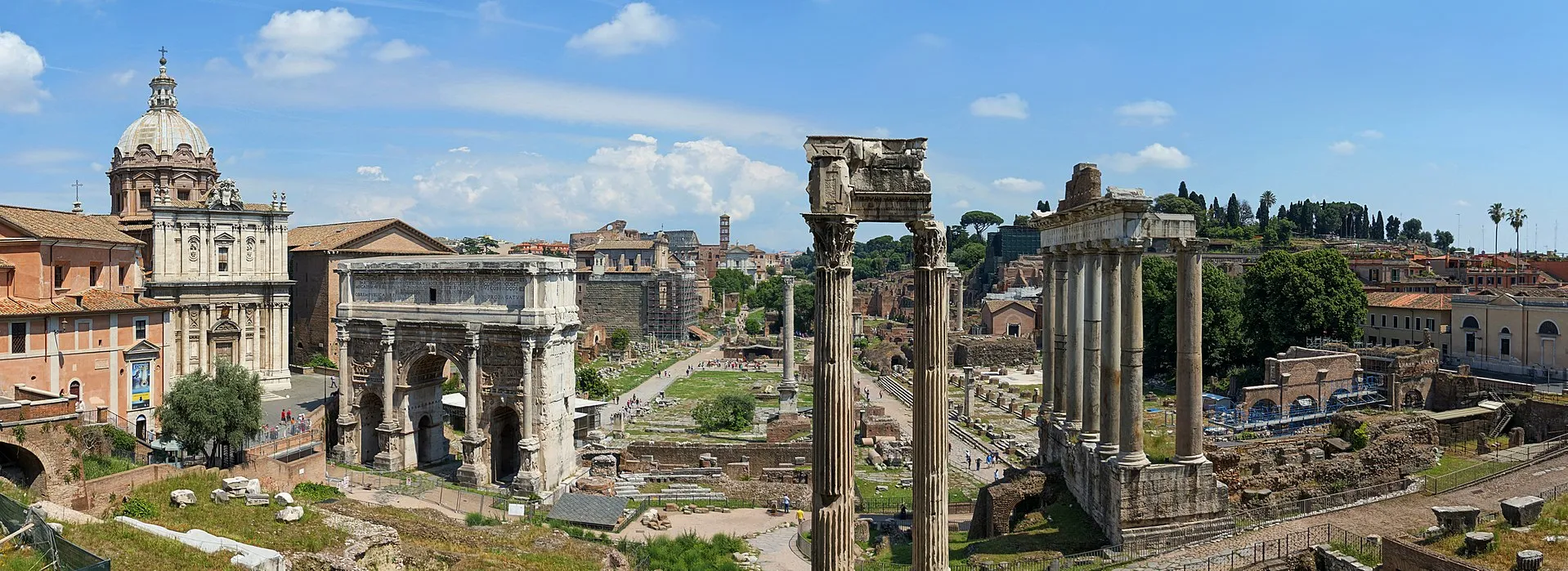
After Rome's fall, the Forum silted up under flood debris and rubble until it lay buried several meters deep, grazed by cattle as the Campo Vaccino ("cow field") through the medieval and Renaissance centuries. Early antiquarians dug piecemeal for marble and statuary, but scientific recovery began in the early 19th century when Carlo Fea cleared soil from around the Arch of Septimius Severus in 1803. Napoleonic administrators pushed further clearance, and campaigns through the 1800s gradually exposed the Republican and Imperial pavement levels. The transformative work came from Giacomo Boni, who from 1898 introduced stratigraphic excavation to the site -- reading the ground layer by layer rather than simply hauling out monuments. Boni uncovered the Lapis Niger, a black-marble shrine over one of Rome's oldest Latin inscriptions, and probed the archaic burial ground beneath the Sepulcretum. Excavation and consolidation continue today, with ongoing study of the deep Cloaca Maxima drainage and the earliest hut foundations that push the site's dated occupation back toward the 8th century BC.
Key Artifacts
The standout survivor is the Temple of Saturn, whose eight surviving Ionic columns from a 4th-century rebuild once fronted Rome's state treasury. The triple Arch of Septimius Severus (203 AD) still carries relief panels of the emperor's Parthian campaigns, while the single Arch of Titus preserves the famous carving of the menorah looted from Jerusalem. The brick-cored Curia Julia is one of the best-preserved structures, its Senate chamber intact because it was reused as a church. Three colossal coffered vaults of the Basilica of Maxentius each span 25 meters and dominate the eastern end. Smaller finds anchor the site's earliest history: the Lapis Niger shrine, the round Temple of Vesta with its sacred hearth, and the statue-lined courtyard of the House of the Vestals. The Rostra speaker's platform and the column bases of the Temple of Castor and Pollux complete a catalogue of ruins spanning nearly a millennium of construction.
When to Visit
Daily: 9 AM - one hour before sunset. Ticket valid 24 hours: includes Colosseum and Palatine Hill. Best time: late afternoon for golden light on the ruins.
Admission and Costs
Entry: €18 (combined with Colosseum and Palatine). Guided tours: €40-60 per person. Private archaeologist: €200-350 for up to 6.
The Case for a Guide
Without context, the Roman Forum is an evocative but bewildering scatter of brick stubs and column fragments — an archaeologist guide reconstructs the streetscape building by building, turning rubble into a functioning city.
- Building function identification: Each ruin had a specific civic purpose — the Curia Julia (Senate House), the Basilica Aemilia (commercial hall), the Rostra (speaker's platform) — and only a guide can stand at each foundation and explain what happened there without a map or placard
- Caesar's assassination site: The popular myth places Julius Caesar's murder at the Forum's Theatre of Pompey — a guide clarifies the actual location, explains the confusion, and describes how the Senate meeting was moved that day in 44 BC
- Daily Roman street life: Guides reconstruct the social geography — where senators walked, where merchants traded, where triumphal processions turned — making the silent stones feel populated again
- Triumphal procession route: The Via Sacra running through the Forum was the road returning generals marched along — a guide traces the exact route and explains the ritual humiliation of captives displayed beside the victor's chariot
- Vestal Virgins' quarters: The House of the Vestals is one of the most evocative ruins in the Forum, but only a guide explains the extraordinary power these priestesses held — including the ability to pardon condemned criminals on the way to execution
Tips for Visitors
Combine with the Colosseum: same ticket, plan 3-4 hours total for both. A guide is essential here -- ruins are indecipherable without context. Wear sturdy shoes on uneven ancient stones. Bring water and sun protection as there is limited shade. Late afternoon golden light makes the best photographs. Enter from the Via dei Fori Imperiali side for the most dramatic first impression.
🎧 Audio companion for Roman Forum
Read the introduction transcript
The Roman Forum fills the second half of our free, self-guided Rome: Colosseum & Roman Forum audio walk. After the climb up the Via Sacra, four stops help you make sense of the valley: where to look first from the Arch of Titus, the eight towering columns of the Temple of Saturn that once stood over the state treasury, and the speakers’ platform and Senate House that sat at the heart of Roman public life.
The walk closes by turning south to the green slopes of the Palatine Hill, where the city itself was born. Open the full walk to read the whole narration — or listen to your browser read it aloud — while you look out over the ruins; the stops inside the Forum require an admission ticket, while this audio introduction is free.
Frequently Asked Questions
During which months is the Roman Forum most enjoyable to explore?
April, May, September, and October deliver the ideal conditions -- warm enough to enjoy the sprawling open-air ruins without the brutal summer heat that bakes the exposed ancient stones. Late afternoon in these months casts a golden glow across the columns and arches that photographers prize. July and August are punishing with little shade across the site, while winter months from November through February are cool and uncrowded but offer reduced daylight hours for this expansive archaeological zone.
When can visitors tour Roman Forum?
Daily: 9 AM - one hour before sunset. Ticket valid 24 hours: Includes Colosseum & Palatine. Best time: Late afternoon for golden light
How much is the entrance fee for Roman Forum?
Entry: €18 (combined with Colosseum & Palatine). Guided tours: €40-60 per person. Private archaeologist: €200-350 for up to 6
What should visitors know before visiting Roman Forum?
Combine with Colosseum: Same ticket, plan 3-4 hours total. Guides essential: Ruins indecipherable without context. Wear sturdy shoes: Uneven ancient stones. Water & sun protection: Limited shade