
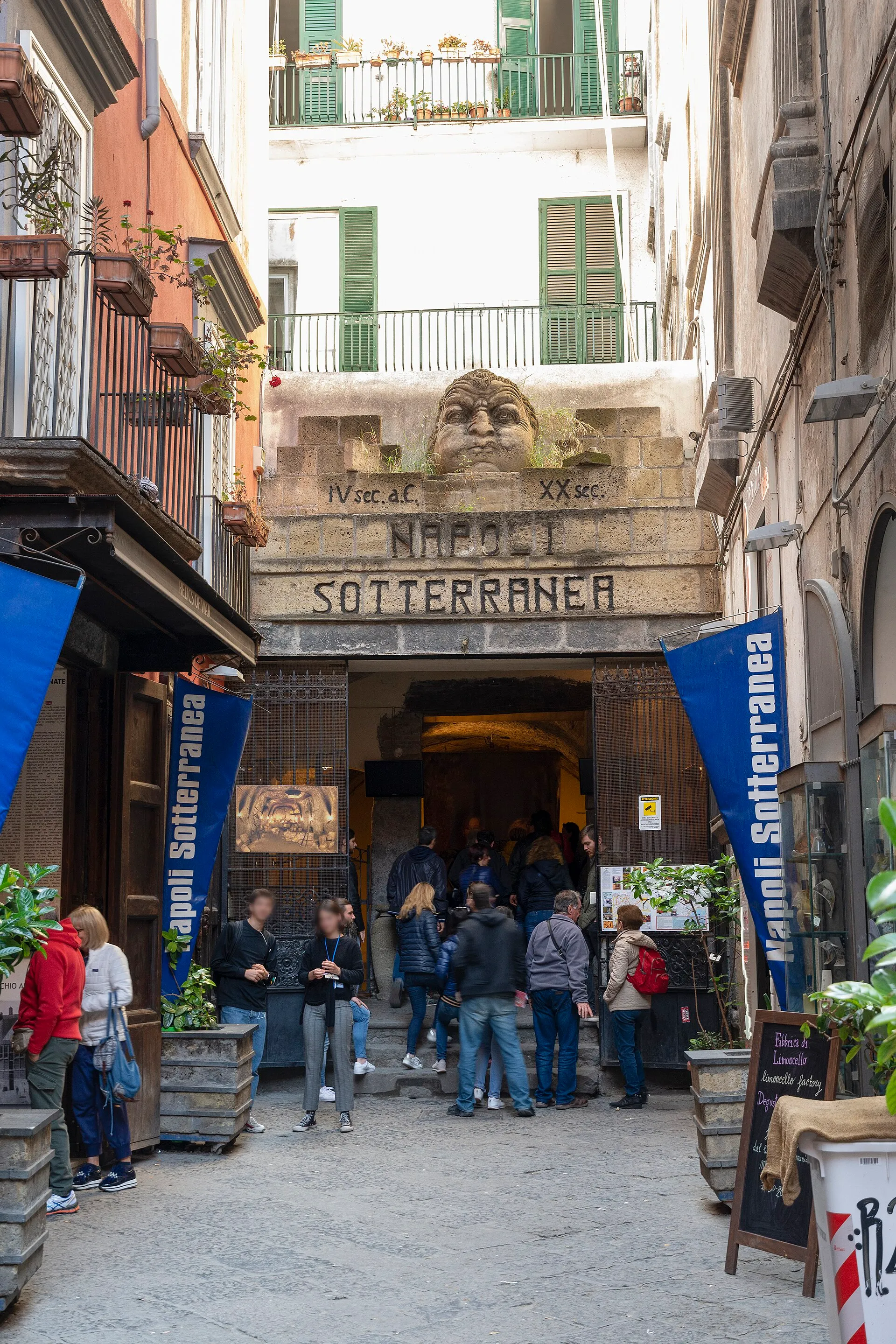
Excavation History
The quarrying began when Greek colonists cut tuff stone from these depths to raise Neapolis in the 4th century BC, and the Romans later widened the voids into the vast aqueduct that fed the city until the 1884 cholera epidemic condemned the contaminated cisterns and sealed the network. For decades the passages were forgotten, used only as illegal dumping grounds -- some chambers filled with 40 meters of accumulated rubble. Engineer Guglielmo Melisurgo surveyed and mapped the labyrinth in 1889, producing the first systematic record of what lay beneath the historic center. During World War II Neapolitans cleared debris and breached walls to link the cisterns into air-raid shelters, unwittingly reopening the ancient system. Modern rediscovery came through the speleo-archaeological association LAES (Libera Associazione Escursionisti Sottosuolo), whose volunteers explored, cleared, and lit the tunnels from the 1970s onward, opening them to guided visits. The buried Greco-Roman theater, hidden beneath apartments on Vico Cinquesanti, was traced through cellars and reached via an ordinary ground-floor flat.
Key Artifacts
The most celebrated find is the Greco-Roman theater where the emperor Nero is said to have performed, its cavea and vaulted corridors preserved beneath tenement buildings whose residents live directly above the ancient tiers. The great cisterns carved from tuff -- some vaults soaring overhead, others squeezing to passages just 50 centimeters wide -- are themselves the principal ruins, showing the cocciopesto waterproof plaster the Romans lined them with. From the WWII occupation survive iron beds, latrines, water tanks, children's toys, and period graffiti, alongside a collection of recovered war relics: military vehicles, weapons, and even a rebuilt field ambulance displayed in a subterranean gallery. A working hydroponic garden thrives 40 meters down, its plants nourished by mirror-reflected sunlight. Visitors on the adventure route wade a surviving stretch of the aqueduct channel by candlelight, tracing water grooves worn into the stone over two millennia.
When to Visit
Daily: 10 AM - 6 PM (tours depart hourly). English tours: typically at 10 AM, 12 PM, 2 PM, 4 PM, 6 PM. Duration: approximately 2 hours. Closed: December 25.
Admission and Costs
Standard tour: €12 per person. Adventure route: €15 (includes wading through ancient aqueduct). Combined tickets: often available with other Naples attractions.
Tips for Visitors
Not for claustrophobics: some passages are genuinely tight -- consider carefully. Wear comfortable shoes: stairs and uneven surfaces throughout. Bring a light jacket: underground temperature stays around 18 degrees C year-round. Book ahead: English tours can fill up, especially in high season. Several companies offer underground tours -- Napoli Sotterranea at Piazza San Gaetano is the original. Combine with Pompeii for ancient history and the Archaeological Museum for artifacts.
Frequently Asked Questions
Does the season matter when visiting Naples Underground?
Naples Underground is one of the rare attractions that performs equally well in every month, since the tunnels maintain a constant temperature of around 18 degrees Celsius regardless of what happens on the surface. This makes it an especially welcome retreat during Naples' hot July and August or on rainy winter days. Any season works beautifully, though combining the underground tour with above-ground exploration of the historic center is most pleasant from March through June and September through November.
When can visitors tour Napoli Sotterranea (Naples Underground)?
Daily: 10 AM - 6 PM (tours depart hourly). English tours: Typically at 10 AM, 12 PM, 2 PM, 4 PM, 6 PM. Duration: Approximately 2 hours. Closed: December 25
How much does Napoli Sotterranea (Naples Underground) cost?
Standard tour: €12 per person. Adventure route: €15 (includes wading through the ancient aqueduct). Combined tickets often available with other Naples attractions. Tours are mandatory — independent exploration is not permitted.
What's included in a Napoli Sotterranea (Naples Underground) tour?
The underground tells the story of Naples in reverse chronological order as you descend: WWII shelters with graffiti and beds from families who lived underground during bombing campaigns, the Roman aqueduct system that sustained one of the ancient world's largest cities, and Greek quarries from the 4th century BC revealing the origins of Neapolis.